
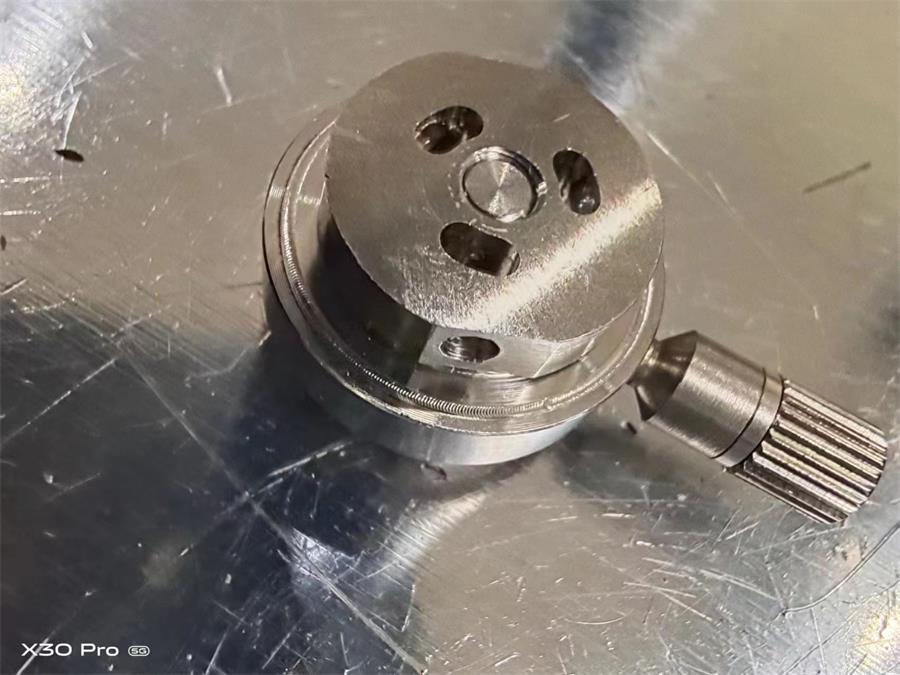
High-value tooling such as injection molds, die casting molds, and precision stamping dies requires extremely accurate maintenance and repair methods. Even minor damage can lead to production defects, downtime, and significant replacement costs.
Mold laser welding has become a preferred solution because it enables precise, low-impact repair while maintaining the original geometry and hardness of the tool. Modern systems such as a Mold Laser Welding Machine are widely used in industrial maintenance for extending tool life and improving production efficiency.
1. High Precision Repair Capability
Mold laser welding delivers energy in a highly focused beam, allowing operators to repair microscopic defects without affecting surrounding areas.
This enables:
- Accurate repair of cracks and wear zones
- Restoration of fine edges and cavity surfaces
- Minimal material removal or distortion
This level of precision is critical for high-value tooling where dimensional accuracy directly affects product quality.
2. Minimal Heat-Affected Zone (HAZ)
One of the biggest advantages of laser welding is the extremely small heat-affected zone.
This results in:
- No significant deformation of mold geometry
- Preservation of hardened surface layers
- Reduced risk of secondary stress or cracking
Traditional welding methods often introduce excessive heat, which can compromise tool integrity. Laser welding avoids this issue through localized energy input.
3. Extended Tool Life
High-value molds are expensive to manufacture and replace. Mold laser welding allows repeated repair cycles, significantly extending tool lifespan.
Benefits include:
- Restoration of worn surfaces
- Repair of repeated damage areas
- Delayed need for full mold replacement
This directly improves return on investment (ROI) for manufacturing operations.
4. Reduced Production Downtime
Mold failure or wear can interrupt production lines and lead to costly downtime. Laser welding enables fast, targeted repair without extensive disassembly or re-machining.
Key advantages:
- Faster repair compared to traditional welding
- Reduced machine idle time
- Quick recovery of production schedules
For industries with high-volume output, this is a major operational benefit.
5. Strong Metallurgical Bonding
Laser welding creates a solid metallurgical bond between the added material and the base mold steel.
This ensures:
- High joint strength
- Resistance to wear and pressure
- Long-term durability under repeated cycles
The repair area behaves similarly to the original mold material under working conditions.
6. Cost Efficiency for High-Value Tools
Replacing precision molds can be extremely expensive. Mold laser welding significantly reduces maintenance costs by enabling in-place repair.
Cost benefits include:
- Reduced need for new tooling
- Lower machining and polishing costs
- Less scrap from defective molds
Over time, this leads to substantial savings in manufacturing operations.
7. Compatibility with Advanced Mold Steels
Mold laser welding is suitable for a wide range of tool steels commonly used in industrial applications, including:
- H13 hot-work steel
- P20 pre-hardened steel
- S136 stainless mold steel
- Other alloyed tool steels
Adjustable parameters allow precise control for different hardness levels and compositions.
Conclusion
Mold laser welding provides a highly efficient and precise solution for maintaining high-value tooling. Its advantages—precision repair, minimal heat impact, extended tool life, reduced downtime, and strong bonding—make it an essential technology in modern mold manufacturing and maintenance.
With equipment such as a Mold Laser Welding Machine, manufacturers can significantly improve productivity while reducing long-term tooling costs and operational risks.
Post time: Jun-25-2026
