
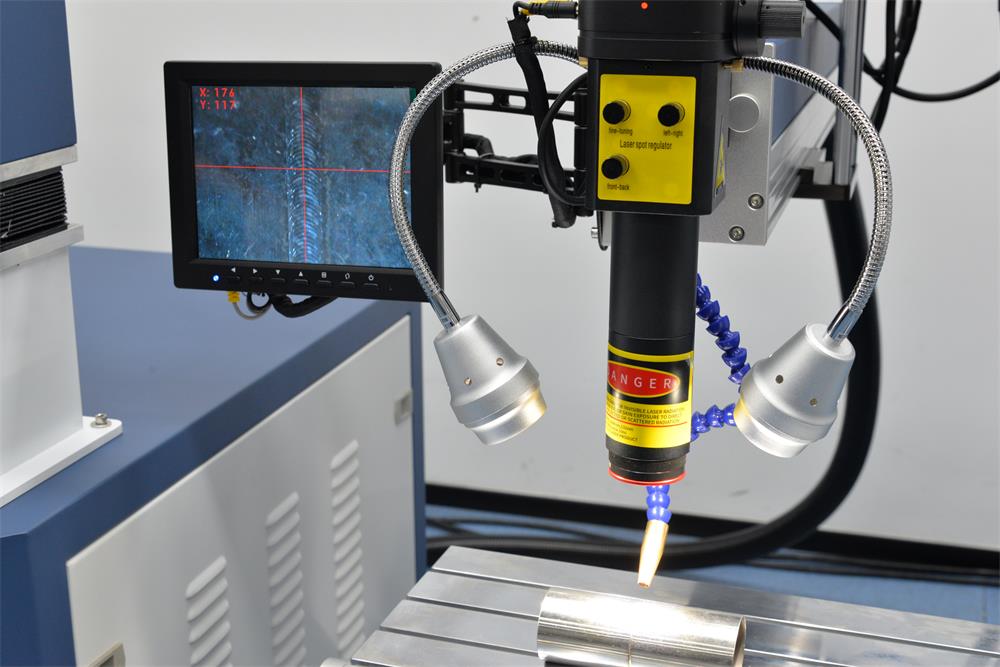
Investing in a mold laser welder is a major decision for mold manufacturers, repair workshops, injection molding companies, and die maintenance professionals. The right machine can extend mold life, reduce downtime, and improve repair quality. However, not every laser welding machine is suitable for every application.
Before making a purchase, it is important to ask the right questions. Doing so helps you select a machine that matches your production needs and delivers long-term value.
1. What Types of Molds Will You Repair?
Different industries use different molds, including:
- Plastic injection molds
- Die casting molds
- Stamping dies
- Blow molds
- Rubber molds
- Precision tooling
The size, material, and complexity of your molds determine the laser power, worktable size, and machine configuration you need.
2. Which Mold Materials Will You Weld?
A quality mold laser welder should handle a wide range of metals, including:
- P20 steel
- H13 tool steel
- S136 stainless steel
- SKD11
- NAK80
- Copper alloys
- Aluminum alloys
- Stainless steel
Check whether the machine supports the materials commonly used in your workshop.
3. Is the Laser Power Suitable for Your Applications?
Laser power directly affects welding depth and efficiency.
Typical options include:
| Laser Power | Best For |
|---|---|
| 150W | Small precision repairs |
| 200W | General mold maintenance |
| 300W | Medium-sized molds and deeper welding |
| 400W+ | Heavy-duty industrial repair |
Choosing excessive power may increase costs, while insufficient power can limit repair capability.
4. What Is the Maximum Welding Depth?
Different repair jobs require different penetration depths.
Ask the supplier about:
- Maximum single-pass penetration
- Multi-layer welding capability
- Heat affected zone
- Weld strength
Deep crack repair requires higher penetration without causing excessive thermal distortion.
5. How Precise Is the Laser Spot?
Precision is one of the biggest advantages of mold laser welding.
Important specifications include:
- Adjustable spot diameter
- Stable pulse energy
- Fine positioning
- Smooth weld appearance
Small laser spots make it easier to repair intricate mold details without affecting surrounding surfaces.
6. Does the Machine Include a High-Quality Microscope?
Most precision mold repairs are performed under magnification.
A professional mold laser welder should provide:
- Stereo microscope
- Comfortable viewing angle
- Adjustable focus
- Bright LED illumination
Good visibility improves both welding quality and operator comfort.
7. Is the Machine Easy to Operate?
Modern laser welders should feature user-friendly controls.
Look for:
- Touchscreen interface
- Parameter memory
- Adjustable pulse settings
- Preset welding programs
- Easy maintenance
Simple operation reduces training time and minimizes operator errors.
8. What Cooling System Does It Use?
Laser welders generate considerable heat during operation.
Reliable cooling is essential for:
- Stable laser output
- Longer component life
- Continuous production
- Reduced maintenance
Industrial water cooling systems are generally preferred for heavy-duty mold repair.
9. What Is the Expected Service Life?
Before purchasing, ask about:
- Laser source lifespan
- Xenon lamp replacement interval (for YAG machines)
- Cooling system durability
- Optical component maintenance
Lower maintenance costs contribute significantly to overall ownership value.
10. What Safety Features Are Included?
Laser welding involves high-energy laser beams.
Essential safety features include:
- Protective enclosure
- Emergency stop button
- Cooling protection
- Water flow alarm
- Laser safety interlock
- Stable grounding protection
Safety should never be overlooked when selecting industrial equipment.
11. What Consumables Will You Need?
Besides the machine itself, consider ongoing operating costs.
Common consumables include:
- Welding wire
- Protective gas
- Filters
- Cooling water
- Xenon lamps (for traditional YAG welders)
Understanding these costs helps estimate the total cost of ownership.
12. Does the Supplier Offer Technical Support?
Reliable after-sales service is just as important as machine quality.
Ask whether the supplier provides:
- Installation guidance
- Online technical support
- Video training
- Spare parts inventory
- Warranty service
- Software updates
Quick technical assistance can minimize production downtime.
13. Can the Machine Be Customized?
Some manufacturers offer optional features such as:
- Larger worktables
- Motorized lifting platforms
- Rotary fixtures
- CCD monitoring systems
- Customized power configurations
A machine tailored to your workflow often delivers higher productivity.
14. What Is the Total Cost Instead of Just the Purchase Price?
The lowest-priced machine is not always the most economical.
Consider:
- Purchase cost
- Shipping expenses
- Import duties
- Installation
- Training
- Maintenance
- Energy consumption
- Spare parts
Evaluating the complete ownership cost provides a more accurate investment picture.
15. Can You See Real Welding Samples?
Before placing an order, request actual welding demonstrations.
Ask the supplier to weld your own mold samples whenever possible.
Evaluate:
- Weld appearance
- Crack repair quality
- Surface smoothness
- Heat distortion
- Post-polishing requirements
Real-world testing offers the best evidence of machine performance.
Why Asking These Questions Matters
A mold laser welder is a long-term investment that directly impacts repair quality, production efficiency, and operating costs. By carefully evaluating your application requirements, machine specifications, and supplier support, you can avoid costly mistakes and choose equipment that delivers reliable performance for years.
Rather than focusing solely on price, prioritize precision, stability, ease of operation, after-sales service, and overall value. Asking the right questions before purchasing will help ensure that your mold laser welding machine becomes a productive asset for your business.
Post time: Jul-14-2026
