
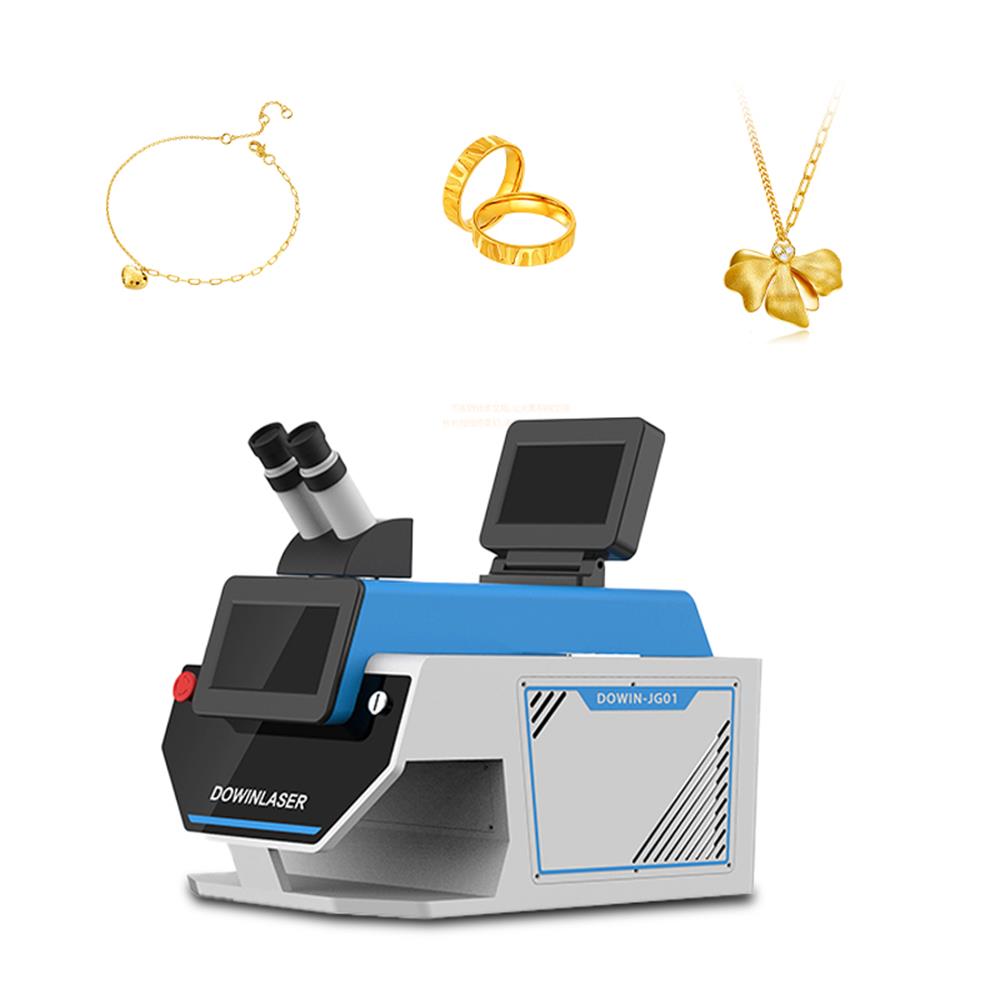
Repairing a thin gold bracelet can be difficult with traditional soldering. Gold conducts heat quickly, and excessive heat can affect nearby links, weaken delicate sections, or cause visible distortion.
A jewelry laser welding machine provides a more controlled way to repair thin gold bracelets by concentrating energy precisely on the damaged area.
Why Is Thin Gold Bracelet Welding Difficult?
Thin bracelet links have very little material to absorb heat. If too much heat is introduced during repair, the surrounding metal can melt or deform.
Common problems include:
-
Warped bracelet links
-
Overheating of nearby areas
-
Excessive melting
-
Visible discoloration
-
Weak or oversized welds
This is why controlling the laser pulse energy, duration and spot size is essential.
How Does Laser Welding Prevent Distortion?
A pulsed laser welder delivers short, concentrated bursts of energy to a small welding area.
Instead of heating a large section of the bracelet, the operator can focus the laser on the broken joint or damaged link. The surrounding material receives much less heat.
For thin gold bracelets, operators typically start with lower pulse energy and gradually increase it until a stable weld pool is achieved.
The exact parameters depend on the gold alloy, thickness and joint condition.
Step-by-Step: Welding a Thin Gold Bracelet
1. Clean the Bracelet
Remove dirt, polishing compounds and oils before welding. A clean surface helps produce a more stable weld.
2. Align the Broken Area
Position the bracelet carefully under the microscope. The two sides of the damaged link should fit together as closely as possible.
3. Select a Small Spot Size
A smaller laser spot allows the operator to place energy more precisely on a thin joint.
4. Start With Low Pulse Energy
Do not begin with excessive power. Use short pulses and gradually adjust the energy based on the welding response.
5. Add Gold Filler When Necessary
If material has been lost from the broken area, a small amount of matching gold wire can be added with the laser.
This allows the operator to rebuild the missing section without applying heat to the entire bracelet.
6. Weld in Multiple Small Pulses
Rather than creating one large weld immediately, controlled pulses can build the joint progressively.
This helps reduce heat accumulation and gives the operator better control over the final shape.
Why Use a Laser Welder Instead of a Torch?
The biggest advantage is localized heat control.
A torch heats a relatively large area, while a laser can concentrate energy on a very small point.
For delicate jewelry repairs, this can mean:
Smaller heat-affected area + better precision + less distortion
Laser welding is particularly useful for fine chains, thin bracelet links, prongs and other delicate gold components.
Can Laser Welding Damage Gold?
Yes, if the parameters are incorrect.
Excessive pulse energy, an unsuitable spot size or too much heat accumulation can still damage thin gold.
The goal is not to use the highest laser power. It is to use the right amount of energy for the material and joint.
For jewelry workshops, a laser welder with adjustable pulse energy, pulse duration, frequency and spot size provides greater control over delicate repairs.
Final Takeaway
Laser welding a thin gold bracelet without distortion depends on precise heat control.
A jewelry laser welder allows the operator to concentrate short pulses directly on the damaged area, minimizing unnecessary heating of the surrounding gold.
For the best results, use clean surfaces, accurate alignment, low initial pulse energy and multiple controlled welds rather than trying to repair the entire joint with one high-energy pulse.
Post time: Aug-28-2026
