
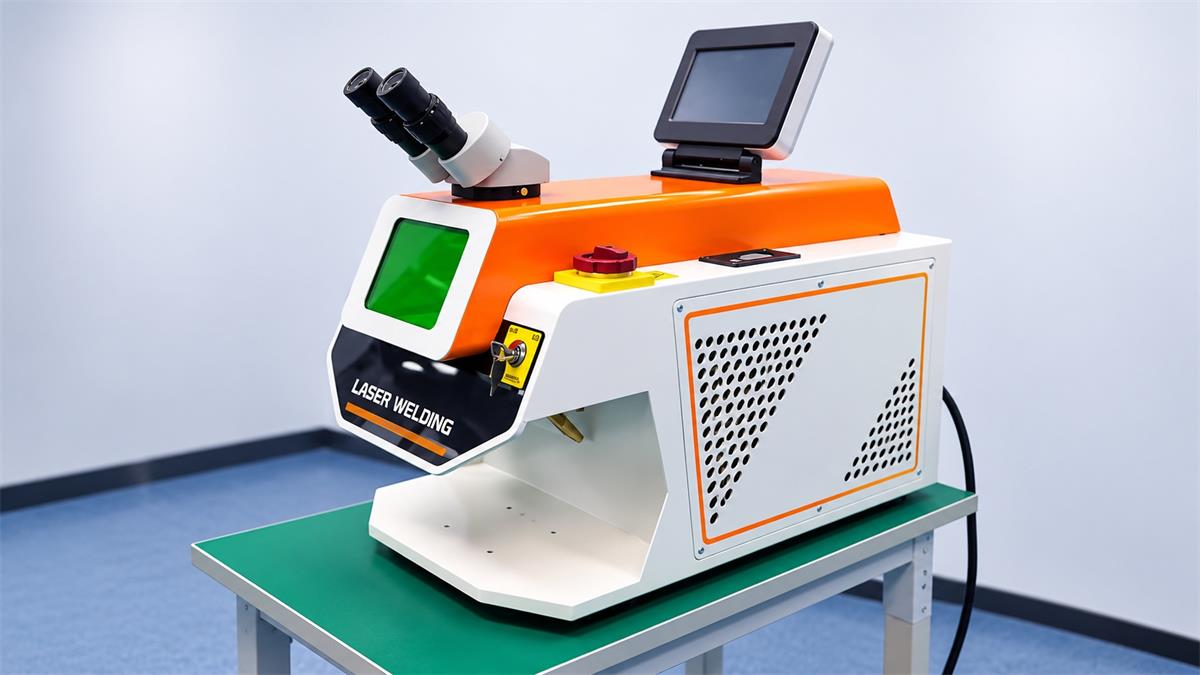
14K and 18K gold are two of the most common materials used in jewelry manufacturing and repair. Both can be laser welded, but they do not always respond to laser energy in the same way. Differences in gold content, alloy composition, melting behavior, and color can affect weld penetration, surface appearance, and the final repair quality.
For jewelry workshops using a jewelry laser welding machine, understanding these differences is important. Whether you are repairing a broken gold chain, filling pores in a ring, or fixing a delicate setting, the correct welding approach depends on the actual gold alloy rather than just its karat number.
1. What Is the Difference Between 14K and 18K Gold?
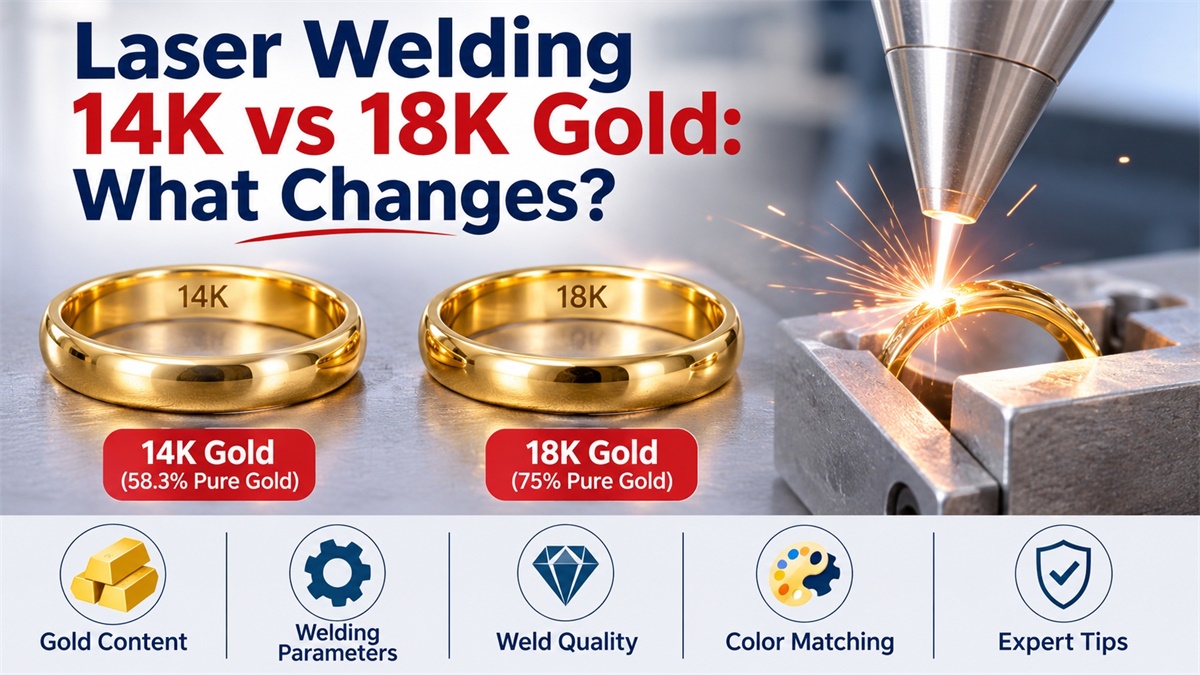
The biggest difference is the percentage of pure gold. The remaining percentage consists of other metals added to improve hardness, durability, color, and manufacturing properties.
| Property | 14K Gold | 18K Gold |
|---|---|---|
| Gold content | 58.3% | 75% |
| Other metals | 41.7% | 25% |
| Common applications | Everyday jewelry, rings, chains | Fine jewelry, luxury rings, bracelets |
| Alloy composition | Higher proportion of alloying metals | Higher proportion of pure gold |
| Welding considerations | Depends on the specific alloy and color | Depends on the specific alloy and color |
For example, 14K yellow gold usually contains a higher proportion of copper and silver than 18K yellow gold. However, the exact composition varies between manufacturers. White gold may contain nickel, palladium, silver, or other alloying elements.
These additional metals influence how the material behaves when exposed to concentrated laser energy.
2. Does 14K Gold Require Different Laser Welding Parameters?
Yes, the welding parameters may need to be adjusted when switching between 14K and 18K gold. However, there is no universal rule that 14K always requires more power or that 18K always requires less power.
The actual welding response depends on several factors:
- Alloy composition: Copper, silver, zinc, nickel, and palladium can influence melting behavior and weld pool stability.
- Material thickness: A thin gold chain requires a different energy input from a thick ring.
- Welding position: Surface repairs, butt joints, and filling holes have different requirements.
- Spot diameter: A smaller spot concentrates energy into a smaller area.
- Pulse duration: Shorter pulses can help control heat input on delicate jewelry.
For pulsed YAG laser welding, pulse energy, pulse duration, frequency, and spot diameter should be adjusted together. Operators should begin with conservative settings, test on matching scrap material, and gradually increase the energy until sufficient fusion is achieved.
For example, a thin 14K gold chain may need lower energy than a thick 18K gold ring. Material thickness and joint geometry can matter more than the karat difference itself.
3. Is 18K Gold More Difficult to Laser Weld?
Not necessarily. Both 14K and 18K gold can produce good laser welding results when the material and parameters are properly matched.
However, 18K gold contains a higher percentage of pure gold and a lower percentage of alloying metals. This changes its thermal and metallurgical behavior.
Some practical considerations include:
- Heat distribution: Different alloy compositions can change how heat moves through the workpiece.
- Weld pool behavior: The composition of the molten metal affects how the weld pool forms and solidifies.
- Color matching: The repaired area may look different if the filler material does not match the original alloy.
- Surface finish: Excessive energy can create visible melting, discoloration, or an uneven repair area.
For valuable 18K jewelry, especially pieces with visible repair areas, testing the exact alloy before production is strongly recommended.
4. Does Gold Color Affect Laser Welding?
Yes. Yellow gold, white gold, and rose gold can behave differently during laser welding, even when they have the same karat rating.
14K and 18K Yellow Gold
Yellow gold generally contains combinations of gold, copper, and silver. The proportions influence the final color and welding behavior. When repairing yellow gold jewelry, using compatible filler material helps maintain a consistent appearance after polishing.
White Gold
White gold can contain nickel or palladium, depending on the alloy formulation. Some white gold jewelry also has a rhodium-plated surface.
During laser welding, the operator should pay attention to the alloy composition and the condition of the plated surface. Rhodium plating may need to be removed from the immediate welding area before repair, followed by appropriate refinishing or replating.
Rose Gold
Rose gold typically contains a higher proportion of copper, which creates its characteristic pink or reddish color. The copper content can influence melting behavior and oxidation. Selecting compatible filler wire is important when repairing visible areas.
5. What Laser Welding Problems Can Occur When Repairing 14K and 18K Gold?
In actual jewelry repair work, the most common problems are not necessarily caused by the karat number. They are often related to unsuitable parameters, incompatible filler wire, or poor control of the welding area.
Porosity and Small Holes
Small pores may appear in the weld area when the material contains impurities, surface contamination, or alloying elements that vaporize during welding. Zinc-containing gold alloys, for example, can be particularly challenging because zinc has a relatively low boiling point.
Clean the workpiece before welding and use suitable filler wire. Adjusting pulse energy and duration can also help improve weld pool stability.
Cracks Around the Weld
Some gold alloys are more sensitive to cracking during solidification. The filler material should be compatible with the original alloy, and excessive heat input should be avoided.
Different Colors After Welding
A repaired area may have a slightly different color from the surrounding jewelry. This is particularly noticeable on rose gold and white gold. Using filler wire with a matching karat and alloy color can reduce this problem.
Burning or Excessive Melting
Applying too much energy to thin jewelry can cause excessive melting, unwanted holes, or damage to nearby decorative details. Use a controlled spot diameter and suitable pulse duration, especially when working on delicate chains and fine settings.
6. Can One Jewelry Laser Welder Handle Both 14K and 18K Gold?
Yes. A properly configured pulsed YAG jewelry laser welding machine can handle both 14K and 18K gold, as well as other common jewelry materials.
The important factor is not having a separate machine for every gold purity. It is having sufficient parameter adjustment capability to accommodate different materials and repair applications.
When choosing equipment, jewelry manufacturers and repair workshops should pay attention to:
- Adjustable laser energy: Different gold alloys and thicknesses require different energy levels.
- Adjustable pulse duration: Helps control heat input when repairing delicate components.
- Adjustable spot diameter: Allows operators to work on both small details and larger repair areas.
- Microscope observation: Provides a clear view of the welding position, especially for fine jewelry work.
- Argon shielding: Helps protect the welding area from oxidation.
- Stable energy output: Important for consistent results during repeated repair operations.
Dowin’s YAG jewelry laser welding machines are designed for precision jewelry repair and production. Available configurations include 150W and 200W models, with microscope observation and adjustable welding spot diameter.
For more information about the equipment and its technical specifications, see the YAG desktop spot laser jewelry repairing machine.
7. Practical Testing Tips Before Welding Valuable Gold Jewelry
Before repairing an expensive 14K or 18K gold item, it is better to perform a few tests rather than immediately applying the same settings used for another piece.
- Identify the material: Confirm whether the workpiece is 14K or 18K gold, and identify its color and alloy type if possible.
- Clean the welding area: Remove oil, dirt, polishing compounds, and other surface contamination.
- Prepare matching scrap material: Use a sample with similar thickness and alloy composition.
- Start with conservative settings: Begin with controlled pulse energy and a suitable small spot.
- Check penetration: Make sure the weld achieves sufficient fusion rather than only melting the surface.
- Inspect the appearance: Look for pores, cracks, discoloration, and excessive melting.
- Adjust gradually: Change one parameter at a time to understand its effect on the welding result.
For jewelry containing diamonds or other gemstones, additional care is necessary. Although laser welding concentrates heat in a relatively small area, nearby stones can still be affected depending on their type, setting, and distance from the weld. Test the repair method and use appropriate protection before working on valuable pieces.
8. FAQ: Laser Welding 14K vs 18K Gold
Can a 200W jewelry laser welder weld both 14K and 18K gold?
Yes. A 200W pulsed YAG jewelry laser welding machine can be used for both materials. The operator needs to adjust the welding parameters according to the alloy composition, thickness, and repair requirements. Machine wattage alone does not determine the quality of the weld.
Does 14K gold melt faster than 18K gold?
There is no universal answer. Their melting behavior depends on the specific alloy composition. Copper, silver, zinc, and other added metals influence the solidus and liquidus temperatures. The actual alloy specification is more useful than the karat number alone when selecting welding parameters.
Can I use the same gold filler wire for 14K and 18K?
It is generally better to use filler wire that matches the karat, color, and alloy composition of the original jewelry. Using incompatible filler material may result in color differences, cracking, or inconsistent welding performance.
Is laser welding suitable for repairing thin 14K gold chains?
Yes. Pulsed YAG laser welding is particularly useful for localized repairs on thin gold chains. The operator should use a suitable small spot and carefully controlled pulse energy to avoid melting adjacent links.
Can laser welding repair 18K white gold?
Yes. However, white gold composition varies between manufacturers. Nickel-based and palladium-based white gold may respond differently. Rhodium plating should also be considered when planning the repair and final surface finishing.
What is the best laser welding machine for gold jewelry repair?
A pulsed YAG jewelry laser welder with adjustable energy, pulse duration, spot diameter, microscope observation, and shielding gas is a practical choice for many gold jewelry repair workshops. The appropriate 150W or 200W configuration depends on the thickness of the materials and the range of repair jobs.
Conclusion
The difference between laser welding 14K and 18K gold is mainly related to gold purity and alloy composition. Both materials can be successfully welded, but their parameters should be tested and adjusted according to the actual workpiece.
For jewelry workshops handling different gold alloys every day, a reliable pulsed YAG jewelry laser welding machine provides the flexibility needed for chain repair, ring repair, filling small holes, and precision spot welding.
Looking for a jewelry laser welding machine? Explore Dowin jewelry laser welding machines to compare available models and configurations. Contact Dowin with your material type, jewelry samples, and repair requirements to discuss a suitable machine.
Post time: Nov-13-2026
