
The automotive interior industry requires high-quality, durable, and precisely cut materials to meet the increasing demand for comfortable and customized vehicle interiors. Among these components, car seat covers play an important role in both vehicle appearance and passenger comfort. Traditional cutting methods often face challenges such as material waste, inaccurate cutting, and limited ability to process complex designs.
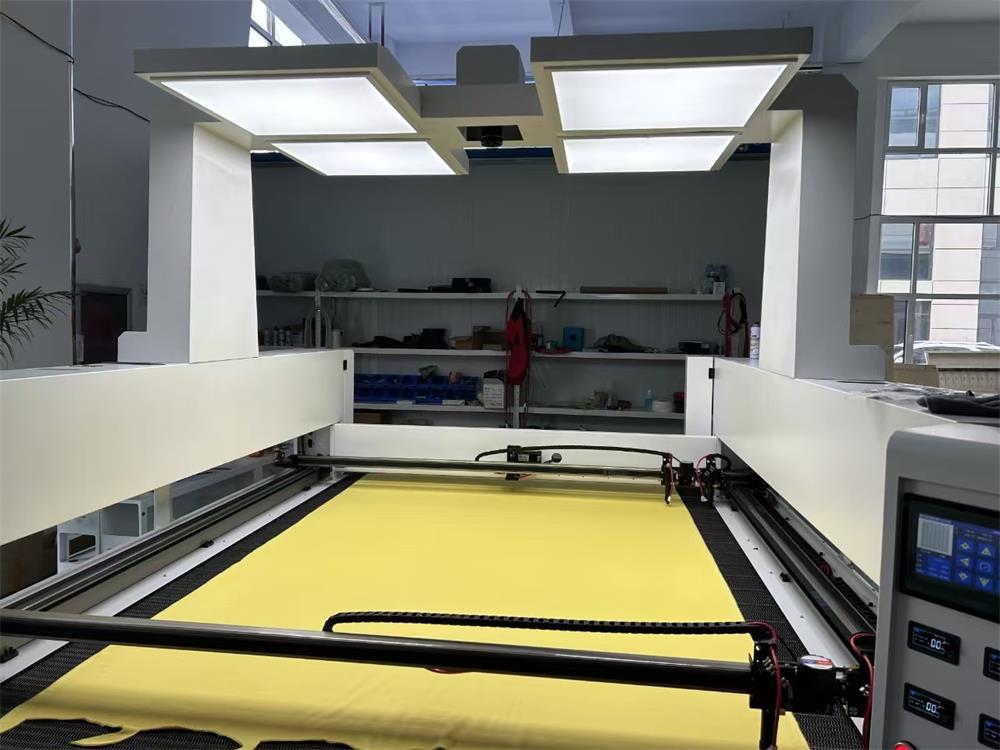
A fabric laser cutting machine provides an advanced solution for car seat cover manufacturing. With high precision, automatic processing, and clean cutting edges, laser technology helps automotive suppliers improve production efficiency and product quality.
Why Use Laser Cutting for Car Seat Covers?
Car seat covers are made from various materials, including leather, artificial leather, fabric, microfiber, and synthetic textiles. These materials require accurate cutting to ensure proper fitting during sewing and assembly.
Laser cutting technology offers several advantages:
- High cutting accuracy
- Smooth and sealed edges
- Reduced material waste
- Fast processing speed
- Digital design flexibility
- Easy automation
For automotive manufacturers producing large volumes of seat covers, laser cutting improves consistency and reduces production costs.
1. Precision Cutting for Complex Seat Cover Patterns
Car seat covers contain multiple components with complex shapes, including:
- Seat cushions
- Backrest covers
- Headrest covers
- Armrest covers
- Side panels
Each piece must match exact dimensions to ensure proper installation.
A laser cutting machine follows digital patterns with high accuracy, allowing manufacturers to achieve:
- Precise curves and contours
- Consistent dimensions between batches
- Accurate sewing alignment
- Reduced assembly problems
This precision is especially important for premium vehicle interiors where appearance quality is critical.
2. Clean Cutting of Leather and Synthetic Materials
Car seat covers commonly use materials that are difficult to cut with traditional blades.
Laser cutting is suitable for:
Genuine Leather
Laser technology provides:
- Smooth cutting lines
- Reduced material damage
- High detail accuracy
Synthetic Leather (PU/PVC)
Laser cutting helps:
- Prevent edge fraying
- Maintain consistent shapes
- Improve production efficiency
Fabric Materials
For polyester, microfiber, and other automotive textiles, laser cutting provides:
- Clean edges
- Minimal deformation
- Reliable repeatability
3. Reduced Material Waste and Higher Cost Efficiency
Material costs are a major factor in automotive seat cover production. Optimizing material usage directly affects profitability.
Laser cutting systems help reduce waste through:
- Automatic nesting software
- Optimized cutting layouts
- Precise cutting paths
- Reduced human error
Better material utilization allows manufacturers to produce more seat covers from the same amount of raw material.
4. Faster Production with Automatic Fabric Feeding
Automotive suppliers often need to process large rolls of fabric or synthetic materials. Manual loading and positioning can slow production.
Modern laser cutting machines with automatic feeding systems provide:
- Continuous roll processing
- Stable material transportation
- Reduced operator involvement
- Higher daily production capacity
This makes them suitable for mass production of automotive seat covers.
5. No Need for Physical Cutting Tools
Traditional cutting often requires molds, dies, or blades for different patterns. This can increase preparation time and storage costs.
Laser cutting uses digital files instead of physical tools.
Benefits include:
- Quick pattern changes
- Lower tooling costs
- Easy customization
- Faster product development
Manufacturers can quickly adjust designs for different vehicle models without creating new cutting dies.
6. Improved Product Quality and Consistency
Automotive customers expect excellent interior quality. Uneven cutting can lead to wrinkles, poor fitting, or sewing difficulties.
Laser cutting improves:
- Pattern accuracy
- Stitching alignment
- Overall appearance
- Production consistency
This helps automotive suppliers maintain strict quality standards.
7. Applications of Laser Cutting in Automotive Interiors
Fabric laser cutting machines are widely used for:
Seat Cover Production
- Car seat upholstery
- Truck seat covers
- Bus seat fabrics
- Racing seat materials
Interior Components
- Door panel fabrics
- Roof lining materials
- Decorative textile parts
- Interior trim components
Advanced Automotive Materials
- Composite fabrics
- Acoustic insulation materials
- Protective covers
8. How to Choose a Laser Cutting Machine for Car Seat Covers
When selecting a laser cutting solution, manufacturers should consider:
Cutting Area
A larger working area improves efficiency when processing large automotive materials.
Automatic Feeding System
Continuous feeding is important for high-volume production.
Laser Power
The suitable power depends on:
- Material thickness
- Material type
- Cutting speed requirements
Software Capability
Professional CAD/CAM software helps optimize patterns and reduce material waste.
Machine Stability
Reliable mechanical structure and laser components ensure long-term production performance.
Laser Cutting vs Traditional Cutting for Car Seat Covers
| Feature | Laser Cutting | Traditional Cutting |
|---|---|---|
| Precision | High | Depends on tools |
| Edge quality | Clean and sealed | May require finishing |
| Tool cost | No cutting dies required | Requires replacement tools |
| Pattern changes | Fast digital adjustment | Time-consuming |
| Material waste | Lower | Higher |
| Automation | Easy integration | Limited |
Conclusion
Laser cutting technology provides an efficient and precise solution for manufacturing car seat covers. By improving cutting accuracy, reducing material waste, and supporting automated production, fabric laser cutting machines help automotive suppliers produce higher-quality interiors while lowering manufacturing costs.
As the automotive industry continues to demand customized designs, lightweight materials, and faster production cycles, laser cutting will remain an essential technology for modern car seat cover manufacturing.
Post time: Jul-09-2026
