
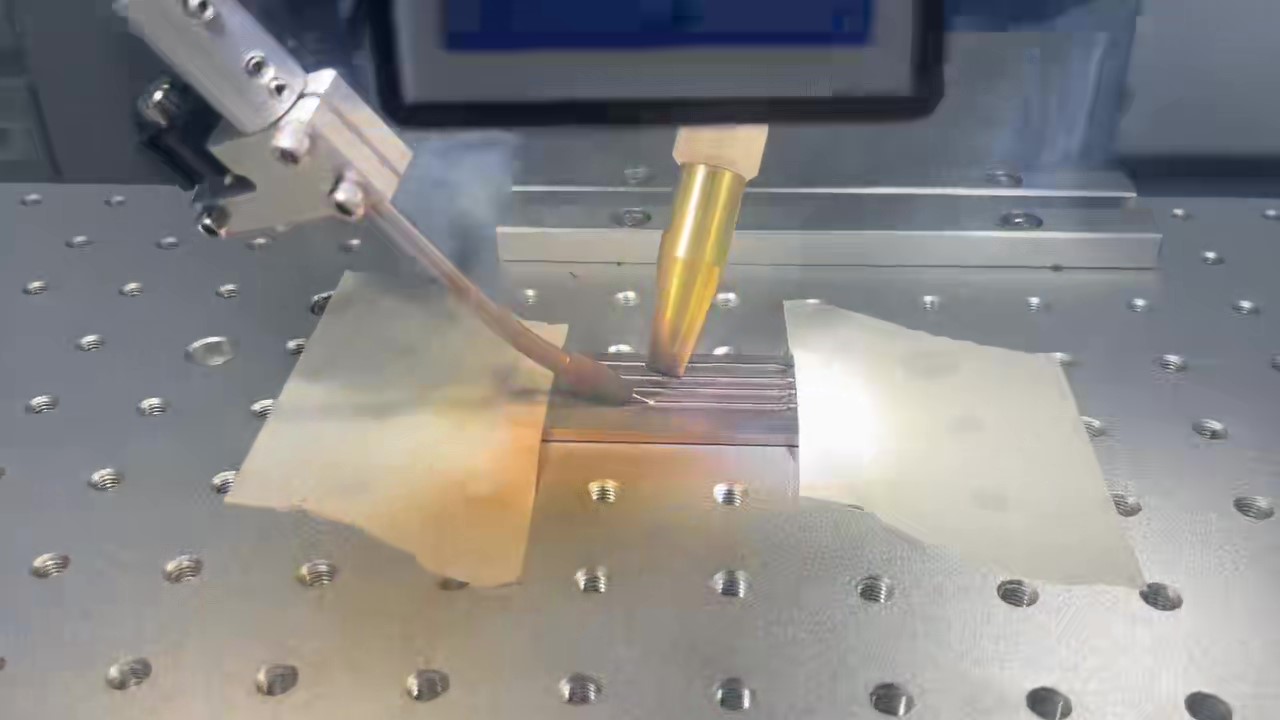
In the mold manufacturing and repair industry, precision is everything. Whether repairing injection molds, die-casting molds, stamping molds, or precision tooling, choosing the right welding technology directly affects repair quality, production efficiency, and overall operating costs. Among the most widely used technologies are Fiber Mold Laser Welding Machines and YAG Mold Laser Welders.
Many mold manufacturers are now asking the same question: Which technology is better for modern mold repair?
The answer depends on your production requirements, repair volume, budget, and long-term business goals. This article compares fiber laser mold welders and YAG mold laser welders in terms of performance, maintenance, efficiency, operating costs, and application scenarios.
Understanding YAG Mold Laser Welding Machines
YAG (Yttrium Aluminum Garnet) laser welding machines have been used in mold repair for decades. They typically utilize a xenon lamp-pumped laser source that generates pulsed laser energy for precision welding.
YAG mold laser welders became popular because they offer:
- Stable welding performance
- Good control over heat input
- Suitable precision for mold repair
- Relatively low initial investment
For many years, YAG technology has been considered the industry standard for repairing cracks, worn edges, and damaged mold cavities.
However, as manufacturing technology evolves, many workshops are transitioning to fiber laser systems due to their higher efficiency and lower operating costs.
What Is a Fiber Mold Laser Welding Machine?
A Fiber Mold Laser Welding Machine uses advanced fiber laser technology to generate highly concentrated laser energy. Unlike traditional YAG systems, fiber lasers do not rely on xenon lamps and complex optical paths.
Instead, laser energy is generated directly within optical fibers, resulting in:
- Higher energy conversion efficiency
- Better beam quality
- Lower maintenance requirements
- Longer service life
Fiber laser technology has become increasingly popular in industries requiring precision welding, including automotive manufacturing, aerospace, electronics, medical devices, and mold repair.
Comparison of Welding Quality
YAG Mold Laser Welder
YAG systems provide excellent repair quality for most mold applications. Their pulsed laser output allows operators to carefully control weld penetration and heat-affected zones.
Advantages include:
- Fine welding spots
- Smooth weld appearance
- Effective crack repair
- Proven reliability
However, beam quality may decrease over time as components age.
Fiber Mold Laser Welding Machine
Fiber lasers produce a more concentrated and stable beam. This results in:
- Deeper penetration
- Higher welding precision
- Better weld consistency
- Reduced porosity
For high-precision mold repair, fiber laser systems often achieve superior welding quality compared to traditional YAG machines.
Energy Efficiency Comparison
One of the biggest differences between these technologies is energy efficiency.
YAG Laser Efficiency
Traditional YAG laser welders typically convert only 3%–5% of electrical energy into laser energy. The remaining energy becomes heat, requiring additional cooling systems.
This means:
- Higher electricity consumption
- Increased cooling requirements
- Greater operational expenses
Fiber Laser Efficiency
Fiber laser systems can achieve energy conversion efficiencies of 25%–40%.
Benefits include:
- Lower power consumption
- Reduced heat generation
- Smaller cooling systems
- Significant long-term savings
For companies running equipment daily, these savings can quickly offset the higher purchase price of a fiber laser welder.
Maintenance Requirements
YAG Mold Laser Welder
YAG machines contain consumable components such as:
- Xenon lamps
- Reflectors
- Optical elements
These parts gradually wear out and require replacement.
As a result:
- Maintenance costs increase over time
- Production interruptions may occur
- Technical servicing becomes necessary
Fiber Mold Laser Welding Machine
Fiber laser systems contain fewer wearable components.
Advantages include:
- Minimal maintenance
- Longer laser source lifespan
- Reduced downtime
- Lower servicing costs
Many fiber laser sources can operate for over 100,000 hours before significant degradation occurs.
Welding Speed and Productivity
In modern manufacturing, productivity directly impacts profitability.
YAG Laser Performance
YAG welders perform well for small-scale repair work and low-volume production environments. However, welding speed can be limited when handling larger repair projects.
Fiber Laser Performance
Fiber lasers offer:
- Faster welding speeds
- Higher energy density
- Improved production efficiency
For workshops processing multiple molds daily, fiber laser systems can significantly increase output while maintaining excellent quality.
Cost Considerations
Initial Investment
YAG mold laser welders generally have a lower purchase price, making them attractive for:
- Small workshops
- Startup mold repair businesses
- Companies with limited budgets
Fiber laser systems often require a higher initial investment.
Long-Term Cost
When evaluating total ownership costs, fiber lasers frequently become the more economical option because of:
- Lower power consumption
- Reduced maintenance expenses
- Longer component lifespan
- Higher productivity
Over several years of operation, many companies find that fiber laser welders provide a stronger return on investment.
Which Machine Is Best for Mold Repair?
Choose a YAG Mold Laser Welder If:
- You have a limited equipment budget.
- Your repair volume is relatively low.
- You need a proven and familiar technology.
- You operate a small mold repair workshop.
Choose a Fiber Mold Laser Welding Machine If:
- You require maximum precision.
- You perform repairs daily.
- You want lower operating costs.
- You seek higher productivity.
- You are planning long-term business growth.
Future Trends in Mold Welding Technology
As manufacturing industries continue adopting automation and precision engineering, fiber laser technology is becoming the preferred choice for modern mold repair facilities.
The combination of superior beam quality, lower energy consumption, minimal maintenance, and faster welding speeds makes fiber laser welders highly attractive for manufacturers seeking competitive advantages.
While YAG mold laser welders remain effective and reliable, the market trend increasingly favors fiber laser solutions for companies focused on efficiency and long-term profitability.
Conclusion
Both Fiber Mold Laser Welding Machines and YAG Mold Laser Welders offer excellent mold repair capabilities. YAG technology remains a dependable and cost-effective solution for many workshops, especially those with lower repair volumes and tighter budgets.
However, for manufacturers seeking higher precision, reduced operating costs, and greater productivity, fiber laser technology represents the future of mold repair welding. The initial investment may be higher, but the long-term benefits often outweigh the upfront cost.
For businesses looking to stay competitive in today’s manufacturing environment, investing in a high-quality fiber mold laser welding machine can be a strategic step toward improved efficiency, better repair quality, and sustainable growth.
Post time: Jun-04-2026
