
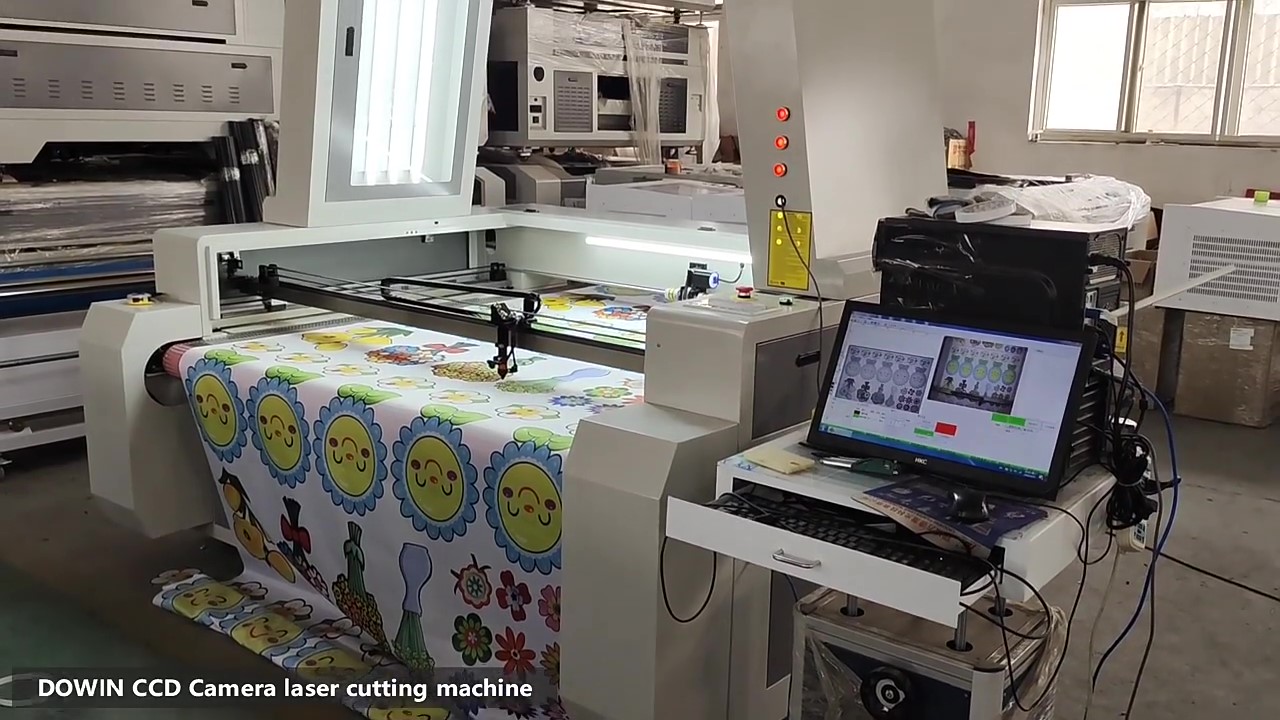
The textile industry has undergone a dramatic transformation over the past decade. As fashion trends change faster, customization becomes more popular, and production efficiency becomes increasingly important, manufacturers are searching for technologies that can deliver speed, precision, and flexibility. Among the most impactful innovations is the fabric laser cutting machine.
From garment manufacturing and home textiles to sportswear and technical fabrics, laser cutting technology is reshaping how fabrics are processed. Compared with traditional cutting methods, fabric laser cutting machines offer unparalleled accuracy, reduced material waste, and improved production efficiency.
In this article, we explore how fabric laser cutting machines work, their advantages, key applications, and why they have become essential equipment for modern textile manufacturers.
What Is a Fabric Laser Cutting Machine?
A fabric laser cutting machine is a computer-controlled system that uses a focused laser beam to cut various textile materials with exceptional precision.
Unlike traditional cutting tools such as scissors, knives, or mechanical blades, laser cutting is a non-contact process. The laser beam melts, vaporizes, or burns through the material along a programmed path, creating clean and accurate cuts without physical contact.
Modern fabric laser cutters are typically equipped with:
- High-speed motion systems
- Digital control software
- Automatic feeding systems
- Vision recognition cameras
- Intelligent nesting software
These features allow manufacturers to process large volumes of fabric efficiently while maintaining consistent quality.
How Does Fabric Laser Cutting Work?
The cutting process begins with a digital design file created using CAD software.
The workflow generally includes:
- Creating or importing the design pattern.
- Arranging patterns using nesting software.
- Loading fabric onto the cutting platform.
- The laser beam follows the programmed path.
- Finished pieces are collected for further processing.
Because the entire process is digitally controlled, manufacturers can quickly switch between designs without changing physical tools or molds.
This flexibility is one of the key reasons laser cutting has become increasingly popular in the textile industry.
Major Advantages of Fabric Laser Cutting Machines
Exceptional Cutting Precision
One of the most significant benefits of laser technology is its accuracy.
Fabric laser cutting machines can achieve highly detailed cuts that are difficult or impossible with conventional methods.
This is especially important for:
- Fashion garments
- Lace patterns
- Embroidery materials
- Sportswear components
- Decorative textiles
Precise cutting helps improve product quality while reducing production errors.
Clean and Sealed Edges
Many synthetic fabrics tend to fray when cut using traditional blades.
Laser cutting uses heat to seal the edges during the cutting process, reducing or eliminating fraying.
Materials that benefit from edge sealing include:
- Polyester
- Nylon
- Spandex
- Acrylic fabrics
- Technical textiles
Sealed edges improve product appearance and reduce the need for additional finishing operations.
Increased Production Efficiency
Traditional cutting methods often require manual labor and multiple processing steps.
Laser cutting machines can operate continuously with minimal operator intervention.
Benefits include:
- Faster cutting speeds
- Reduced setup times
- Automated operation
- Consistent output quality
Manufacturers can significantly increase production capacity while lowering labor costs.
Reduced Material Waste
Fabric costs represent a substantial portion of textile manufacturing expenses.
Advanced nesting software optimizes pattern placement to maximize material utilization.
As a result:
- Less fabric is wasted
- Production costs decrease
- Profit margins improve
Even small improvements in material utilization can generate significant savings over large production volumes.
Flexible Production Capability
Consumer demand for personalized products continues to grow.
Fabric laser cutting machines make it easy to produce:
- Custom garments
- Personalized sportswear
- Small production runs
- Prototype samples
- Limited-edition fashion collections
Because no physical cutting dies are required, manufacturers can quickly adapt to changing market demands.
Post time: Jun-04-2026
