
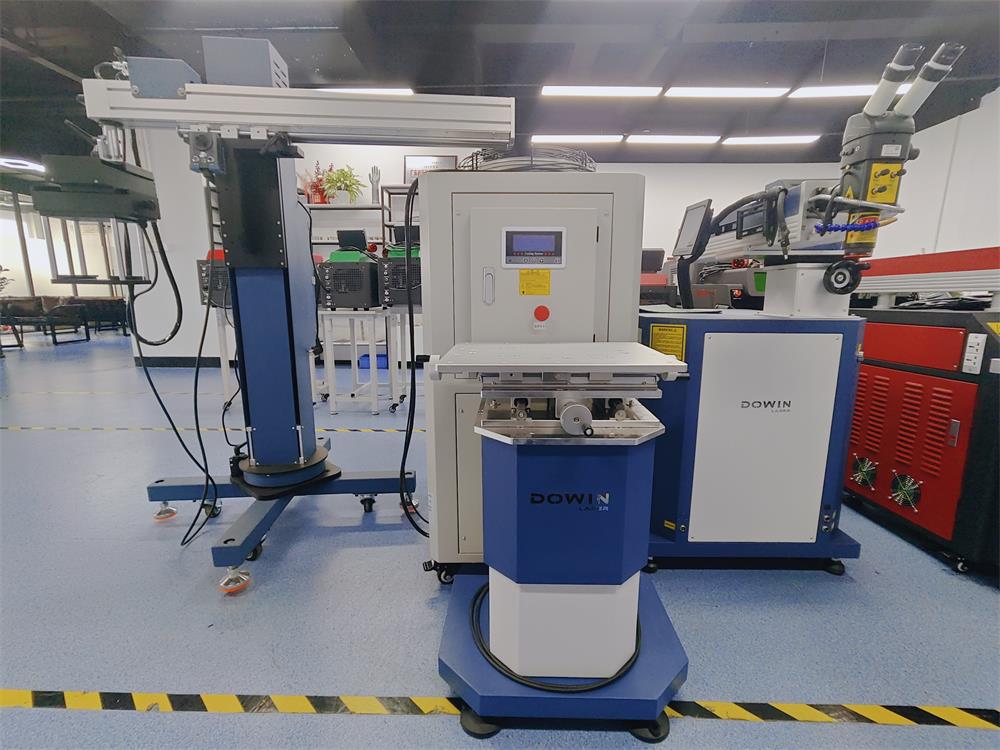
Laser welding has become one of the most effective methods for repairing molds used in injection molding, die casting, stamping, and precision manufacturing. Compared with traditional welding methods, laser technology offers greater accuracy, lower heat input, and better control over the repair process.
Among laser welding systems, fiber laser mold welding machines and YAG mold welding machines are the two most common technologies. While both are capable of repairing molds, they differ in laser source, efficiency, maintenance requirements, operating costs, and overall performance.
This article compares fiber laser and YAG mold welding technologies to help manufacturers choose the best solution for their mold repair applications.
What Is a Fiber Laser Mold Welding Machine?
A fiber laser welding machine uses a fiber laser source to generate a high-quality laser beam that is transmitted through optical fiber directly to the welding head.
Fiber laser technology offers:
- High beam quality
- Excellent energy efficiency
- Stable laser output
- Long service life
- Low maintenance requirements
It is widely used for precision mold repair and modern industrial welding applications.
What Is a YAG Mold Welding Machine?
A YAG (Nd:YAG) mold welding machine uses a neodymium-doped yttrium aluminum garnet crystal as the laser medium. The laser energy is generated through a flash lamp pumping system.
For many years, YAG laser welders have been widely used for:
- Mold repair
- Jewelry welding
- Precision component repair
- Tool restoration
Although reliable, YAG technology has gradually been replaced by fiber lasers in many industrial applications due to advances in laser efficiency.
1. Laser Source Technology
The most fundamental difference is the laser source.
Fiber Laser
Features:
- Fiber laser source
- Direct optical fiber transmission
- Stable laser beam
- High energy conversion efficiency
YAG Laser
Features:
- Nd:YAG crystal
- Flash lamp pumping
- More complex optical path
- Lower energy conversion efficiency
Fiber laser technology generally provides more stable long-term performance.
2. Energy Efficiency
Energy efficiency directly affects operating costs.
Fiber Laser
Fiber lasers convert electrical energy into laser energy more efficiently.
Benefits include:
- Lower power consumption
- Reduced operating costs
- Less heat generation
- Improved overall productivity
YAG Laser
YAG laser systems typically consume more electricity because flash lamps have relatively low energy conversion efficiency.
They also generate more waste heat, requiring additional cooling.
3. Maintenance Requirements
Maintenance costs are an important consideration for long-term operation.
Fiber Laser
Fiber laser systems offer:
- No flash lamp replacement
- Minimal optical alignment
- Long laser source life
- Reduced maintenance frequency
Typical fiber laser sources can operate for tens of thousands of hours under normal conditions.
YAG Laser
YAG systems require more routine maintenance, including:
- Flash lamp replacement
- Optical component cleaning
- Optical alignment
- Higher maintenance costs over time
4. Welding Precision
Precision is critical when repairing expensive molds.
Fiber Laser
Advantages include:
- Small laser spot size
- Stable beam quality
- Excellent control of welding depth
- Smooth weld seams
Suitable for:
- Small cracks
- Precision cavities
- Sharp mold corners
- Fine mold details
YAG Laser
YAG welding also provides good precision but generally offers:
- Slightly larger spot size
- Less stable beam over long operating periods
- Greater dependence on optical system condition
5. Heat-Affected Zone
Excessive heat can damage mold accuracy.
Fiber Laser
Fiber laser welding produces:
- Small heat-affected zones
- Minimal thermal deformation
- Better protection of hardened mold steel
- Reduced risk of cracking
YAG Laser
YAG systems also provide relatively localized heating, but compared with fiber lasers, they generally produce:
- Slightly larger heat-affected zones
- More thermal stress
- Greater cooling requirements
6. Welding Speed
Production efficiency affects overall maintenance costs.
Fiber Laser
Fiber laser welding typically offers:
- Faster energy delivery
- Stable continuous operation
- Higher repair efficiency
- Reduced downtime
YAG Laser
YAG welding remains effective but generally operates at lower overall efficiency, particularly in high-volume repair environments.
7. Operating Costs
Although initial purchase prices vary depending on configuration, long-term operating costs differ significantly.
Fiber Laser Advantages
- Lower electricity consumption
- Fewer replacement parts
- Less maintenance
- Higher productivity
YAG Advantages
- Lower purchase cost in some configurations
- Mature technology
- Familiar operation for experienced technicians
However, ongoing maintenance and consumable costs are usually higher.
8. Suitable Applications
Fiber Laser Mold Welding
Ideal for:
- Injection molds
- Die casting molds
- Precision stamping dies
- Medical molds
- Electronic component molds
- High-value tooling
YAG Mold Welding
Still suitable for:
- General mold repair
- Small workshops
- Occasional maintenance
- Applications where existing YAG systems are already in use
Fiber Laser vs YAG Mold Welding Comparison
| Feature | Fiber Laser | YAG Laser |
|---|---|---|
| Laser source | Fiber laser | Nd:YAG crystal |
| Energy efficiency | High | Moderate |
| Power consumption | Lower | Higher |
| Beam stability | Excellent | Good |
| Maintenance | Low | Higher |
| Flash lamp replacement | Not required | Required |
| Welding precision | Excellent | Very good |
| Heat-affected zone | Smaller | Slightly larger |
| Operating cost | Lower | Higher |
| Service life | Longer | Shorter |
Which Technology Should You Choose?
A fiber laser mold welding machine is the better choice if you need:
- High-precision mold repair
- Continuous industrial operation
- Lower operating costs
- Minimal maintenance
- Better energy efficiency
- Long-term productivity
A YAG mold welding machine may still be a practical option for businesses with lower production volumes, limited budgets, or existing YAG equipment that continues to meet their repair needs.
Conclusion
Both fiber laser and YAG mold welding technologies are capable of repairing molds effectively, but fiber laser systems have become the preferred choice for modern manufacturing. With higher energy efficiency, lower maintenance requirements, superior beam quality, and reduced operating costs, fiber laser welders provide significant long-term advantages for precision mold repair.
For manufacturers seeking to improve repair quality, reduce downtime, and extend the service life of valuable molds, investing in a fiber laser mold welding machine is a smart and future-ready solution.
Post time: Jul-14-2026
