
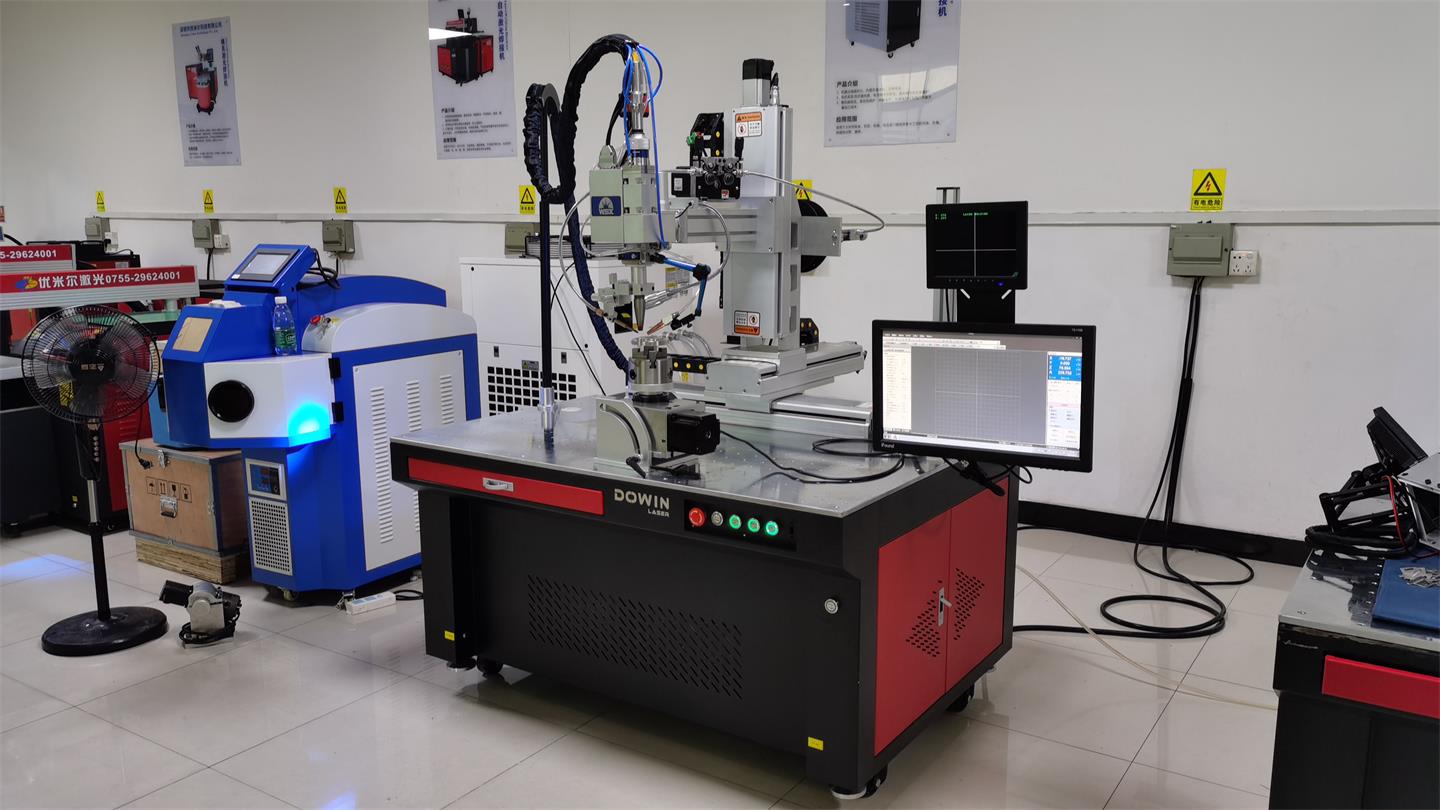
An automatic fiber laser welding machine is designed for manufacturers that need faster, more consistent welding with less manual operation. Compared with handheld laser welding, an automatic system can integrate motion control, fixtures, robotic arms, or CNC platforms to produce repeatable welds.
For businesses considering an investment, the key question is not simply which machine has the highest laser power. The right system should match your materials, workpiece size, welding method, production volume, and automation requirements.
What Is an Automatic Fiber Laser Welding Machine?
An automatic fiber laser welding machine uses a fiber laser source to join metal components while automated motion controls the welding path.
Depending on the configuration, the system may include:
-
Fiber laser source
-
Automatic welding head
-
CNC or motion platform
-
Motorized worktable
-
Welding fixture
-
Industrial control system
-
Protective enclosure
-
Cooling system
-
Optional vision or monitoring system
The workpiece can be positioned automatically, allowing the same welding operation to be repeated with consistent parameters.
Why Choose Automatic Laser Welding?
1. Consistent Welding Quality
Manual welding quality can vary between operators. An automated system follows a programmed welding path, helping maintain consistent weld position, speed and energy.
This is particularly valuable for repetitive production.
2. Higher Production Efficiency
Once the machine is properly programmed and fixtured, it can continuously weld multiple workpieces with less manual intervention.
This can reduce handling time and improve production throughput.
3. Precise Heat Control
Fiber laser welding produces concentrated heat with a relatively small heat-affected zone.
This can help reduce:
-
Thermal deformation
-
Excessive grinding
-
Material discoloration
-
Post-welding finishing
4. Lower Dependence on Manual Skills
Automation does not completely eliminate the need for skilled operators, but it can reduce the amount of manual welding required for repetitive jobs.
The operator can focus more on setup, inspection, parameter adjustment and production management.
What Materials Can Automatic Fiber Laser Welding Handle?
Fiber laser welding is commonly used for metals such as:
-
Stainless steel
-
Carbon steel
-
Mild steel
-
Aluminum
-
Galvanized steel
-
Copper
-
Brass
-
Titanium
However, weldability depends on the specific alloy, thickness, joint design and laser configuration.
Materials such as aluminum and copper may require more careful parameter selection because of their high reflectivity and thermal conductivity.
How Much Laser Power Do You Need?
Laser power should be selected according to material thickness and production requirements.
Typical industrial configurations may include 1,000W, 1,500W, 2,000W, 3,000W or higher fiber laser sources.
As a general direction:
-
1,000–1,500W: Thin sheet metal and lighter-duty applications
-
2,000W: General industrial welding and medium-thickness materials
-
3,000W+: Higher-speed production and thicker materials
These are only starting points. Welding speed, joint design, material type, laser spot size and filler wire requirements can significantly affect the actual result.
Automatic Welding vs Handheld Laser Welding
| Feature | Automatic Laser Welding | Handheld Laser Welding |
|---|---|---|
| Operation | Programmed | Operator controlled |
| Repeatability | Very high | Depends on operator |
| Production volume | Medium to high | Low to medium |
| Flexibility | Best for repeat jobs | Excellent for varied jobs |
| Labor requirement | Lower | Higher |
| Initial investment | Higher | Lower |
| Best application | Mass production | Repair, customization, small batches |
If you frequently weld the same components, automation can provide a major productivity advantage.
If every workpiece is different, a handheld laser welder may be more flexible.
What Should You Check Before Buying?
Welding Area
Make sure the working area is large enough for your products. A machine that is too small can limit future production.
Automation Method
Ask whether the machine uses a CNC platform, automatic rotary table, robotic arm, or another motion system.
The right choice depends on the shape and production process.
Welding Fixture
A good fixture is critical for automated welding.
It must hold the workpiece accurately and consistently. Poor positioning can result in inconsistent weld seams even when the laser parameters are correct.
Laser Source
Check the laser source manufacturer, rated power, expected service life and available technical support.
Welding Head
The welding head affects beam delivery, focusing and process stability. For automated production, compatibility between the welding head and motion system is particularly important.
Software and Controls
The control system should make it easy to:
-
Create welding programs
-
Adjust laser parameters
-
Control movement
-
Save production recipes
-
Repeat previous jobs
After-Sales Support
Automation makes technical support especially important.
Before purchasing, confirm the availability of installation, operator training, spare parts and remote troubleshooting.
Is an Automatic Fiber Laser Welder Worth the Investment?
For businesses with repetitive welding jobs, an automatic fiber laser welding machine can provide advantages in productivity, consistency and labor efficiency.
However, automation makes the most sense when production volume is high enough to justify the additional investment.
If your business mainly handles prototypes, repairs or highly customized parts, a handheld system may provide a better return.
Final Buying Advice
Before choosing an automatic fiber laser welding machine, define four things:
Material + Thickness + Workpiece Size + Production Volume
Then ask suppliers for actual welding samples using your materials and products.
Do not select a machine based only on laser power or advertised welding speed. A suitable laser source, welding head, motion system, fixture and control software must work together to produce the quality and productivity your business needs.
For manufacturers with repetitive metal welding requirements, a properly configured automatic fiber laser welding system can be a practical step toward more efficient and consistent production.
Post time: Aug-28-2026
