
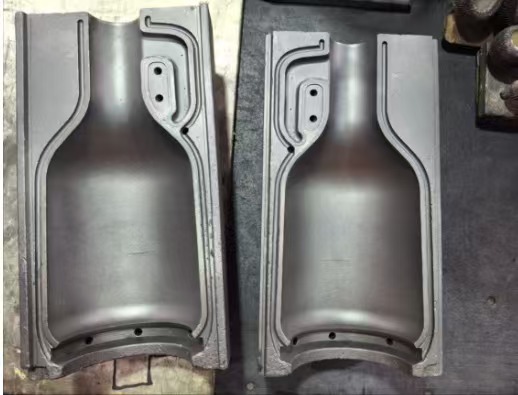
Mold cleaning is a critical part of manufacturing in industries such as plastic injection molding, die casting, rubber molding, and stamping. During production, molds gradually accumulate carbon deposits, release agents, oil, rust, oxidation, and other contaminants that can affect product quality and reduce production efficiency.
Traditional cleaning methods, including chemical cleaning, sandblasting, and manual polishing, can be time-consuming, environmentally harmful, or even damage precision mold surfaces. A pulsed laser cleaning machine offers a modern, non-contact, and highly precise alternative. Thanks to its controlled energy output and minimal heat impact, it has become one of the most effective solutions for cleaning high-value molds.
What Is a Pulsed Laser Cleaning Machine?
A pulsed laser cleaning machine emits high-energy laser pulses in extremely short durations. These pulses remove contaminants through laser ablation while minimizing heat transfer to the underlying material.
Unlike continuous laser cleaning systems, pulsed lasers deliver energy only in short bursts, making them ideal for cleaning delicate surfaces without causing thermal deformation.
This technology allows manufacturers to remove contamination while preserving the original dimensions and finish of the mold.
1. Non-Contact Cleaning Prevents Mold Damage
One of the biggest advantages of pulsed laser cleaning is that it is a completely non-contact process.
Unlike abrasive blasting or mechanical grinding, there is:
- No physical friction
- No tool wear
- No scratches on the mold surface
- No damage to precision cavities
This is especially important for molds with fine engraving, polished surfaces, or complex geometries.
2. Minimal Heat-Affected Zone
Precision molds require strict dimensional accuracy. Excessive heat during cleaning can cause deformation or alter the hardness of the mold steel.
A pulsed laser cleaning machine features:
- Extremely short pulse durations
- Precise energy control
- Very small heat-affected zone (HAZ)
- Low thermal stress on the base material
This makes it suitable for cleaning high-value molds made from H13, P20, S136, SKD61, and other tool steels.
3. Excellent Cleaning Precision
Molds often contain small grooves, sharp corners, textured surfaces, and intricate cavities that are difficult to clean using traditional methods.
Pulsed laser cleaning provides:
- Precise removal of contaminants
- Accurate cleaning of complex structures
- No damage to engraved textures
- Consistent cleaning results
The laser can reach areas that are difficult to access with brushes or abrasive tools.
4. Effective Removal of Various Contaminants
A pulsed laser cleaning machine can efficiently remove many types of contamination, including:
- Carbon deposits
- Mold release agents
- Oil and grease
- Rust
- Oxide layers
- Paint residues
- Plastic residue after molding
The cleaning process restores the mold surface without affecting the base material.
5. No Chemicals or Abrasive Media Required
Traditional mold cleaning often relies on chemical solvents or abrasive materials that generate waste and require disposal.
Pulsed laser cleaning requires:
- No chemical cleaners
- No sand or abrasive media
- No water
- No consumable blasting materials
This makes the process more environmentally friendly while reducing operating costs.
6. Reduced Mold Downtime
Production downtime directly affects manufacturing efficiency.
Because pulsed laser cleaning is fast and highly targeted, manufacturers can:
- Clean molds more quickly
- Reduce maintenance time
- Return molds to production faster
- Improve equipment utilization
Some molds can even be cleaned without complete disassembly, further increasing productivity.
7. Lower Long-Term Maintenance Costs
Although a pulsed laser cleaning machine requires an initial investment, it can significantly reduce long-term maintenance expenses.
Cost-saving benefits include:
- Longer mold service life
- Reduced mold replacement frequency
- Lower labor costs
- Fewer consumables
- Less polishing and rework
Over time, these savings can provide an excellent return on investment.
8. Suitable for Various Mold Types
Pulsed laser cleaning machines are widely used for cleaning:
Injection Molds
- Plastic injection molds
- Precision electronic component molds
- Automotive plastic molds
Die Casting Molds
- Aluminum die casting molds
- Zinc alloy molds
- Magnesium alloy molds
Rubber and Silicone Molds
- Tire molds
- Rubber product molds
- Silicone molds
Stamping and Forging Dies
- Punching dies
- Forming dies
- Forging tools
The technology is suitable for both routine maintenance and precision cleaning before repair or coating.
Pulsed Laser Cleaning vs Traditional Mold Cleaning
| Feature | Pulsed Laser Cleaning | Traditional Cleaning |
|---|---|---|
| Contact with mold | Non-contact | Physical contact or chemicals |
| Surface damage | Minimal | Possible scratches or wear |
| Heat impact | Very low | May be higher |
| Cleaning precision | Excellent | Moderate |
| Chemical use | None | Often required |
| Consumables | None | Sand, brushes, chemicals |
| Environmental impact | Low | Higher |
| Maintenance cost | Lower over time | Higher |
Industries That Benefit from Pulsed Laser Mold Cleaning
Pulsed laser cleaning is widely used in:
- Automotive manufacturing
- Plastic injection molding
- Consumer electronics
- Medical device production
- Aerospace manufacturing
- Household appliance manufacturing
- Precision engineering
These industries depend on clean molds to maintain consistent product quality and reduce production defects.
Conclusion
A pulsed laser cleaning machine is an ideal solution for mold cleaning because it combines precision, efficiency, and safety in a single process. Its non-contact operation, minimal heat input, and ability to remove contaminants without damaging the mold make it superior to many traditional cleaning methods.
For manufacturers seeking to extend mold life, reduce maintenance costs, improve product quality, and support environmentally friendly production, pulsed laser cleaning technology offers a reliable and cost-effective solution for modern mold maintenance.
Post time: Jul-13-2026
