
Introduction
Molds are critical assets in industries such as injection molding, die casting, stamping, and plastic manufacturing. Over time, molds can develop wear, erosion, cracks, or dimensional damage that affects product quality and production efficiency.
Traditional repair methods often involve extensive machining, material removal, or even complete mold replacement. Today, more manufacturers are turning to mold laser welding as a cost-effective and highly accurate repair solution.
This article explains why mold laser welding is ideal for precision mold repair and how it helps manufacturers extend mold life while maintaining production quality.
What Is Mold Laser Welding?
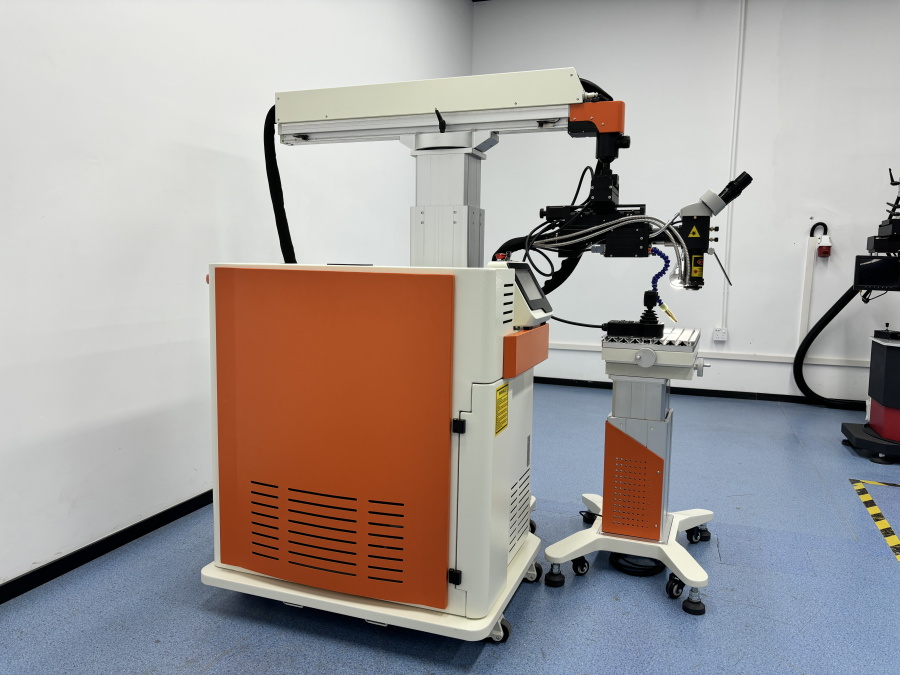
Mold laser welding is a repair process that uses a concentrated laser beam to melt filler material and damaged mold surfaces together. The laser generates precise heat only where needed, allowing operators to repair localized defects without affecting the surrounding mold structure.
This technology is widely used for repairing:
-
Worn mold edges
-
Cracks and fractures
-
Corrosion damage
-
Machining errors
-
Parting line defects
-
Missing material
-
Surface imperfections
Because of its precision, laser welding has become a preferred method for high-value mold repair.
Minimal Heat-Affected Zone
One of the biggest advantages of mold laser welding is its extremely small heat-affected zone.
Traditional welding methods often transfer heat throughout the mold, which can cause:
-
Distortion
-
Warping
-
Residual stress
-
Dimensional changes
Laser welding concentrates energy on a tiny repair area, minimizing thermal impact on surrounding surfaces.
This is especially important for molds with tight tolerances where even minor deformation can affect final product quality.
Exceptional Repair Accuracy
Modern mold manufacturing requires extremely precise dimensions. Even small defects can lead to production issues, flash formation, or poor surface finishes.
Mold laser welding allows operators to:
-
Repair tiny defects accurately
-
Restore critical dimensions
-
Build up worn areas layer by layer
-
Control welding depth precisely
The high level of control makes laser welding ideal for precision mold restoration.
Suitable for Complex Mold Structures
Many molds contain:
-
Deep cavities
-
Narrow corners
-
Fine engraving details
-
Complex geometries
Traditional welding techniques often struggle to access these areas without causing additional damage.
Laser welding systems can focus energy into small and difficult-to-reach locations, allowing repairs that would be challenging using conventional methods.
Extends Mold Service Life
Replacing large industrial molds can be extremely expensive and time-consuming.
By repairing localized damage instead of replacing the entire mold, manufacturers can:
-
Extend mold lifespan
-
Reduce tooling costs
-
Maintain production schedules
-
Improve return on tooling investments
For many companies, laser welding significantly lowers long-term mold maintenance expenses.
High-Quality Surface Restoration
Surface quality is critical in mold manufacturing because it directly affects the appearance and dimensional accuracy of molded products.
Mold laser welding produces:
-
Smooth repair areas
-
Strong metallurgical bonding
-
Minimal porosity
-
Reduced finishing requirements
After polishing and finishing, repaired areas often blend seamlessly with the original mold surface.
Compatible with Various Mold Materials
A major reason why mold laser welding is ideal for precision mold repair is its compatibility with many common mold materials, including:
-
Tool steel
-
H13 steel
-
P20 steel
-
Stainless steel
-
Alloy steel
-
Die-casting mold materials
This versatility allows manufacturers to use the same repair technology across multiple mold types.
Reduces Production Downtime
Unexpected mold damage can halt production and create costly delays.
Laser welding helps reduce downtime by enabling:
-
Faster repairs
-
On-site maintenance in many cases
-
Reduced machining requirements
-
Quicker mold restoration
The ability to return molds to service rapidly helps manufacturers maintain production efficiency.
Environmentally Friendly Repair Solution
Compared with replacing molds or performing extensive machining operations, laser welding is a more sustainable repair method.
Benefits include:
-
Reduced material waste
-
Lower energy consumption
-
Fewer replacement components
-
Extended tooling life
These advantages support both cost reduction and environmental goals.
Common Applications of Mold Laser Welding
Precision mold laser welding is widely used in:
Injection Mold Repair
Repairing wear, gate damage, and cavity defects.
Die Casting Mold Restoration
Restoring erosion and thermal fatigue damage.
Plastic Mold Maintenance
Rebuilding worn surfaces and correcting dimensional issues.
Stamping Die Repair
Fixing chipped edges and restoring tooling geometry.
Manufacturing Defect Correction
Repairing machining errors without remanufacturing the mold.
Choosing the Right Mold Laser Welding Machine
When selecting equipment, manufacturers should consider:
-
Laser power stability
-
Welding precision
-
Microscope observation system
-
Flexible worktable design
-
Cooling system performance
-
Ease of operation
-
Technical support availability
A high-quality mold laser welding machine can significantly improve repair efficiency and consistency.
Conclusion
Understanding why mold laser welding is ideal for precision mold repair helps manufacturers make better decisions about tooling maintenance and repair strategies.
With its high accuracy, minimal heat distortion, strong weld quality, and ability to restore complex mold surfaces, laser welding has become one of the most effective solutions for modern mold repair.
By extending mold life, reducing downtime, and lowering replacement costs, mold laser welding delivers substantial value for manufacturers across a wide range of industries.
Post time: Jun-18-2026
