
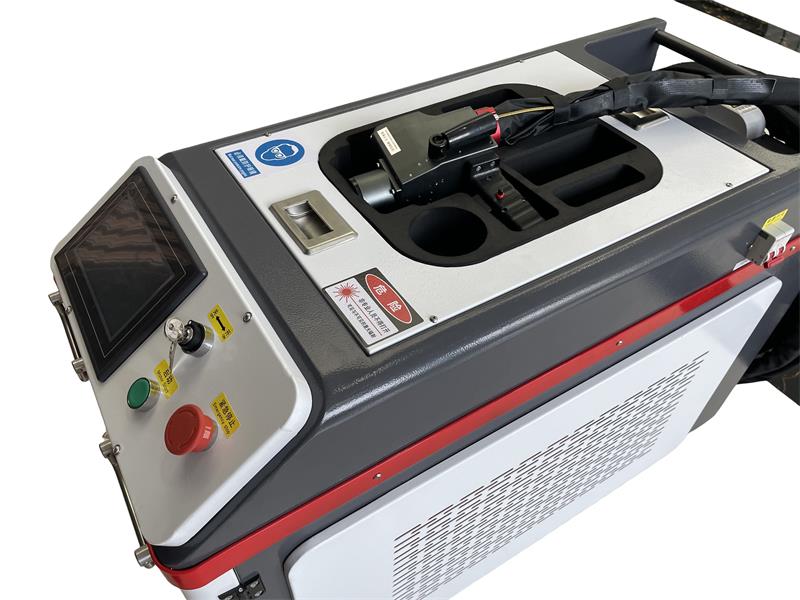
Laser cleaning is often marketed as a “universal solution.” That’s misleading.
The truth is more interesting—and more powerful:
Laser cleaning is not universal. It is selective. And that selectivity is exactly why it’s transforming industry.
Instead of asking “What materials can be cleaned?”, the real question is:
“Which materials interact with laser energy in a controllable way?”
This shift in thinking changes everything.
The Core Principle: It’s Not About the Material—It’s About Energy Behavior
Laser cleaning works through energy absorption contrast:
- Contaminants (rust, paint, oil) absorb energy → vaporize
- Substrate (base material) reflects or resists energy → remains intact
This is why the technology can clean without damage. It’s not magic—it’s physics.
In fact, most contaminants are darker and absorb more energy, while many base materials reflect or tolerate higher temperatures, enabling selective removal .
The Full Spectrum: Materials That Can Be Laser Cleaned
Laser cleaning is far more versatile than most people realize. It spans both industrial-grade metals and delicate heritage materials.
1. Metals: The Foundation of Laser Cleaning
Metals are where laser cleaning performs best—and where it is most widely used.
Common cleanable metals include:
- Steel and stainless steel
- Aluminum and alloys
- Copper, brass, bronze
- Titanium and high-performance alloys
Applications:
- Rust removal
- Oxide and heat tint cleaning
- Paint stripping
- Surface preparation before welding or coating
Why metals work so well:
- High reflectivity protects the base layer
- Contaminants absorb more energy than the metal
This creates natural selectivity, making metals the ideal candidate .
2. Stone, Concrete, and Ceramics: Precision Without Destruction
Laser cleaning is widely used in:
- Historical restoration
- Architecture maintenance
- Monument preservation
It can remove:
- Pollution deposits
- Biological growth (moss, algae)
- Graffiti
Unlike sandblasting, laser cleaning:
- Preserves surface texture
- Reaches micro-cracks
- Avoids structural erosion
This is why it’s becoming standard in cultural heritage conservation .
3. Wood and Organic Materials: High Risk, High Precision
Yes, wood can be laser cleaned—but this is where things get nuanced.
Applications:
- Antique furniture restoration
- Smoke and soot removal
- Paint and varnish stripping
However:
- Wood is heat-sensitive
- Incorrect settings cause burning or carbonization
This requires:
- Low power
- Short pulses
- Careful calibration
Laser cleaning here is not a tool—it’s a skill.
4. Plastics, Rubber, and Composites: Controlled Possibility
Laser cleaning works on certain polymers, including:
- ABS
- PVC
- PET
- Industrial rubber molds
Typical uses:
- Mold cleaning
- Coating removal
- Surface preparation
But here’s the catch:
Polymers have low thermal thresholds, meaning:
- Too much energy = melting or deformation
So laser cleaning is possible—but only with tight parameter control .
5. Glass and Specialized Surfaces: Niche but Powerful
Laser cleaning can also be applied to:
- Glass (in specific conditions)
- Chrome coatings
- Composite materials
However, effectiveness depends on:
- Surface reflectivity
- Contaminant absorption
In some cases, even paper or delicate artifacts can be cleaned—if the energy difference is sufficient.
The Hidden Rule: Not All Materials Are Equal
Here’s the uncomfortable truth most articles avoid:
Just because a material can be laser cleaned doesn’t mean it should be.
Materials That Require Extreme Caution:
- Thin plastics (risk of melting)
- Organic fibers and paper (risk of burning)
- Highly reflective alloys (low efficiency)
- Sensitive coatings (may be unintentionally removed)
Some materials may even be unsuitable depending on conditions .
The Real Limitation Is Not the Material—It’s the Parameters
Laser cleaning success depends on:
- Wavelength
- Pulse duration
- Energy density (fluence)
- Scanning speed
The same material can be:
- Safely cleaned
- Slightly altered
- Completely damaged
…depending entirely on settings.
This is why experienced operators outperform beginners—even with the same machine.
Industry Insight: Why This Matters More Than Ever
Global manufacturing is shifting toward:
- Precision engineering
- Zero-waste processes
- Non-contact technologies
Laser cleaning fits perfectly into this evolution because it:
- Eliminates consumables
- Reduces environmental impact
- Enables automation
It’s already used across:
- Aerospace
- Automotive
- Electronics
- Cultural preservation
And the list keeps expanding.
Breaking the Old Mindset
Traditional thinking:
“Use the strongest method to remove contamination.”
Laser-era thinking:
“Use the smartest energy interaction to remove only what you don’t want.”
This is not just cleaning.
This is controlled material interaction.
Final Insight: The Future Is Material-Agnostic
The future of laser cleaning is not about expanding the list of materials.
It’s about:
- Smarter parameter control
- AI-assisted calibration
- Adaptive cleaning systems
In that world, the question “What materials can be cleaned?” becomes obsolete.
Because eventually, the answer will be:
“Any material—if you understand it well enough.”
Post time: Apr-24-2026
