
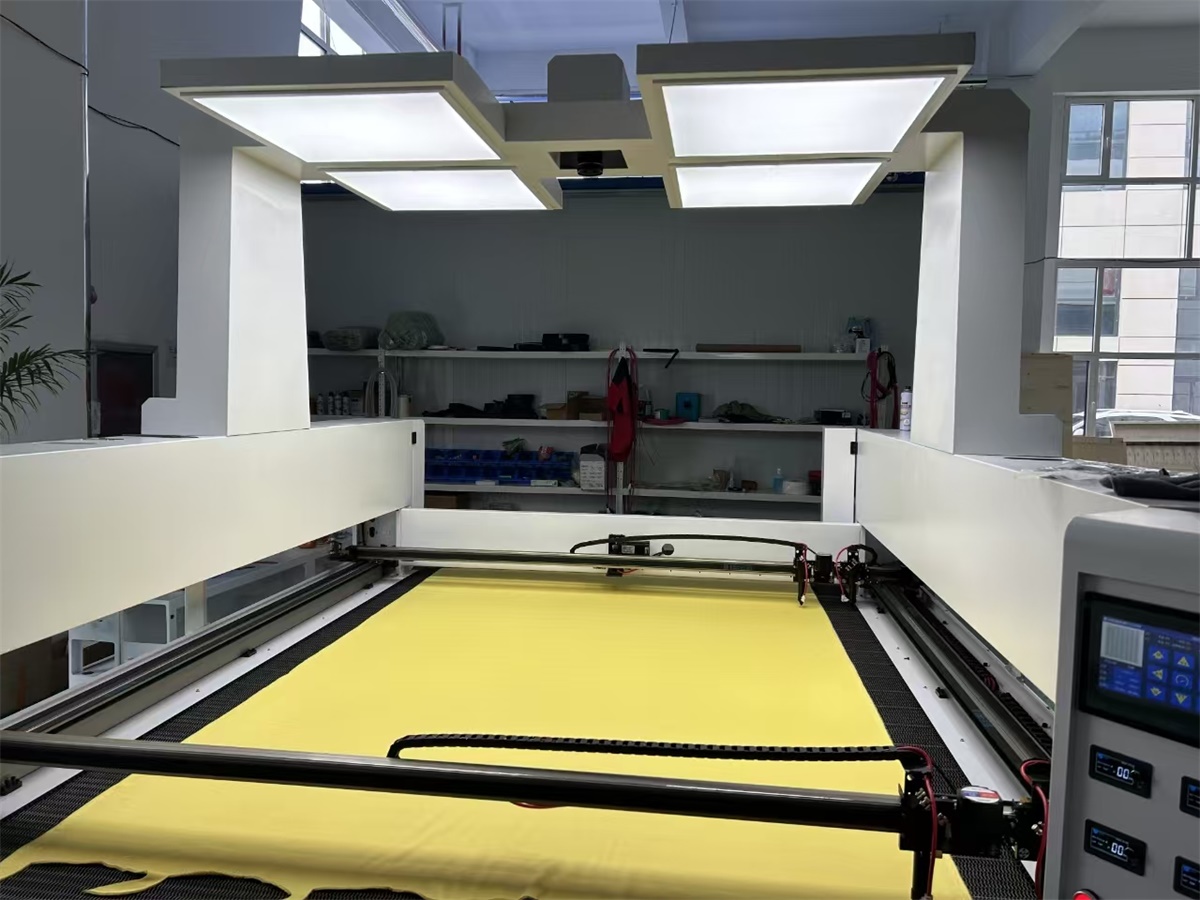
Confused which wattage CO2 laser to buy for fabric cutting? Read our guide covering hobby, small business and industrial textile cutting for polyester, cotton, felt, denim and multi-layer fabrics.
keywords: CO2 laser for fabric cutting, laser cutter wattage for textiles, polyester laser cutting machine, fabric laser cutter for small business, industrial textile laser cutter
If you are shopping for a CO2 laser cutter for textiles, the first question is always: how many watts do I actually need for cutting fabric?
Many buyers overspend on a high-power laser they will never fully use. Others buy a low-watt desktop unit, only to find it is too slow, burns delicate fabric, or cannot cut stacked layers for production.
Fabric cutting is different from cutting wood or acrylic. Textiles are thin and heat-sensitive. For most fabrics, you do not run the laser at full power. You use lower power paired with high speed, good air assist and proper exhaust to get clean, sealed edges without charring.
Below we break down recommended CO2 laser wattages by use case and fabric type, so you can pick the right machine for your workshop or factory.
Quick Power Overview for Fabric CO2 Lasers
- 40W CO2: Hobby, crafts, single-layer thin fabric, labels, felt
- 60W CO2: Best all-rounder for small businesses, apparel patches, light to medium fabric
- 80W–100W CO2: Standard production machine, denim, canvas, fleece, small stacks
- 130W–150W CO2: High-volume conveyor cutting, thick fabrics, multi-layer stacking, upholstery
- 180W+ CO2: Heavy industrial textile production, large roll feed cutting, thick composite fabrics
40W CO2 Laser: Hobby & Light Craft Fabric Cutting
A 40W CO2 laser works great for hobbyists, makers, home crafters and small custom projects.
✅ Best for:
- Thin polyester, satin, lining, lace, lightweight cotton
- Felt patches, embroidery patches, single-layer apparel blanks
- Small signage crafts, non-production low-volume work
⚠️ Limitations:
- Slow for thick fabric or stacked layers
- Easy to burn cotton and natural fibres if speed is not tuned
- Not suitable for continuous daily production
Tip: For thin polyester on a 40W laser, run 20–35% power at high speed with air assist on. Polyester melts and self-seals, which stops fraying — one of the biggest benefits of laser cutting synthetic fabric.
60W CO2 Laser: The Most Popular Small Business Choice
If you run a custom apparel shop, print-on-demand business, embroidery studio or small textile workshop, 60W is our top recommendation for fabric cutting.
✅ Best for:
- Polyester sportswear, spandex, nylon, woven labels
- Medium cotton, fleece, light denim
- Single layer cutting plus occasional 2–3 layer stacks
- Balanced speed, cost and cutting quality
A 60W CO2 gives you extra headroom. You can run faster cutting speeds, reduce heat buildup and avoid burnt edges compared to a 40W machine. This is the sweet spot for most textile startups that cut 50–200 pieces per day.
80W – 100W CO2 Laser: Standard Commercial Textile Cutting
Once you move into regular production, 80W or 100W CO2 lasers become the workhorse for fabric.
✅ Best for:
- Medium-heavy fabrics: denim, canvas, twill, upholstery fabric
- Fleece, thick felt, neoprene
- Regular multi-layer stacking (3–6 layers depending on fabric density)
- Conveyor feed systems for roll fabric
This power range is widely used by garment factories, bag makers, shoe upper workshops and home textile manufacturers. Higher wattage lets you maintain clean cuts at faster line speeds, which directly boosts daily output and lowers cost per piece.
130W – 150W CO2 Laser: High-Volume Industrial Fabric Cutting
For serious textile production with auto conveyor tables and continuous roll feeding, choose 130W to 150W CO2.
✅ Best for:
- Large-format roll fabric cutting
- Multiple stacked layers of cotton, canvas, denim
- Automotive textiles, furniture upholstery, outdoor technical fabrics
- Mass production clothing, masks, protective textile components
These machines usually come with water cooling, strong exhaust, high-flow air assist and nesting software. They are built to run long shifts without power drift or overheating issues.
180W+ CO2 Laser: Heavy-Duty Thick & Composite Textiles
180W and above is reserved for specialised heavy textile jobs: thick carpet, heavy canvas, composite laminated fabrics, non-woven thick filter materials.
Most apparel and soft goods businesses do not need this much power. It adds cost, higher electricity consumption and larger exhaust requirements.
Fabric Type Cheat Sheet
| Fabric | Recommended CO2 Power | Notes |
|---|---|---|
| Polyester, spandex, sportswear | 40–100W | Melts and seals edges; ideal for laser cutting |
| Light cotton, muslin | 40–60W | Natural fibre, easy to char; use high speed |
| Felt | 40–80W | Cuts cleanly, edge hardens slightly |
| Denim, canvas | 80–150W | Dense fabric; higher power for faster cuts |
| Lace, silk, thin lining | 40–60W | Delicate; low power, fast speed, sharp focus |
| Upholstery / multi-layer stacks | 100–150W | Conveyor table recommended |
Key Factors Besides Laser Wattage
Wattage is only one piece of the puzzle. Even a 100W laser will produce bad fabric cuts if these are wrong:
- Air assist: Critical. Compressed air blows away melted residue and reduces burning.
- Exhaust & fume extraction: Cotton, polyester and blends release fumes. Poor extraction leaves sticky residue and fire risk.
- RF vs glass tube CO2: RF metal tube lasers deliver more consistent low-power output, better for fine fabric cutting; glass tubes are cheaper for budget setups.
- Cutting table: Honeycomb table works best for fabric to stop backside burning.
- Test scraps first: Every dye, coating and fabric blend reacts differently. Always test a scrap before batch production.
Final Recommendation
- Hobby / craft: 40W CO2
- Small custom apparel, patches, labels: 60W CO2
- Commercial garment shop, denim, canvas: 80–100W CO2
- Factory roll-to-roll conveyor production: 130–150W CO2
Fabric laser cutting rewards speed and control more than raw power. For 90% of textile businesses, a 60W or 100W CO2 laser will deliver the best ROI.
If you are ready to upgrade, talk to our team to match a CO2 laser, working area and conveyor system to your fabric types and daily production volume.
Extra assets you can use:
- Title variant for Google Ads: What Watt CO2 Laser Cuts Fabric Best?
- FAQ block (for rich snippet):
Q: Can a 40W CO2 laser cut polyester fabric? A: Yes. A 40W CO2 can cut single-layer polyester, felt and thin cotton for craft work. It is not ideal for heavy or stacked fabric production.
Q: Does laser cutting fabric stop fraying? A: For synthetic fabrics like polyester, nylon and spandex, laser heat melts and seals cut edges to prevent fraying. Natural fibres such as cotton will still fray unless you add post-treatment.
Post time: Oct-21-2026
