
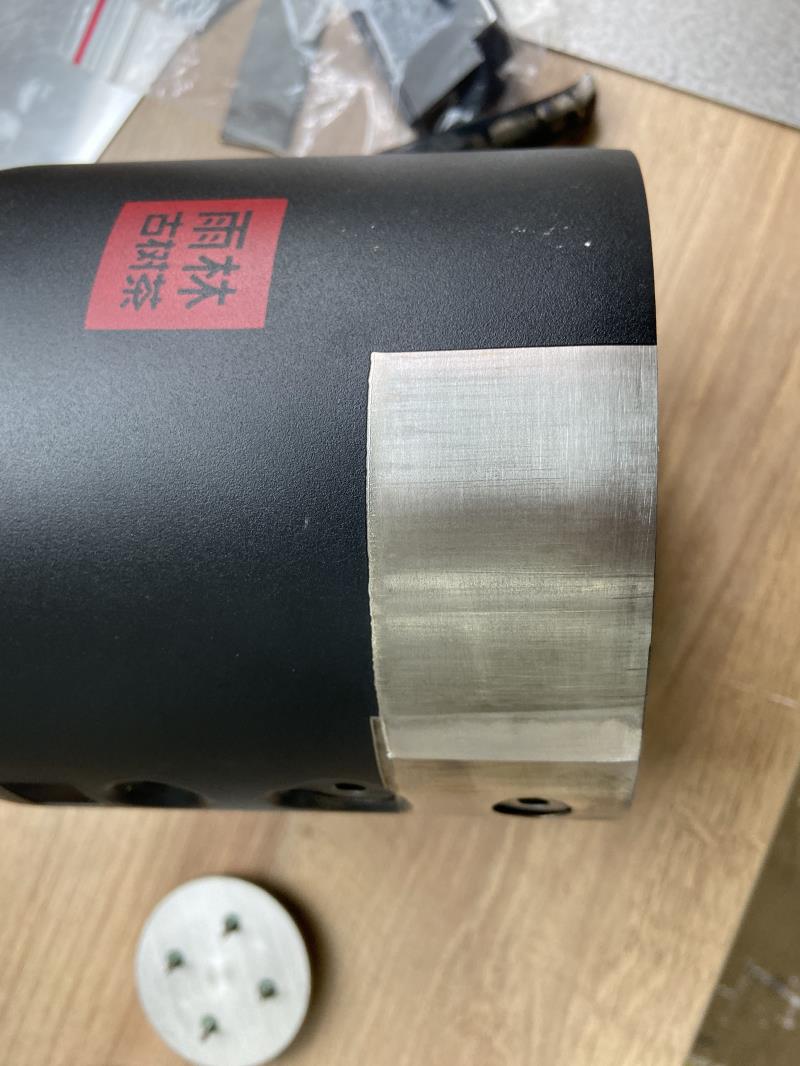
Rethinking Paint Removal in Modern Industry
Paint removal has traditionally been treated as a messy, secondary task—necessary but inefficient. Whether in manufacturing, maintenance, or restoration, removing coatings has relied on chemicals, abrasives, or heat, each bringing its own problems:
- Surface damage from blasting
- Toxic waste from chemical stripping
- Inconsistent results from manual labor
As industries move toward precision, automation, and sustainability, these methods are becoming outdated.
Laser paint removal is not just an alternative—it represents a shift toward controlled, intelligent surface processing.
What Is Laser Paint Removal?
Laser paint removal is a non-contact cleaning process that uses high-energy laser beams to strip paint, coatings, or residues from a surface without damaging the underlying material.
Instead of physically scraping or chemically dissolving paint, laser systems use pulsed energy to break the bond between the coating and the substrate.
In simple terms:
It removes paint by targeting the coating itself—not the surface beneath it.
How Does Laser Paint Removal Work?
The process relies on differences in how materials absorb laser energy.
1. Selective Absorption
Paint layers typically absorb laser energy more efficiently than metals or other base materials.
- Paint heats rapidly
- Underlying substrate reflects or dissipates energy
2. Thermal Expansion and Micro-Ablation
Short laser pulses create:
- Rapid heating of the coating
- Micro-expansion and cracking
- Vaporization or ejection of paint particles
3. Layer-by-Layer Removal
Laser systems can remove coatings gradually:
- Top layers are removed first
- Deeper layers are targeted in controlled passes
- The process stops precisely at the substrate
This level of control is impossible with traditional methods.
Why Laser Paint Removal Is Gaining Momentum
1. Precision Without Damage
Traditional methods often remove both paint and part of the base material.
Laser systems:
- Preserve surface integrity
- Avoid scratches and deformation
- Maintain dimensional accuracy
This is critical for high-value components.
2. Environmental Compliance
Chemical paint stripping produces:
- Hazardous waste
- Toxic fumes
- Disposal challenges
Laser removal eliminates:
- Chemicals
- Secondary pollution
- Water usage
As regulations tighten globally, this advantage becomes decisive.
3. Lower Long-Term Costs
Although initial investment is higher, operational savings include:
- No consumables
- Reduced labor
- Minimal maintenance
Over time, the cost per removal decreases significantly.
4. Automation Compatibility
Laser systems integrate easily with:
- Robotic arms
- Production lines
- Digital control systems
This enables:
- High repeatability
- Scalable operations
- Reduced human error
Key Applications of Laser Paint Removal
1. Automotive Industry
Used for:
- Paint stripping before repainting
- Surface preparation for welding
- Selective coating removal in repairs
2. Aerospace Sector
Aircraft components require:
- Precise coating removal
- No structural damage
Laser systems meet strict safety and quality standards.
3. Industrial Manufacturing
Applications include:
- Pre-treatment before coating or bonding
- Removal of protective layers
- Cleaning production tools and molds
4. Restoration and Heritage Conservation
Laser removal is ideal for:
- Historic buildings
- Sculptures
- Delicate surfaces
It preserves original materials while removing unwanted coatings.
Power Levels: Choosing the Right System
Laser paint removal systems vary by power:
- Low power (100W–300W):
Precision tasks, thin coatings, delicate materials - Mid power (500W–1000W):
General industrial applications - High power (1000W+):
Thick coatings, large-scale operations
Important:
Higher power increases speed—but reduces control.
The best results come from matching power to application.
Limitations and Realistic Expectations
Laser paint removal is powerful—but not universal.
Challenges include:
- Thick or multi-layer coatings may require multiple passes
- Initial equipment cost is higher
- Process requires parameter optimization
- Slower than blasting for large, non-sensitive surfaces
Understanding these limits is essential for effective use.
A Contrarian Perspective: Paint Removal Is Not Just Removal
Most industries treat paint removal as a cost center.
This mindset is flawed.
In reality, it is a critical step that determines downstream quality:
- Surface preparation affects coating adhesion
- Residual contamination impacts product lifespan
- Inconsistent removal leads to defects
Laser technology transforms paint removal into a controlled, repeatable process—closer to manufacturing than maintenance.
Future Trends: Intelligent Surface Processing
Laser paint removal is evolving toward:
- AI-driven parameter optimization
- Real-time surface monitoring
- Fully automated cleaning systems
This will enable:
- Adaptive cleaning based on material condition
- Integration with smart factories
- Higher efficiency with lower human input
Conclusion: From Destructive Cleaning to Precision Control
Laser paint removal redefines how coatings are removed:
- No physical contact
- No chemical waste
- Minimal surface impact
It shifts the focus from removing paint to preserving material while achieving perfect cleanliness.
Final Insight:
The future of paint removal is not about speed or force—it is about precision, control, and understanding exactly what should—and should not—be removed.
Post time: Apr-22-2026
