
The Industrial Cleaning Technology Reshaping Modern Manufacturing
For decades, industrial cleaning relied on methods that were dirty, inefficient, and damaging. Sandblasting created massive dust pollution. Chemical cleaning generated hazardous waste. Grinding damaged metal surfaces while increasing labor costs.
Today, a new generation of manufacturers is abandoning traditional cleaning methods in favor of continuous laser cleaning technology.
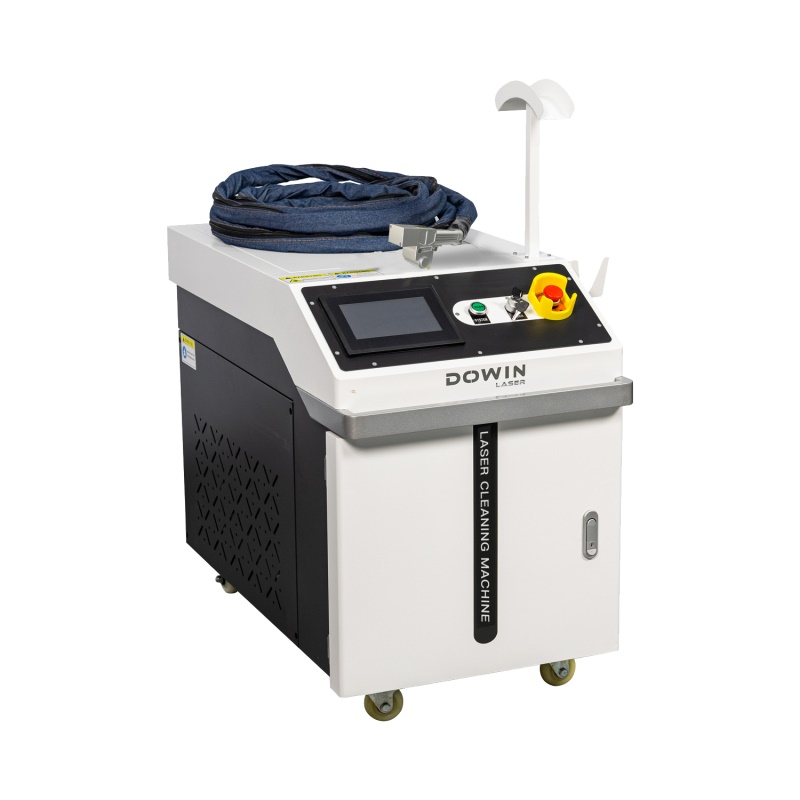
A continuous laser cleaning machine is not simply another industrial cleaning tool. It is a high-energy surface treatment system designed for speed, automation, and large-scale industrial operation. As factories worldwide accelerate toward green manufacturing and intelligent automation, continuous laser cleaning is becoming one of the fastest-growing segments in industrial laser technology.
Recent market research shows that the global continuous laser cleaning machine market exceeded hundreds of millions of dollars in value in 2025 and is projected to maintain strong growth through 2034, driven by automotive, aerospace, shipbuilding, steel, and energy industries.
What Is a Continuous Laser Cleaning Machine?
A continuous laser cleaning machine uses a continuous-wave fiber laser beam to remove rust, paint, oil, oxide layers, coatings, and contaminants from material surfaces. Unlike pulsed laser systems that release energy in short bursts, continuous laser cleaners emit uninterrupted laser energy for high-speed cleaning performance.
The laser beam heats and vaporizes contaminants rapidly while minimizing physical contact with the substrate. This creates a non-abrasive, chemical-free cleaning process suitable for industrial environments requiring speed and consistency.
Continuous laser cleaning systems typically include:
- Fiber laser source
- Handheld or robotic cleaning head
- Galvanometer scanning system
- Water cooling system
- Intelligent control software
- Fume extraction system
Most industrial systems range from 1000W to 3000W power output, making them ideal for heavy-duty cleaning applications.
Why Continuous Laser Cleaning Is Growing So Fast
The rapid rise of continuous laser cleaning is not accidental. Manufacturing itself is changing.
Factories now prioritize:
- Automation
- Environmental compliance
- Lower labor costs
- Reduced consumables
- Surface precision
- Intelligent production systems
Traditional cleaning technologies struggle to meet these demands simultaneously.
Continuous laser cleaning solves multiple industrial problems at once:
- No chemical solvents
- No abrasive media
- Minimal secondary pollution
- Reduced maintenance costs
- High cleaning efficiency
- Easy automation integration
Industry analysts estimate the continuous laser cleaning market may exceed USD 2.5 billion globally by 2033 due to increasing demand for sustainable industrial processing.
How Continuous Laser Cleaning Works
The machine focuses high-energy laser light onto contaminated surfaces. Rust, paint, grease, or oxide layers absorb the laser energy faster than the underlying metal.
This rapid energy absorption causes contaminants to:
- Vaporize
- Peel away
- Fracture thermally
- Detach from the substrate
Because the process is non-contact, there is no mechanical wear on the surface like traditional grinding or blasting.
Continuous laser systems are particularly effective for:
- Thick rust layers
- Large-area cleaning
- Industrial-scale stripping
- High-speed processing
Compared with pulsed laser cleaning, continuous systems emphasize cleaning speed and production efficiency rather than ultra-fine precision.
Main Applications of Continuous Laser Cleaning Machines
Rust Removal
Rust removal is the most common application for continuous laser cleaning systems.
Industries such as shipbuilding, steel fabrication, railway maintenance, and heavy machinery manufacturing use high-power continuous lasers to clean large corroded surfaces efficiently.
Typical Rust Removal Applications:
- Steel structures
- Construction equipment
- Pipelines
- Agricultural machinery
- Industrial tanks
- Automotive frames
Unlike sandblasting, laser rust removal reduces substrate damage and eliminates abrasive waste.
Paint Removal and Surface Stripping
Continuous laser cleaning is widely used for removing:
- Paint coatings
- Powder coatings
- Protective films
- Surface contaminants
This application is especially important in:
- Automotive refurbishment
- Aerospace maintenance
- Ship repair
- Industrial equipment restoration
The automotive industry has become one of the largest adopters of laser cleaning technology because of its efficiency in pre-treatment and surface preparation. Some market reports estimate automotive applications account for nearly 38% of continuous laser cleaning deployments.
Weld Seam Cleaning
Welding quality depends heavily on surface cleanliness.
Continuous laser cleaning systems are increasingly used before and after welding to remove:
- Oxides
- Oil contamination
- Welding discoloration
- Residue layers
This improves weld penetration, appearance, and long-term durability.
In automated production lines, robotic laser cleaning systems can integrate directly into welding cells for real-time surface preparation.
Shipbuilding and Marine Industry
Marine environments create extreme corrosion problems. Traditional rust removal methods in shipyards are labor-intensive and environmentally problematic.
Continuous laser cleaning offers:
- Faster rust removal
- Reduced consumable costs
- Lower dust pollution
- Better worker safety
Shipyards increasingly adopt handheld continuous laser cleaners for deck cleaning, hull maintenance, and weld preparation.
Aerospace Applications
Aircraft maintenance requires highly controlled cleaning processes because excessive abrasion can damage expensive components.
Continuous laser cleaning is used for:
- Paint stripping
- Oxide removal
- Turbine cleaning
- Surface preparation
The aerospace sector values laser cleaning because it combines precision with reduced material damage.
Mold and Manufacturing Maintenance
Industrial molds accumulate carbon deposits, oil, and residue during production.
Continuous laser cleaning allows manufacturers to clean molds:
- Without disassembly
- Without abrasive damage
- With minimal downtime
This improves production efficiency while extending mold lifespan.
Continuous vs Pulsed Laser Cleaning
Many buyers confuse continuous and pulsed laser cleaning systems.
Continuous Laser Cleaning
Best for:
- High-speed cleaning
- Thick rust removal
- Large-area processing
- Industrial heavy-duty work
Advantages:
- Faster cleaning speed
- Lower cost per watt
- Higher efficiency for large surfaces
Pulsed Laser Cleaning
Best for:
- Precision cleaning
- Delicate materials
- Electronics industry
- Fine surface treatment
Advantages:
- Lower heat impact
- Better substrate protection
- Higher precision
Choosing the right system depends on material type, contamination thickness, and production requirements.
The Rise of Handheld Continuous Laser Cleaning Machines
Portable handheld laser cleaners are becoming one of the fastest-growing market segments because they combine mobility with industrial power.
Modern handheld systems allow operators to clean:
- Outdoor equipment
- Large machinery
- Steel structures
- Vehicles
- Pipes
- Hard-to-reach surfaces
Recent market data shows handheld continuous laser cleaning systems are experiencing strong global growth due to increasing demand for flexible industrial maintenance solutions.
Why Continuous Laser Cleaning Represents the Future
The deeper trend behind laser cleaning is not cleaning itself.
It is industrial transformation.
Manufacturing is moving toward:
- Smart factories
- Automated production
- Sustainable processing
- AI-assisted manufacturing
- Lower environmental impact
Laser cleaning fits perfectly into this transition because it is programmable, controllable, and automation-friendly.
Industry discussions increasingly describe laser cleaning as evolving from a “specialized industrial tool” into a foundational manufacturing process.
Conclusion
Continuous laser cleaning machines are transforming industrial surface treatment through speed, efficiency, and environmental sustainability. From rust removal and paint stripping to weld cleaning and mold maintenance, continuous laser systems provide a cleaner and smarter alternative to traditional methods.
As industries continue demanding greener production, lower maintenance costs, and higher automation capability, continuous laser cleaning technology is rapidly becoming an essential part of modern manufacturing infrastructure.
Post time: May-09-2026
