
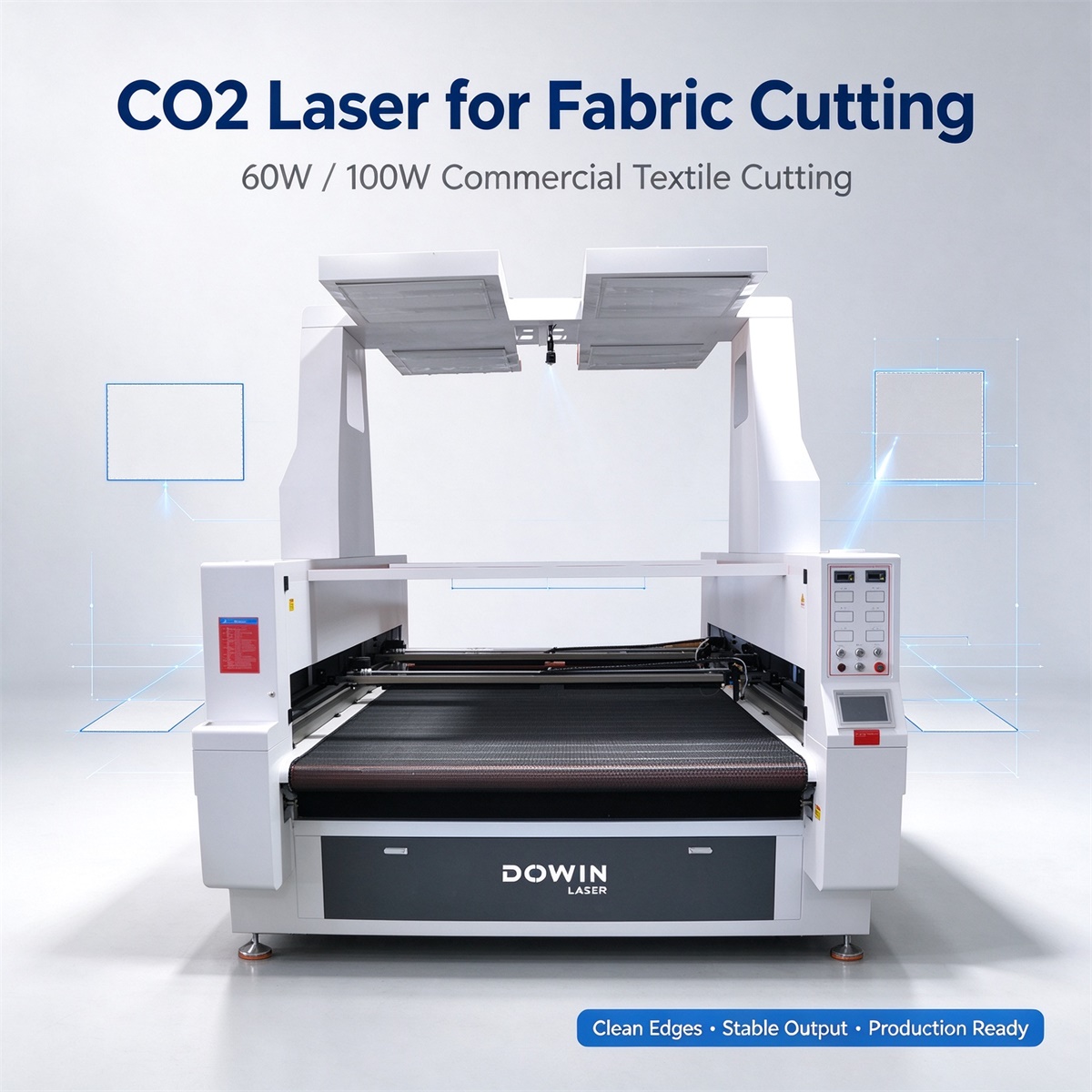
Meta Description: Compare pros & cons of 40W, 60W, 80–100W, 130–150W, 180W+ CO2 lasers for fabric cutting. Pick the right laser for crafts, small business or textile production. Target keywords: CO2 laser wattage pros cons fabric cutting, 60W vs 100W laser cutter for textile, low watt CO2 laser fabric cutting, industrial CO2 laser for fabric
If you’re selecting a CO2 laser for fabric cutting, wattage directly impacts cutting speed, edge quality, running cost and suitable workload. Higher wattage is not always better — delicate fabrics can easily scorch with excess power, while low-watt machines may struggle with production volumes. Below we break down the advantages and disadvantages of each common power tier for textiles.
40W CO2 Laser
Best for hobbyists, home crafters, low-volume custom crafts, single-layer thin fabric ✅ Advantages
- Low upfront investment; affordable entry option
- Small footprint, low power consumption, simple installation
- Easy to tune for delicate materials: lace, satin, thin lining, lightweight felt
- Lower fume output; smaller exhaust system is enough
- Friendly for beginners, simple maintenance
❌ Disadvantages
- Slow cutting speed, not built for daily batch production
- Limited penetration: cannot cut stacked layers, denim, canvas or thick fleece
- Less power headroom; easy to get burnt edges if speed/air assist is not perfect
- Glass tube versions have shorter service life under frequent use
- Not suitable for roll conveyor continuous cutting
Best fit: Hobby craft, custom patches, small labels, one-off handmade textile projects
60W CO2 Laser
The popular all-rounder for small apparel shops, embroidery studios, print-on-demand sellers ✅ Advantages
- Balanced price, speed and cutting performance — the sweet spot for most small fabric businesses
- Enough headroom to run faster speeds, reducing heat charring on cotton and natural fabrics
- Handles polyester, spandex, light cotton, fleece and occasional 2–3 thin stacked layers
- Works well for single-layer garment cutting, patches, woven labels and sublimation blanks
- Compatible with honeycomb tables; most standard laser software supports fine fabric nesting
❌ Disadvantages
- Still limited for thick dense fabric like heavy denim and multi-layer stacks
- Not ideal for long-hour nonstop factory production; tube wear speeds up with heavy daily use
- Cannot keep high efficiency on wide roll-fed upholstery fabrics
Best fit: Small custom apparel business, embroidery patch cutting, low-to-medium daily orders
80W – 100W CO2 Laser
Commercial workhorse for garment workshops, bag, shoe upper and home textile makers ✅ Advantages
- Fast cutting speed, stable for regular commercial workloads
- Easily cuts denim, canvas, twill, neoprene, thick felt and fleece
- Supports 3–6 stacked fabric layers (depends on fabric density)
- Good match for semi-auto conveyor roll feed systems
- Flexible: cuts both light synthetic fabric and heavy woven material on one machine
- Longer usable life under 8-hour daily production compared to 40W/60W glass tube lasers
❌ Disadvantages
- Higher purchase cost and electricity consumption
- Needs stronger air assist and larger fume extraction system
- Extra power must be carefully controlled on silk, lace or ultra-thin fabric; risk of melting or burning
- Larger space requirement, water chiller is mandatory
Best fit: Medium-volume garment cutting, canvas bags, denim goods, neoprene accessories
130W – 150W CO2 Laser
High-volume industrial laser for roll-to-roll textile production, upholstery, outdoor fabrics ✅ Advantages
- Maintains fast speed even with multiple stacked fabric layers
- Designed for long-shift continuous factory operation
- Perfect for large-format roll fabric, automotive textiles, sofa upholstery, outdoor technical fabrics
- Stable power output for mass nesting cutting, improves overall throughput
- Handles thick non-woven, filter fabrics and heavy canvas efficiently
❌ Disadvantages
- High capital cost
- High running cost: power consumption, chiller, heavy-duty exhaust and air compressor
- Overkill for thin single-layer polyester crafts; easy to ruin delicate textiles if parameters are not locked
- Larger machine size, needs dedicated factory area and professional installation
- Higher maintenance expense
Best fit: Garment factories, upholstery manufacturers, roll fabric mass production
180W+ CO2 Laser
Heavy-duty industrial laser for special thick composite textiles ✅ Advantages
- Cuts very thick, laminated, carpet and heavy composite textile materials
- Strong penetration for high-layer stacks of dense industrial fabrics
- Stable continuous operation for specialized heavy textile lines
❌ Disadvantages
- Very expensive to buy and operate
- Almost unnecessary for regular clothing, sportswear and soft goods
- Huge fume generation, requires professional fire safety design
- Too much heat for most apparel fabrics, very limited flexible use
- High replacement cost for laser tubes and optics
Best fit: Carpet cutting, thick filter material, laminated industrial textiles only
Quick Comparison Summary Table
| Wattage | Pros | Cons |
|---|---|---|
| 40W | Cheap, compact, gentle on thin fabric | Slow, no stacking, not for production |
| 60W | Great value, versatile for small custom textile | Cannot cut thick fabric or heavy stacks |
| 80–100W | Fast, handles denim/canvas, semi-production ready | Higher power cost, risky for ultra-delicate fabric |
| 130–150W | High speed, continuous roll cutting, multi-layer stacks | Expensive, overkill for light fabric |
| 180W+ | Cuts extra thick composite textile | High cost, not suitable for normal apparel |
Additional Critical Note
Wattage is just one variable. RF metal CO2 tubes deliver smoother, more adjustable low-power output and are better for fine fabric, while glass tubes are cheaper but less consistent at low power settings. Air assist, exhaust, honeycomb table and parameter testing will greatly affect edge quality, no matter which wattage you choose.
FAQ Block (for Google rich snippet)
Q: Is higher wattage always better for fabric laser cutting? A: No. Fabric is heat-sensitive. Higher wattage machines are for speed and multi-layer cutting. Too much power on thin lace, silk or single polyester will cause burning or distorted melted edges.
Q: What wattage is most cost-effective for a fabric laser cutting business? A: 60W is the top pick for small custom shops. If you plan daily commercial production with denim or stacked fabric, choose 80–100W.
Post time: Oct-21-2026
