
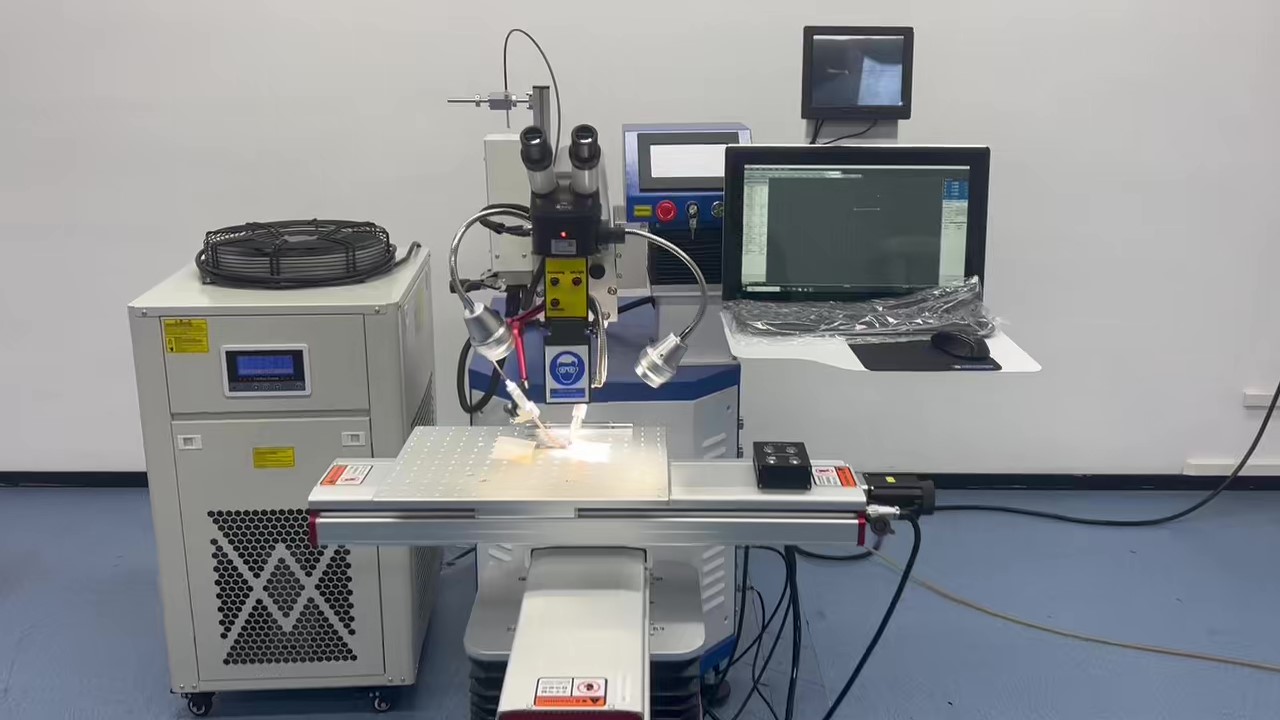
In today’s competitive manufacturing environment, mold quality directly impacts product quality, production efficiency, and overall profitability. Whether you are repairing injection molds, die-casting molds, stamping dies, or precision tooling, investing in the right mold laser welder can significantly reduce downtime and extend mold lifespan.
However, not all mold laser welding machines are created equal. While many models may appear similar on the surface, differences in laser performance, control systems, precision, and durability can have a major impact on repair quality and long-term operating costs.
If you are considering purchasing a mold laser welder, here are the top features you should evaluate before making a decision.
1. Stable Laser Output
The most important feature of any mold laser welder is the stability of its laser output.
Consistent laser energy ensures:
- Uniform weld penetration
- Reduced porosity
- Better bonding strength
- Smoother weld appearance
- Fewer repair defects
Unstable laser output can lead to inconsistent weld quality, requiring additional grinding, polishing, or rework.
A high-quality machine should maintain stable energy delivery even during long operating periods, ensuring reliable performance for demanding industrial applications.
2. Adjustable Pulse Parameters
Mold repair often involves working with various materials, crack sizes, and repair depths.
A professional mold laser welder should allow precise adjustment of:
- Pulse energy
- Pulse width
- Pulse frequency
- Laser spot size
- Welding speed
These adjustments give operators greater control over heat input and welding quality.
Machines with a wide parameter adjustment range can handle a broader variety of repair tasks, from delicate mold edges to deep crack restoration.
3. High-Precision Microscope System
Precision is essential in mold repair.
Many repairs involve tiny cracks, sharp corners, intricate surfaces, or detailed engraving areas.
A high-quality stereo microscope enables operators to:
- Clearly observe welding areas
- Position filler wire accurately
- Monitor weld pool formation
- Improve repair accuracy
A comfortable optical system also reduces operator fatigue during extended work sessions.
Some modern machines additionally offer CCD camera systems and large display screens for enhanced visibility.
4. Large Welding Spot Adjustment Range
Different mold repairs require different spot sizes.
Small laser spots are ideal for:
- Fine detail repair
- Sharp edges
- Precision tooling
Larger spots are better for:
- Deep crack filling
- Surface restoration
- Large mold repairs
A machine with flexible spot-size adjustment provides greater versatility and allows one machine to perform a wide variety of repair jobs.
5. Powerful Cooling System
Heat management is critical for laser equipment.
A reliable cooling system helps:
- Maintain laser stability
- Protect optical components
- Extend machine lifespan
- Prevent overheating
Industrial-grade water chillers with intelligent temperature control are generally preferred over basic cooling systems.
When evaluating a machine, buyers should pay close attention to cooling capacity and system reliability, especially if the machine will operate for multiple shifts per day.
6. High-Quality Motion System
Precision mold repair often requires accurate positioning.
Advanced mold laser welders may include:
- Motorized XYZ worktables
- Precision guide rails
- Smooth positioning controls
- Multi-axis movement systems
These features improve operator efficiency and allow accurate welding of complex mold geometries.
For large molds, a flexible movement system becomes particularly important.
7. Wide Material Compatibility
Molds are manufactured from many different materials, including:
- Tool steel
- Stainless steel
- H13 steel
- P20 steel
- Copper alloys
- Aluminum alloys
A versatile mold laser welder should support a broad range of welding materials and filler wires.
This flexibility allows manufacturers to repair different mold types without requiring multiple welding systems.
8. User-Friendly Control Interface
Ease of operation directly impacts productivity.
Modern mold laser welders often feature:
- Touchscreen controls
- Digital parameter settings
- Stored welding programs
- Multilingual interfaces
A simple and intuitive control system reduces training time and minimizes operator errors.
The ability to save commonly used welding parameters is especially valuable for repetitive repair work.
9. Long Laser Component Lifespan
The laser source is one of the most important and expensive components of the machine.
Buyers should pay attention to:
- Laser source quality
- Component durability
- Expected service life
- Maintenance requirements
Machines built with high-quality components generally provide better long-term reliability and lower operating costs.
A slightly higher initial investment often results in significant savings over the life of the equipment.
10. Automatic Wire Feeding Capability
For larger repair jobs, automatic wire feeding can greatly improve productivity.
Benefits include:
- Consistent filler material delivery
- Improved welding efficiency
- Reduced operator workload
- Better weld uniformity
While manual wire feeding remains suitable for many applications, automatic systems can significantly accelerate large-scale repair projects.
11. Low Heat-Affected Zone (HAZ)
One of the major advantages of laser welding compared with traditional welding methods is its minimal heat input.
A quality mold laser welder should provide:
- Small heat-affected zones
- Minimal distortion
- Reduced residual stress
- Better dimensional accuracy
This is particularly important when repairing high-precision molds where even minor deformation can cause production defects.
12. Strong After-Sales Support
Many buyers focus exclusively on machine specifications while overlooking supplier support.
Reliable technical support can be just as important as the machine itself.
Look for suppliers that offer:
- Installation assistance
- Operator training
- Technical troubleshooting
- Spare parts availability
- Remote support services
Strong after-sales service helps maximize equipment uptime and protects your investment.
13. Expandability for Future Needs
Manufacturing requirements evolve over time.
Choosing a machine that supports future upgrades can provide long-term value.
Potential upgrade options include:
- Automated worktables
- Camera monitoring systems
- CNC integration
- Robotic welding solutions
- Advanced software packages
An expandable platform allows your equipment to grow alongside your business.
Why These Features Matter
The true value of a mold laser welder is not determined solely by its purchase price.
A machine with superior precision, stability, and reliability can:
- Extend mold service life
- Reduce repair costs
- Minimize production downtime
- Improve repair quality
- Increase workshop productivity
In many cases, the savings generated through faster repairs and reduced mold replacement costs quickly exceed the initial equipment investment.
Conclusion
When purchasing a mold laser welder, manufacturers should look beyond basic specifications and focus on features that directly affect welding quality, productivity, and long-term reliability. Stable laser output, precision optics, advanced cooling systems, flexible parameter control, and strong supplier support are among the most important factors to consider.
Selecting the right machine can transform mold maintenance operations, helping businesses reduce costs, improve repair accuracy, and maximize production efficiency.
For manufacturers seeking dependable performance and professional mold repair capabilities, Dowin Laser provides industrial-grade mold laser welding machines designed to meet the demands of modern mold repair workshops worldwide.
Post time: Jun-04-2026
