
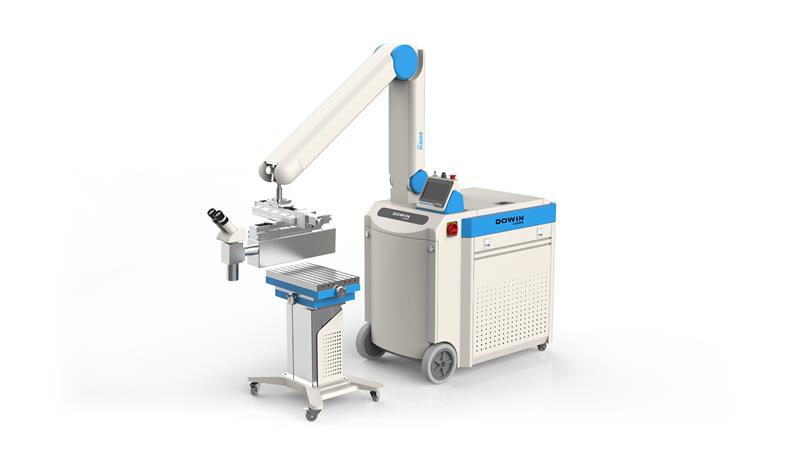
Plastic injection molding depends on precision molds, tight production schedules, and consistent part quality. Even small mold defects can lead to flashing, short shots, dimensional errors, or costly downtime. That is why mold laser welding machines have become essential equipment in modern molding factories.
With precise heat control, low distortion, and high repair accuracy, laser welding helps extend mold life while reducing replacement costs. Below are the top seven applications of mold laser welding machines in the plastic injection industry.
1. Repairing Worn Gate Areas
The gate is one of the most stressed zones in an injection mold. Continuous resin flow, pressure, and heat gradually enlarge or damage the gate, affecting fill balance and cycle time.
Laser welding can rebuild worn gate edges with high precision, allowing technicians to restore original dimensions without replacing inserts or the entire mold.
Benefits:
- Better material flow control
- Reduced flashing
- Restored cycle consistency
- Lower tooling replacement cost
2. Fixing Parting Line Damage
Parting lines often suffer from wear, dents, or accidental impacts during handling and maintenance. Once damaged, molds may produce flash or mismatch marks on plastic parts.
Mold laser welding machines can deposit filler material exactly where needed, then allow fine polishing back to tolerance.
Common uses:
- Flash correction
- Surface sealing restoration
- Alignment edge rebuilding
3. Repairing Ejector Pin Holes and Surrounding Areas
Repeated ejection cycles create stress around ejector pin holes. Over time, cracking, wear, or oval deformation may occur.
Laser welding is ideal for rebuilding localized damaged zones without overheating nearby precision cavities.
Why it matters:
- Maintains smooth ejection
- Prevents pin sticking
- Reduces reject rates
4. Restoring Mold Cavities and Core Surfaces
Cavity and core surfaces directly determine final product appearance and dimensions. Scratches, corrosion, pitting, or small dents can ruin production quality.
Laser welding allows micro-filling of damaged surfaces followed by texturing or polishing.
Typical products affected:
- Consumer electronics housings
- Automotive interior parts
- Appliance shells
- Transparent plastic components
5. Modifying Mold Dimensions for Product Updates
In fast-moving industries, product designs change frequently. A small wall thickness adjustment or clip redesign may require mold modification.
Instead of building a new mold, manufacturers use laser welding to add material to selected areas, then re-machine to updated dimensions.
Advantages:
- Faster engineering changes
- Lower development cost
- Shorter product launch cycle
6. Repairing Thin Ribs, Corners, and Fine Features
Thin ribs, sharp corners, and tiny mold details are difficult to repair with traditional TIG welding because of excess heat and distortion risk.
Laser welding offers controlled micro-energy input, making it suitable for precision features that require minimal heat-affected zones.
Ideal for:
- Connector molds
- Packaging cap molds
- Medical component molds
- Micro-feature molds
7. Emergency Crack Repair and Preventive Maintenance
Unexpected mold cracks can stop production immediately. Laser welding is widely used for rapid crack repair, especially on inserts and non-critical structural zones.
It is also valuable for preventive maintenance—repairing early wear before catastrophic failure occurs.
Result:
- Less unplanned downtime
- Longer mold lifespan
- Better maintenance scheduling
Why Plastic Injection Factories Choose Laser Welding
Compared with conventional repair methods, mold laser welding machines provide:
- High precision weld beads
- Low thermal deformation
- Minimal post-processing
- Faster repair turnaround
- Longer mold service life
For factories running expensive molds, avoiding even one replacement can justify the investment.
Final Thoughts
In the plastic injection industry, mold damage does not always mean mold replacement. Mold laser welding machines turn many costly failures into manageable repairs.
From gate rebuilding to cavity restoration and design modification, these systems help manufacturers reduce downtime, control tooling budgets, and stay competitive in high-speed production environments.
Post time: Apr-27-2026
