
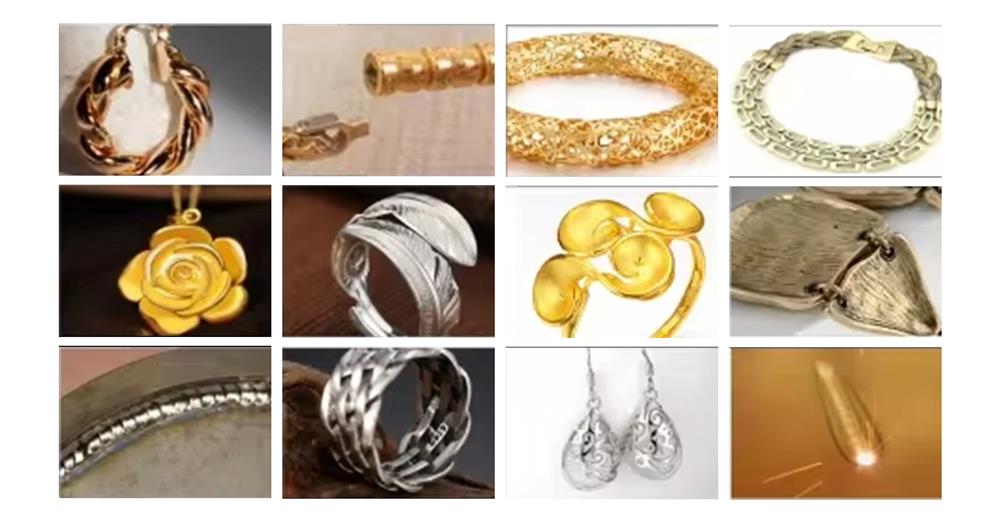
Jewelry casting is an efficient way to produce complex gold, silver, platinum, and other precious metal designs. However, even a well-controlled casting process can produce defects such as porosity, pinholes, cracks, pits, shrinkage cavities, and incomplete surfaces.
Traditional repair methods often involve soldering, filing, grinding, or remelting the jewelry. These processes can affect the surrounding metal and may be difficult to control on small or high-value pieces.
A jewelry laser welder provides a more precise way to repair casting defects by adding a small amount of compatible metal exactly where it is needed.
What Are Common Jewelry Casting Defects?
Before choosing a repair method, it is important to identify the type of casting defect.
Porosity and Pinholes
Small pores and pinholes can appear on the surface of cast jewelry because of trapped gas, shrinkage, contamination, or improper casting conditions. They may become particularly visible after polishing.
Cracks
Casting cracks can occur because of thermal stress, metal composition, mold conditions, or insufficient control during cooling. Larger cracks may require more extensive repair.
Pits and Surface Cavities
Small cavities and depressions can remain after casting or become visible during polishing. If they are not repaired, they can affect the final appearance of the jewelry.
Incomplete or Missing Areas
Thin sections, sharp edges, prongs, or decorative details may not form completely during casting. A laser welder can add material to rebuild these small areas.
How Does a Laser Welder Repair Casting Defects?
Laser welding uses a concentrated laser beam to melt a very small area of the jewelry and a compatible filler wire.
The basic repair process is:
-
Clean and inspect the jewelry to identify the defect.
-
Remove contamination or oxidation from the repair area.
-
Select matching filler wire according to the jewelry material and color.
-
Adjust laser parameters such as power, pulse duration, frequency, and spot size.
-
Add small amounts of filler material into the defect.
-
Build up the surface gradually until the cavity or damaged area is completely filled.
-
Polish and finish the repaired area after welding.
Because the laser concentrates energy into a small spot, the operator can make very localized repairs without heating the entire jewelry piece.
Why Use Laser Welding for Jewelry Casting Repair?
Precise Material Addition
A laser welder allows the operator to add filler metal precisely where it is required. This is especially useful for small pinholes, pits, edges, and detailed casting defects.
Small Heat-Affected Area
Compared with conventional torch soldering, laser welding can produce a much smaller localized heat-affected area. This helps reduce unnecessary heating of the surrounding jewelry.
Suitable for Detailed Jewelry
Jewelry often contains thin sections, sharp edges, small prongs, and intricate designs. The precision of laser welding makes it easier to work on these areas without affecting nearby details.
Less Grinding and Finishing
When the filler material is accurately placed, less excess material may need to be removed during finishing. This can help preserve the original shape and details of the jewelry.
Better Control for Precious Metals
Gold, silver, platinum, and other precious metals can be repaired using suitable laser welding parameters and matching filler materials. The exact settings depend on the metal, thickness, defect size, and jewelry design.
Laser Welding vs. Traditional Soldering for Casting Defects
Torch soldering remains useful for many jewelry repairs, but it can be difficult to control when the defect is extremely small or located close to delicate features.
Laser welding provides a more localized heat source and allows the operator to control the weld position and filler material more precisely.
| Feature | Laser Welding | Torch Soldering |
|---|---|---|
| Heat control | Highly localized | Wider heating area |
| Small defects | Excellent | More difficult |
| Thin jewelry | Suitable with proper settings | Higher heat risk |
| Intricate details | High precision | More challenging |
| Filler material | Precisely controlled | Requires solder |
| Finishing work | Often reduced | May require more finishing |
The best method depends on the jewelry design, metal, defect, production process, and operator experience.
Can a Laser Welder Repair Gold Casting Defects?
Yes. Laser welding is widely suitable for repairing gold jewelry and gold castings, provided that the laser parameters and filler material are correctly selected.
For example, a casting may develop small pores after polishing. Instead of removing a large amount of surrounding material, an operator can use a laser welder to fill the individual defects with matching gold wire.
This approach is particularly useful for rings, bracelets, pendants, earrings, chains, and other detailed jewelry components.
Can Laser Welding Repair Silver and Platinum Castings?
Laser welding can also be used for silver and platinum jewelry. However, different metals have different thermal and optical characteristics.
Silver, for example, has high thermal conductivity and can require carefully optimized welding parameters. Platinum also requires appropriate control of heat input and filler material.
For production applications, parameters should be tested on the same or equivalent material before repairing high-value jewelry.
How to Prevent Casting Defects from Reappearing
Laser welding can repair defects, but improving the casting process is still important for reducing repeated repairs.
Jewelry manufacturers should pay attention to:
-
Proper wax or resin model quality
-
Investment and burnout conditions
-
Metal cleanliness
-
Melting and casting temperature
-
Mold temperature
-
Filling and feeding conditions
-
Cooling and solidification
-
Proper polishing and finishing
A combination of better casting control and laser welding repair can significantly improve the final quality of cast jewelry.
Is a Jewelry Laser Welder Worth It for a Jewelry Workshop?
For workshops that frequently repair casting defects, a jewelry laser welder can be a valuable production tool.
It is particularly useful when a workshop needs to repair high-value jewelry, delicate castings, small holes, cracks, prongs, edges, or detailed surfaces while minimizing unnecessary heat and material removal.
For occasional low-volume repairs, traditional methods may still be sufficient. However, for jewelry manufacturers, casting factories, and professional repair shops handling frequent defects, laser welding can improve both repair precision and workflow efficiency.
Frequently Asked Questions
What jewelry defects can a laser welder repair?
A jewelry laser welder can be used for many localized defects, including pinholes, porosity, small cracks, pits, cavities, missing edges, and incomplete casting details.
Does laser welding change the color of gold jewelry?
With appropriate filler material and welding parameters, the repaired area can be closely matched to the original metal. Final polishing and finishing also affect the appearance.
Can laser welding repair jewelry after polishing?
Yes. In many cases, casting defects become easier to identify after polishing. The defective area can be laser welded and then polished again to restore the surface.
Is laser welding better than soldering for jewelry casting defects?
For small, localized casting defects, laser welding generally provides more precise heat and material control. Soldering can still be appropriate for certain larger or conventional repairs.
Conclusion
Repairing jewelry casting defects with a laser welder allows manufacturers and repair professionals to address small defects with controlled, localized heat and precise filler-metal deposition.
For jewelry casting factories and professional workshops, laser welding is especially valuable for repairing gold, silver, platinum, and other precious metal jewelry while preserving delicate details and reducing unnecessary finishing work.
When casting defects are a regular part of production, a dedicated jewelry laser welding machine can turn a time-consuming repair process into a more precise and repeatable workflow.
Post time: Aug-21-2026
