
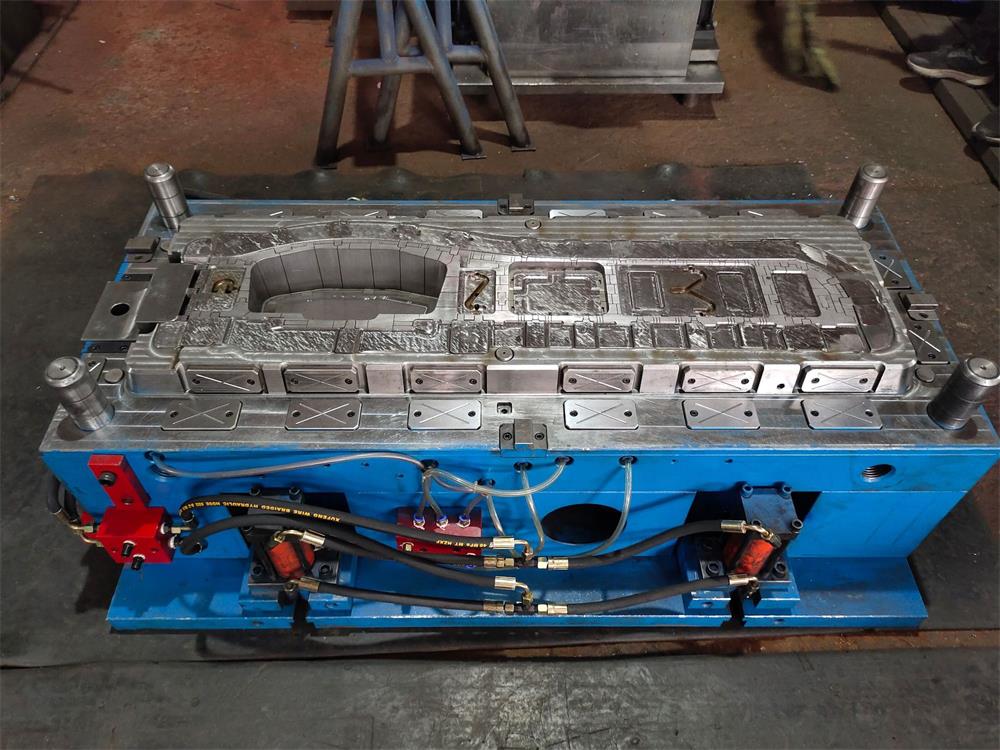
Die casting molds are among the most heavily stressed tools in modern manufacturing. Used extensively in the automotive, aerospace, electronics, machinery, and consumer goods industries, these molds operate under extreme conditions involving high temperatures, intense pressure, and rapid thermal cycling. Over time, even the most durable die casting molds develop cracks, erosion, wear, and surface damage that can negatively impact production quality and efficiency.
Replacing a damaged die casting mold can be costly and may lead to significant production downtime. As a result, more manufacturers are turning to mold laser welding solutions as a cost-effective and highly precise method for mold repair and maintenance. Modern mold laser welding machines allow manufacturers to restore damaged molds quickly, accurately, and with minimal thermal distortion, extending tool life while reducing operational costs.
Why Die Casting Molds Require Specialized Repair Solutions
Unlike injection molds, die casting molds are exposed to molten metals such as aluminum, zinc, and magnesium alloys. During production, mold surfaces repeatedly encounter temperatures that can exceed several hundred degrees Celsius.
This harsh environment often leads to:
-
Thermal fatigue cracks
-
Surface erosion
-
Edge wear
-
Cavity damage
-
Porosity defects
-
Impact-related fractures
-
Dimensional wear
If left untreated, these defects can affect casting quality, increase scrap rates, and eventually force mold replacement.
Traditional repair methods such as TIG welding often introduce excessive heat into the mold, increasing the risk of deformation and additional damage. Laser welding technology offers a more precise alternative.
How Mold Laser Welding Works
Mold laser welding uses a highly concentrated laser beam to melt filler material and the mold surface simultaneously, creating a strong metallurgical bond.
Unlike conventional welding techniques, laser energy is focused on a very small area, producing:
-
Minimal heat-affected zones
-
Reduced thermal distortion
-
Precise material deposition
-
Superior weld quality
This allows technicians to repair damaged mold sections without significantly affecting surrounding areas.
For die casting molds that require high dimensional accuracy, this advantage is particularly valuable.
Key Benefits of Laser Welding for Die Casting Mold Repair
Exceptional Repair Precision
Die casting molds often contain complex cavity structures and critical dimensions.
Laser welding machines allow operators to repair extremely small defects with remarkable accuracy.
This precision helps restore:
-
Fine mold details
-
Parting lines
-
Edges and corners
-
Intricate cavity surfaces
The result is a repaired mold that closely matches its original specifications.
Minimal Thermal Distortion
Heat control is one of the biggest challenges in mold repair.
Conventional welding methods can generate excessive heat, causing:
-
Warping
-
Residual stress
-
Hardness changes
-
Dimensional deviations
Laser welding minimizes these risks by concentrating energy only where it is needed.
This localized heating preserves the mold’s structural integrity and reduces post-repair machining requirements.
Extended Mold Lifespan
A high-quality die casting mold represents a significant investment.
Laser welding enables manufacturers to repair defects multiple times throughout the mold’s service life.
Benefits include:
-
Delayed mold replacement
-
Lower tooling expenses
-
Improved asset utilization
-
Greater production efficiency
For high-volume production environments, these savings can be substantial.
Reduced Production Downtime
Time is critical in manufacturing.
Ordering a replacement mold can take weeks or even months depending on complexity.
Laser welding repairs can often be completed within hours or days, allowing production lines to resume operation much faster.
This reduction in downtime directly contributes to increased profitability.
Common Die Casting Mold Defects Repaired by Laser Welding
Modern mold laser welding equipment can effectively repair a wide range of defects.
Thermal Fatigue Cracks
Repeated heating and cooling cycles eventually create microscopic cracks on mold surfaces.
Laser welding can fill and reinforce these cracks before they expand and cause larger failures.
Edge Damage
Mold edges are particularly vulnerable to impact and wear.
Laser welding restores damaged edges with precise material deposition while preserving original dimensions.
Surface Erosion
Molten metal flow gradually erodes mold surfaces over time.
Laser welding allows worn areas to be rebuilt accurately, extending mold service life.
Machining Errors
Occasionally, dimensional corrections are required after mold manufacturing.
Laser welding provides an efficient method for adding material and modifying mold geometry.
Cavity Restoration
Damaged mold cavities can often be repaired without replacing the entire mold.
This significantly reduces maintenance costs and production delays.
Features to Look for in a Mold Laser Welding Machine
Selecting the right equipment is essential for achieving optimal repair results.
High-Stability Laser Source
A stable laser source ensures consistent weld quality and reliable performance during long repair operations.
Adjustable Welding Parameters
The ability to adjust pulse energy, frequency, pulse width, and spot size allows technicians to optimize settings for different mold materials and repair tasks.
Precision Microscope System
Microscope-assisted welding improves visibility and enables accurate positioning of the laser beam during complex repairs.
Flexible Worktable Design
Large die casting molds can be difficult to position.
A multi-axis worktable improves accessibility and enhances repair efficiency.
User-Friendly Control System
Advanced control software simplifies operation, reduces training requirements, and improves process consistency.
Industries Benefiting from Die Casting Mold Laser Welding
Laser welding technology has become an essential maintenance solution across numerous industries.
Automotive Manufacturing
Automotive die casting molds are used to produce engine components, transmission housings, structural parts, and electric vehicle components.
Laser welding helps maintain these critical tools while minimizing downtime.
Aerospace Industry
Aerospace manufacturers rely on high-precision molds where dimensional accuracy is essential.
Laser welding provides reliable repairs while preserving strict tolerances.
Consumer Electronics
Electronic product housings often require highly detailed die casting molds.
Laser repair enables manufacturers to restore mold performance without sacrificing precision.
Industrial Equipment Manufacturing
Heavy machinery components frequently depend on large die casting molds that are expensive to replace.
Laser welding extends mold life and improves return on investment.
Why Laser Welding Is the Future of Die Casting Mold Maintenance
Manufacturers today face increasing pressure to improve efficiency while reducing costs.
Laser welding addresses both challenges by offering:
-
Precision repairs
-
Faster turnaround times
-
Reduced mold replacement costs
-
Extended tool life
-
Improved production reliability
As die casting technology continues to evolve, laser welding is becoming a standard maintenance solution rather than an optional upgrade.
Conclusion
Mold laser welding solutions provide an effective and economical approach to repairing die casting molds. By delivering precise material deposition, minimal thermal distortion, and superior weld quality, laser welding machines help manufacturers restore damaged molds while maintaining critical dimensions and performance.
For die casting companies seeking to maximize mold lifespan, reduce downtime, and improve production efficiency, investing in professional mold laser welding equipment is a smart long-term strategy. Advanced systems from Dowin Laser offer the precision, reliability, and flexibility required to meet the demanding repair needs of modern die casting operations, helping manufacturers protect valuable tooling assets and maintain a competitive advantage.
Post time: Jun-08-2026
