
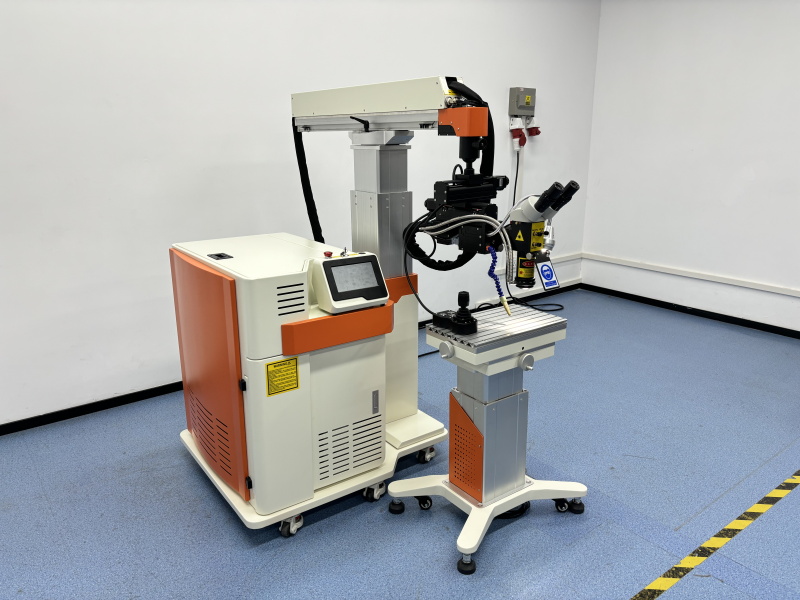
In modern manufacturing, molds are not just production tools—they are profit centers. Whether used in automotive stamping, plastic injection molding, die casting, electronics, or medical production, molds determine product precision, output speed, and overall factory efficiency. When a mold surface cracks, wears out, chips, or loses dimensional accuracy, production can stop instantly.
This is where the mold laser repair welding machine becomes one of the most valuable investments in advanced manufacturing.
Instead of replacing expensive molds or relying on rough traditional welding methods, companies now use laser mold repair systems to restore damaged molds with micron-level precision, minimal heat distortion, and dramatically lower downtime.
Why Mold Damage Is a Billion-Dollar Problem
Across global manufacturing, mold wear and failure create hidden losses every year:
- Unexpected production shutdowns
- Scrap products caused by mold defects
- Long lead times for new tooling
- High replacement costs for precision molds
- Labor costs for polishing and re-machining
- Delivery delays that damage customer trust
A complex injection mold can cost thousands to hundreds of thousands of dollars depending on industry and tolerance requirements. Replacing such a mold because of a small crack or worn edge is economically irrational.
My view is simple: Factories that replace molds too early are burning money. Smart factories repair strategically.
What Is a Mold Laser Repair Welding Machine?
A mold laser repair welding machine uses a concentrated laser beam to melt filler wire and base metal in a highly controlled micro-area. This allows technicians to rebuild damaged mold sections with extreme accuracy.
Common repairs include:
- Edge rebuilding
- Surface pitting restoration
- Crack filling
- Corner repair
- Dimensional recovery
- Parting line repair
- Engraving correction
- Fine cavity restoration
Because the heat-affected zone is very small, surrounding mold areas remain stable, reducing deformation risk.
Main Industries Using Mold Laser Welding Machines
1. Plastic Injection Mold Industry
Injection molds constantly face pressure, friction, and heat cycles. Over time, gates, runners, and cavity edges wear out.
Laser repair helps manufacturers:
- Restore gate precision
- Fix cavity scratches
- Repair ejector pin marks
- Extend mold lifespan multiple cycles
This is critical for packaging, home appliance, and consumer electronics factories.
2. Automotive Tooling Industry
Automotive molds require strict tolerances. Even minor defects can lead to poor panel fitment or rejected parts.
Laser mold welding is used for:
- Stamping die crack repair
- Trimming edge rebuilding
- Die casting mold restoration
- Surface defect correction
With vehicle platforms becoming more complex, fast repair capability is now a competitive advantage.
3. Electronics Manufacturing
Miniaturized plastic parts and metal components need ultra-fine molds. Traditional welding often causes unacceptable deformation.
Laser welding enables:
- Precision cavity repair
- Connector mold maintenance
- Micro-feature restoration
- Fine-texture preservation
4. Medical Device Production
Medical molds often require mirror surfaces and high dimensional stability.
Laser systems can repair molds while maintaining:
- Tight tolerances
- Clean surfaces
- Material integrity
- Repeatability standards
Why Laser Repair Beats Traditional Welding
Minimal Heat Input
Conventional TIG welding spreads heat across a wider area. Laser energy is concentrated only where needed.
Result:
- Less distortion
- Lower post-machining costs
- Better dimensional control
Precision at Micron Level
Operators can repair extremely small zones without affecting nearby geometry.
Faster Turnaround
Many mold repairs can be completed in hours rather than days.
Lower Total Cost
One repaired mold may save the cost of buying a new tool, lost production time, and customer delays.
The ROI Most Factories Ignore
Many buyers compare only machine price. That is outdated thinking.
A better question is:
How much downtime does one machine prevent each year?
If a production line loses $2,000 per hour and laser repair reduces downtime by 20 hours annually, that is $40,000 saved—often more than enough to justify the equipment.
This is why mold laser welding machines are increasingly viewed as profit-protection assets rather than maintenance tools.
Key Features to Look for in a Mold Laser Repair Welding Machine
When selecting equipment, prioritize:
- Stable laser power output
- Adjustable pulse parameters
- High-precision microscope system
- Smooth X/Y/Z worktable movement
- Easy wire feeding system
- Low maintenance design
- User-friendly controls
- Reliable cooling system
For high-end factories, automation integration and digital parameter storage are also valuable.
Future Trend: Repair Before Failure
The next stage of manufacturing is predictive maintenance. Factories will increasingly inspect molds with sensors and vision systems, then use laser welding to repair wear before catastrophic failure happens.
That means mold repair will shift from reactive maintenance to proactive profit strategy.
This transition is already underway in leading factories.
Final Thoughts
The mold laser repair welding machine is no longer optional for competitive manufacturers. It reduces downtime, extends mold life, improves product quality, and protects tooling investment.
My strongest opinion: Factories still relying only on traditional mold repair methods are operating with yesterday’s mindset in tomorrow’s market.
In manufacturing, speed matters. Precision matters. Cost control matters.
Laser mold repair delivers all three.
Post time: Apr-27-2026
