
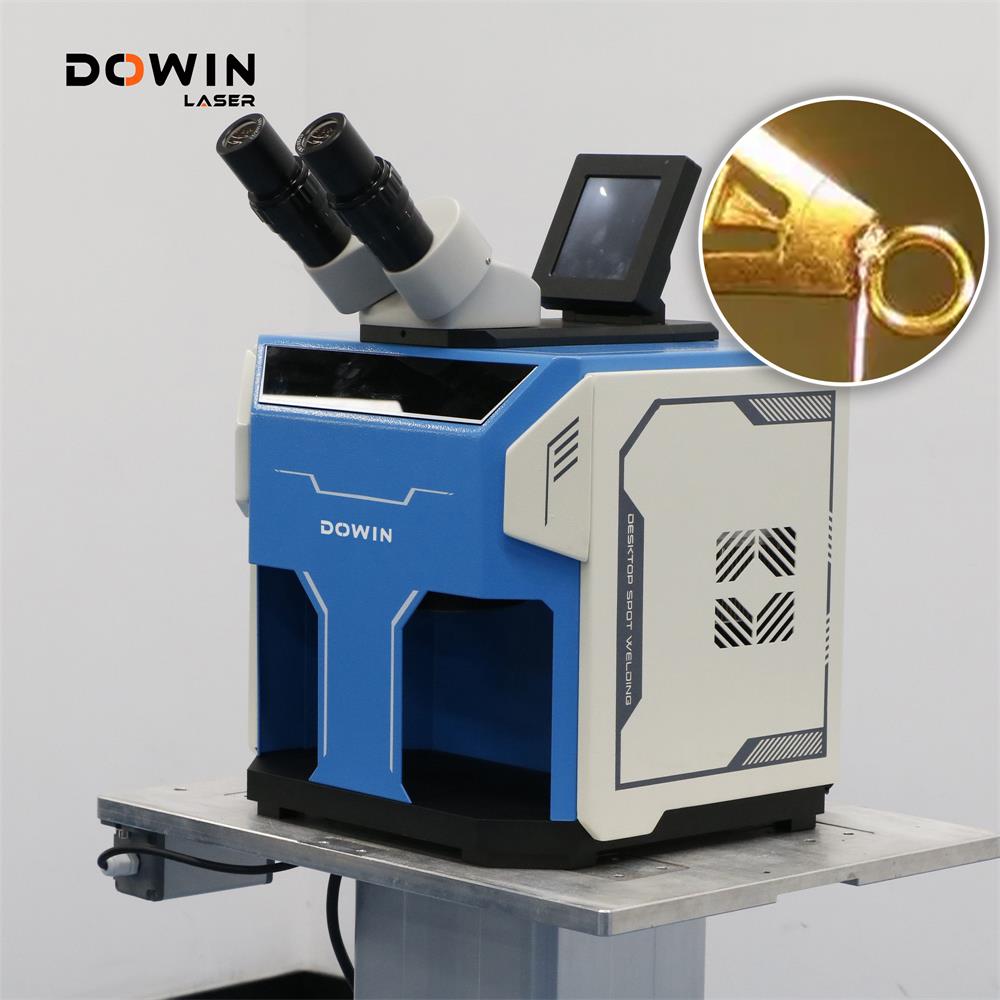
Jewelry repair has traditionally relied on torch soldering to join broken chains, resize rings, repair settings, and restore damaged precious metals. However, jewelry laser welding has become an increasingly important technology for repair shops that handle delicate, high-value, or gemstone-set jewelry.
Both methods have their place. The key difference is how they introduce heat and how precisely that heat can be controlled. Traditional soldering uses a lower-melting filler alloy and distributes heat over a wider area, while laser welding concentrates energy into a very small spot and can fuse the base metal directly.
For many precision jewelry repairs, especially those involving gemstones, thin metal, platinum, or intricate designs, laser welding offers significant advantages.
Laser Welding vs Soldering: Quick Comparison
| Feature | Jewelry Laser Welding | Traditional Soldering |
|---|---|---|
| Heat affected area | Very small | Relatively large |
| Precision | Extremely high | Moderate to high |
| Filler material | Optional, depending on repair | Required |
| Risk to nearby stones | Lower when properly operated | Higher due to heat spread |
| Repair near gemstones | Excellent for suitable applications | Often requires stone removal |
| Thin chains | Excellent | Can be challenging |
| Prong rebuilding | Excellent | More difficult |
| Platinum repair | Highly suitable | More challenging |
| Finishing work | Usually minimal | Often more polishing required |
| Repair appearance | Clean and discreet | Can leave a visible solder joint |
| Equipment cost | Higher | Lower |
| Operator skill | Requires specialized training | Requires traditional bench skills |
The best method depends on the jewelry design, metal, repair location, gemstone type, and required structural strength.
What Is Jewelry Laser Welding?
A jewelry laser welding machine uses a highly focused laser beam to generate heat at a precise location. Instead of heating a large section of jewelry, the operator can direct laser energy onto the damaged area and control parameters such as pulse energy, duration, and spot size.
This makes laser welding particularly useful for:
-
Gold jewelry repair
-
Silver jewelry repair
-
Platinum jewelry repair
-
Ring resizing
-
Broken chain repair
-
Prong rebuilding
-
Crack repair
-
Porosity filling
-
Antique jewelry restoration
-
Custom jewelry manufacturing
Because the heat is highly localized, the surrounding metal experiences significantly less thermal exposure than with conventional torch soldering.
How Traditional Jewelry Soldering Works
Traditional jewelry soldering uses a torch to heat the joint and a solder alloy with a lower melting temperature than the jewelry metal.
When the solder melts, it flows into the joint and creates the connection after cooling.
Soldering remains an effective and economical technique for many repairs. It is particularly practical when:
-
The jewelry is made from relatively thick metal.
-
There are no heat-sensitive gemstones nearby.
-
A larger structural joint is required.
-
The repair area can safely withstand torch heating.
-
Equipment investment needs to remain low.
For straightforward repairs on bare metal, traditional soldering can still be an efficient solution.
However, the wider heat distribution can become a disadvantage when working on delicate jewelry.
1. Heat Control: The Biggest Difference
The most important difference between laser welding and soldering is heat distribution.
A torch heats a relatively large area. Heat travels through the metal and can affect nearby components, gemstones, finishes, or decorative details.
Laser welding concentrates energy into a small target area. This creates a much smaller heat-affected zone and helps reduce thermal distortion.
This is especially valuable when repairing:
-
Thin ring shanks
-
Fine chains
-
Filigree
-
Micro-prongs
-
Intricate settings
-
Antique jewelry
-
Jewelry with nearby gemstones
For high-value jewelry, controlling heat can be just as important as creating the repair itself.
2. Laser Welding Is Better for Precision Jewelry Repair
Traditional soldering works well for many conventional joints, but extremely small repairs can be difficult to control with a torch.
A jewelry laser welder allows the operator to target a very small area and build up material precisely where it is required.
For example, a worn prong can be rebuilt by adding compatible filler material and applying controlled laser pulses. The operator can gradually reconstruct the damaged section instead of applying heat to the entire setting.
This level of control is one reason laser welding is increasingly used for luxury jewelry and precision repair.
3. Jewelry Laser Welding Can Reduce Gemstone Removal
Gemstone protection is one of the strongest arguments for using laser welding.
Traditional soldering can require removing gemstones before applying substantial heat, particularly when working with heat-sensitive stones. Removing and resetting stones adds labor and introduces additional handling risk.
Because laser welding concentrates heat around the repair point, certain repairs can be performed with stones remaining in the setting, depending on the gemstone, its treatment, location, and the specific repair.
However, laser welding does not mean every gemstone is automatically safe. Jewelers should evaluate the stone, treatment history, setting, laser parameters, and repair location before proceeding.
This distinction is important for professional jewelry repair businesses.
4. Laser Welding for Ring Repair
Rings are among the most common applications for jewelry laser welding.
A laser welder can be used for:
Ring Shank Repair
Cracked or worn ring shanks can be repaired with localized welding and compatible filler material.
Ring Resizing
Laser welding can be used during resizing to create precise joints and minimize unnecessary heat exposure.
Prong Rebuilding
Worn prongs can be rebuilt by adding small amounts of metal exactly where material has been lost.
Crack Repair
Small cracks and porosity defects can be filled and repaired with controlled laser pulses.
These applications are especially valuable for engagement rings, platinum rings, vintage jewelry, and other pieces where preserving the original appearance is important.
5. Laser Welding for Chain Repair
Fine jewelry chains can be difficult to repair with a traditional torch.
Very thin or hollow chain components can deform or melt when exposed to excessive heat. Laser welding allows the operator to apply energy precisely to the broken area.
This makes it suitable for repairing:
-
Fine gold chains
-
Silver chains
-
Delicate necklace links
-
Small jump rings
-
Intricate chain structures
The goal is not simply to reconnect the chain, but to create a repair that is structurally reliable while maintaining the original appearance.
6. Platinum Jewelry: Laser Welding vs Soldering
Platinum is one of the metals where laser welding can provide a particularly strong advantage.
Platinum has a very high melting point, making conventional torch repair more demanding. Laser welding provides concentrated energy that can be precisely controlled at the repair point.
Laser welding is commonly used for:
-
Platinum ring repair
-
Platinum prong rebuilding
-
Platinum chain repair
-
Cracked platinum settings
-
Antique platinum restoration
-
Platinum ring resizing
For workshops regularly repairing platinum jewelry, a laser welding machine can significantly expand repair capabilities.
7. Which Produces a Better-Looking Repair?
Appearance is critical in jewelry repair.
A poorly executed solder joint can leave excess material, discoloration, or a visible repair line that requires additional finishing.
Laser welding allows the operator to place material very precisely. After appropriate finishing and polishing, the repaired area can be highly discreet.
This is particularly useful for luxury jewelry where customers expect the repair to preserve the original appearance rather than make the repair itself noticeable.
8. Is Laser Welding Stronger Than Soldering?
There is no universal answer because joint design, material compatibility, laser parameters, filler selection, and operator technique all affect the final result.
The fundamental difference is that laser welding can fuse the parent metal, while soldering creates a joint using a lower-melting filler alloy. Properly executed laser welds can therefore provide a strong metallurgical connection suitable for many demanding jewelry repairs.
However, soldering can still be preferable for some larger structural joints where a broad bonding area is advantageous.
The goal should not be to replace soldering in every situation, but to select the appropriate process for each repair.
When Should a Jeweler Choose Laser Welding?
A jewelry laser welding machine is particularly valuable when the repair requires:
-
High precision
-
Minimal heat spread
-
Work close to gemstones
-
Repair of very thin metal
-
Prong rebuilding
-
Platinum repair
-
Antique jewelry restoration
-
Minimal finishing
-
Highly discreet repair results
-
Repeated high-value jewelry repairs
If a jewelry workshop regularly encounters these jobs, laser welding can become a valuable addition to the traditional bench setup.
When Is Traditional Soldering Still the Better Choice?
Laser welding is not a universal replacement for soldering.
Traditional soldering can remain the better option when:
-
The repair involves a large structural joint.
-
The jewelry can safely tolerate torch heating.
-
The metal is thick and easy to heat uniformly.
-
A broad soldered connection is desirable.
-
The repair is simple and cost-sensitive.
-
A laser welder would not provide a meaningful technical advantage.
Many professional workshops can benefit from using both technologies rather than choosing only one.
Soldering handles conventional repairs efficiently, while laser welding provides an additional solution for delicate and high-precision work.
Why Jewelry Repair Shops Are Investing in Laser Welding Machines
For a professional jewelry repair business, the value of a laser welder goes beyond individual repairs.
A laser welding machine can help workshops:
Expand repair capabilities: Handle delicate repairs that are difficult with a torch.
Reduce heat-related problems: Minimize thermal exposure around the repair area.
Improve repair precision: Control the welding position and amount of added material more accurately.
Reduce finishing work: Cleaner welds can mean less grinding and polishing.
Increase service value: Offer advanced repair services for luxury and high-value jewelry.
Modern jewelry laser welders are also designed for applications such as custom jewelry manufacturing, prong repair, ring resizing, chain joining, and porosity repair.
Laser Welding vs Soldering: Which Should You Choose?
The answer depends on the repair.
Choose laser welding when precision, localized heat, gemstone proximity, or delicate metal is the main concern.
Choose soldering when the repair is straightforward, the jewelry can safely tolerate broader heating, and a conventional structural joint is appropriate.
For many modern jewelry workshops, the most practical solution is not laser welding instead of soldering, but laser welding alongside traditional soldering.
This combination gives jewelers more flexibility: conventional soldering for routine structural work and laser welding for precision repairs where heat control and accuracy are critical.
FAQ: Laser Welding for Jewelry Repair
Can a laser welder repair gold jewelry?
Yes. Jewelry laser welding machines can be used for yellow gold, white gold, rose gold, and other gold alloys when appropriate parameters and compatible filler material are selected.
Can laser welding repair platinum jewelry?
Yes. Platinum is a common application for jewelry laser welding, particularly for ring repair, prong rebuilding, crack repair, and restoration. Its high melting point makes precise laser energy control particularly useful.
Can laser welding be used near diamonds?
In suitable applications, laser welding can be performed close to mounted diamonds because the heat-affected zone is highly localized. However, every stone and repair should be evaluated individually, and proper laser parameters and operator experience are essential.
Is laser welding better than soldering for jewelry?
Not for every repair. Laser welding is generally advantageous for delicate, high-precision repairs and work near suitable gemstones, while soldering remains useful for conventional structural joints and straightforward repairs.
Does laser welding require filler wire?
Not always. Some repairs can be completed by fusing the existing metal, while other repairs require compatible filler wire to rebuild missing material or create the desired joint.
Is a jewelry laser welding machine worth the investment?
For jewelry repair shops, manufacturers, and custom jewelry studios that frequently perform precision repairs, the additional capabilities, reduced heat exposure, and expanded service range can make a laser welder a valuable investment.
Conclusion
Laser welding and soldering are complementary jewelry repair technologies rather than direct substitutes.
Traditional soldering remains practical for many conventional repairs, but laser welding provides a major advantage when precision and heat control are critical. Its localized energy, ability to rebuild tiny sections of metal, and suitability for many delicate repairs make it particularly valuable for modern jewelry workshops.
For businesses handling gold, silver, platinum, fine chains, gemstone settings, prongs, antique jewelry, and custom pieces, a professional jewelry laser welding machine can expand repair capabilities while helping achieve cleaner and more controlled results.
For workshops looking to move beyond conventional torch repair, jewelry laser welding is a practical technology to consider—not simply because it is newer, but because it solves specific repair problems that traditional soldering can make more difficult.
Post time: Aug-17-2026
