
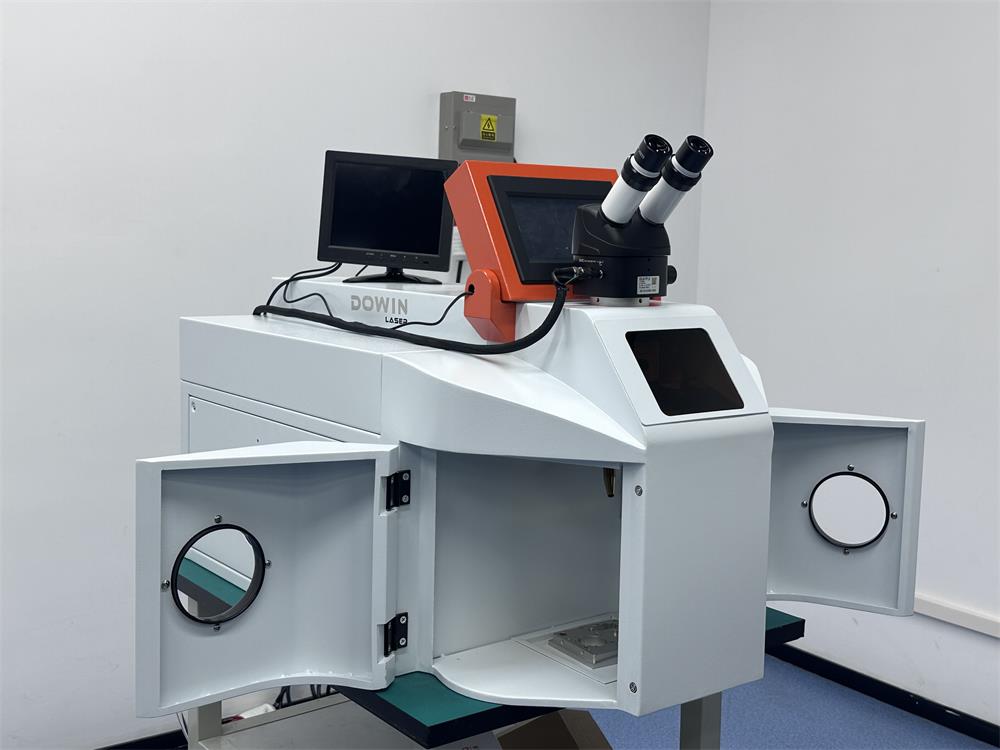
Antique jewelry is more than a piece of precious metal. It may contain decades or even centuries of craftsmanship, delicate filigree, hand-cut details, thin settings, and gemstones that require careful handling. When an antique ring, pendant, bracelet, or brooch needs repair, the goal is not simply to make the damaged area strong again. The repair should preserve as much of the original design and material as possible.
This is where laser welding for antique jewelry repair can provide an important advantage.
Unlike conventional torch soldering, a jewelry laser welder concentrates energy into a very small area. This gives the jeweler greater control over where metal is melted and added, making laser welding particularly useful for delicate restoration work, small cracks, worn areas, broken prongs, and difficult-to-reach sections.
Why Is Antique Jewelry Difficult to Repair?
Antique jewelry can present repair challenges that are less common with newer pieces.
Years of wear may have made the metal thinner, while previous repairs may have introduced solder into the original construction. Decorative elements such as filigree, engraving, milgrain edges, and small settings can also be extremely difficult to repair without affecting the surrounding design.
Another concern is heat.
Traditional torch soldering heats a relatively large area of the jewelry. For a modern, relatively robust piece, this may be perfectly appropriate. However, when working on an antique piece with fragile details or heat-sensitive gemstones, controlling the heat becomes much more important.
A laser welder approaches the problem differently. Instead of broadly heating the jewelry, the operator can deliver laser energy to a specific repair location.
This precision is one reason professional jewelry repair shops use laser welding for delicate and restoration work. Industry examples describe laser welding as particularly useful for antique, estate, filigree, and gemstone-set jewelry where conventional torch techniques may introduce additional risks.
How Does Laser Welding Restore Antique Jewelry?
The basic process is relatively straightforward, but successful restoration depends heavily on the operator’s experience.
1. Inspect the Antique Jewelry
Before welding, the jeweler examines the damaged area under magnification.
The inspection should identify:
-
The type of precious metal
-
The location and extent of the damage
-
Existing solder or previous repairs
-
Metal thickness
-
Nearby gemstones
-
Structural weaknesses
-
Decorative details that must be preserved
This step is especially important for antique jewelry because the visible damage may not represent the entire problem.
For example, a cracked prong may be associated with a weakened section of metal around the stone. Simply closing the visible crack may not provide a durable repair.
2. Clean and Prepare the Repair Area
Contamination can interfere with the welding process.
Oxidation, dirt, polishing compounds, old solder, and other residues may need to be removed before laser welding. The repair area should be prepared carefully without unnecessarily removing original material.
For antique jewelry restoration, preservation is often as important as repair.
3. Add Matching Metal When Necessary
Laser welding does not necessarily mean simply joining two existing pieces of metal.
A jeweler can use a compatible filler wire to rebuild missing material, reinforce worn areas, fill small cracks, or reconstruct damaged sections.
The filler material should be selected according to the jewelry’s metal and the desired appearance of the finished repair.
4. Apply Laser Pulses Precisely
The operator then directs the laser at the repair area under magnification.
Short, controlled pulses can melt a very small quantity of metal at a time. This allows the jeweler to gradually build up or fuse the damaged section rather than applying heat to a large portion of the antique piece.
The operator can adjust parameters such as pulse energy, duration, frequency, and spot size according to the material and repair.
This level of control is one of the main reasons laser welding has become useful for fine jewelry repair.
5. Finish and Polish the Repair
After welding, the repaired area can be filed, shaped, polished, or otherwise finished to match the surrounding surface.
For antique jewelry, finishing requires particular care.
Over-polishing can remove original details such as engraving, milgrain, or aged surface characteristics. A good restoration should therefore balance structural repair with preservation of the jewelry’s original appearance.
What Types of Antique Jewelry Can Be Laser Welded?
A jewelry laser welder can be used for a wide range of restoration applications.
Antique Rings
Common applications include:
-
Broken or worn prongs
-
Cracks in ring shanks
-
Worn shoulders
-
Missing metal
-
Small casting defects
-
Damaged settings
-
Resizing-related repairs
For rings containing valuable gemstones, localized laser welding can be especially useful when the repair needs to be performed close to the setting.
Antique Chains and Bracelets
Thin chains can be difficult to repair using conventional soldering because excessive heat may affect surrounding links.
Laser welding allows the jeweler to work on a small section of a chain while limiting heat transfer to adjacent areas.
This can be useful for repairing:
-
Broken chain links
-
Jump rings
-
Clasp connections
-
Thin bracelet sections
-
Small attachment points
Antique Filigree Jewelry
Filigree is one of the strongest applications for precision laser welding.
The decorative wirework can be extremely thin, and broad heating can make conventional repair more difficult.
A laser welder can target a small break or attachment point while helping preserve nearby decorative structures.
Antique Brooches and Pendants
Broken posts, worn connections, cracks, and small structural failures can often be addressed with localized welding.
Because many brooches and pendants contain intricate decorative work, the ability to control the repair area can be more important than simply applying maximum welding power.
Can Laser Welding Repair Antique Jewelry Without Removing the Gemstone?
In some situations, laser welding can allow a jeweler to repair metal close to a gemstone without removing the stone.
However, this should never be interpreted as meaning that every gemstone is automatically safe during laser welding.
The gemstone, setting, metal type, repair location, laser parameters, and operator’s technique all matter.
Some professional jewelry repair businesses specifically use laser welding around gemstones and on delicate antique pieces because the concentrated heat can reduce the amount of surrounding metal exposed to heat compared with conventional torch work.
The correct approach is therefore to evaluate the stone and repair individually rather than promising that stones never need to be removed.
Laser Welding vs. Torch Soldering for Antique Jewelry
Both methods have a place in jewelry repair.
| Feature | Laser Welding | Torch Soldering |
|---|---|---|
| Heat concentration | Highly localized | Broader heat distribution |
| Precision | Very high | Depends heavily on technique |
| Small repairs | Excellent | Suitable |
| Thin metal | Often advantageous | Requires careful heat control |
| Intricate filigree | Well suited | Can be challenging |
| Repairs near some gemstones | Can be advantageous | May require greater caution |
| Filler material | Can use fine filler wire | Uses solder |
| Antique restoration | Particularly useful for delicate areas | Still valuable for many repairs |
| Operator skill | Requires laser-specific training | Requires traditional soldering skill |
The important point is that laser welding does not simply replace soldering.
A professional jeweler should select the repair technique according to the jewelry, the damage, the metal, and the desired restoration result.
Why Laser Welding Can Be Valuable for Antique Jewelry Restoration
The biggest advantage is control.
Antique jewelry often requires the jeweler to remove as little original material as possible while restoring structural strength.
A laser welder can support this approach by allowing very localized metal deposition and fusion.
Other potential benefits include:
-
Small and precise weld areas
-
Reduced surrounding heat exposure
-
Ability to work on delicate components
-
Accurate addition of filler metal
-
Access to difficult-to-reach repair locations
-
Suitable for many precious-metal repair applications
-
Less disruption to intricate decorative details
These characteristics explain why laser welding is increasingly used for delicate jewelry repair and restoration rather than only for new jewelry manufacturing.
What Precious Metals Can Be Laser Welded?
Jewelry laser welding systems can be configured for many commonly used precious metals, including:
-
Gold
-
Silver
-
Platinum
-
Palladium and selected precious-metal alloys
However, the exact welding parameters depend on the alloy, thickness, surface condition, and repair objective.
For antique jewelry, identifying the metal correctly is particularly important because older pieces may use alloy compositions that differ from modern jewelry.
The operator should therefore avoid assuming that a piece marked with a familiar hallmark will behave exactly like a modern alloy of the same nominal material.
Can Laser Welding Preserve the Original Appearance of Antique Jewelry?
It can help, but the quality of the final restoration depends on more than the laser itself.
A successful antique jewelry repair requires:
-
Accurate identification of the original construction
-
Appropriate laser parameters
-
Correct filler material
-
Controlled metal deposition
-
Skilled finishing and polishing
-
Careful preservation of original details
For example, repairing a crack in a Victorian filigree ring is not simply a matter of making the crack disappear. The repair must also maintain the surrounding wirework and overall visual character.
This is why laser welding should be considered a precision restoration tool, not an automatic solution for every antique jewelry problem.
When Should a Jeweler Choose Laser Welding?
Laser welding is particularly worth considering when:
-
The damaged area is very small
-
The jewelry contains intricate details
-
The metal is thin
-
The repair is close to a gemstone
-
Conventional soldering would expose a large area to heat
-
The piece contains valuable antique craftsmanship
-
A previous solder repair needs to be corrected
-
Missing metal needs to be rebuilt precisely
-
The repair location is difficult to access with a torch
For larger structural repairs or situations where broad heating is acceptable, conventional soldering may still be the more practical choice.
Choosing a Laser Welder for Antique Jewelry Repair
Jewelry workshops considering a laser welding machine should evaluate more than laser power.
Important specifications and capabilities include:
Pulse Energy and Control
Fine jewelry repair requires precise energy control. A machine designed for jewelry applications should allow the operator to adjust welding parameters according to delicate materials.
Microscope or Magnified Viewing System
Accurate positioning is essential for antique jewelry restoration. A high-quality viewing system allows the operator to see the repair area clearly while controlling the laser.
Adjustable Spot Size
A smaller spot can be useful for highly localized repairs, while a larger spot may be appropriate for other applications.
Filler Wire Compatibility
The machine should support the type and diameter of filler wire required for common jewelry repair applications.
Operator Ergonomics
Jewelry repair often involves extended periods of precision work. Microscope positioning, controls, worktable design, and machine accessibility can therefore affect productivity as well as repair quality.
Frequently Asked Questions
Is laser welding safe for antique jewelry?
Laser welding can be an effective method for delicate antique jewelry, but the safety of a specific repair depends on the metal, gemstone, construction, and laser parameters. Professional evaluation is essential.
Can a laser welder repair old gold jewelry?
Yes. Laser welding can be used for many gold jewelry repair applications, including cracks, worn areas, broken settings, chains, and other localized damage.
Can laser welding repair antique filigree?
Yes. The precision of laser welding makes it particularly useful for delicate filigree repairs where minimizing unnecessary heat is important.
Is laser welding better than soldering for antique jewelry?
Not universally. Laser welding offers advantages for precise, localized repairs, while soldering remains useful for many traditional jewelry repairs. The best method depends on the individual piece.
Can laser welding repair jewelry with stones?
In some cases, yes. Some professional jewelers use laser welding for repairs near set gemstones because the heat can be concentrated in a small area. However, gemstone type and repair conditions must always be evaluated before welding.
Final Thoughts
Restoring antique jewelry requires a different mindset from ordinary metal repair. The objective is not simply to make a broken area functional again, but to preserve the craftsmanship, proportions, details, and character of the original piece.
Laser welding for antique jewelry repair provides jewelers with a highly controlled method for working on fragile areas, thin metals, intricate filigree, damaged settings, and other difficult repair locations.
When combined with skilled inspection, appropriate filler materials, carefully selected laser parameters, and professional finishing, a jewelry laser welder can become an important tool for modern antique jewelry restoration.
For jewelry workshops handling antique, vintage, estate, and high-value pieces, laser welding is therefore worth considering as a precision alternative to conventional repair techniques—not because it replaces traditional craftsmanship, but because it gives the jeweler another level of control when traditional methods are difficult or risky.
Post time: Aug-25-2026
