
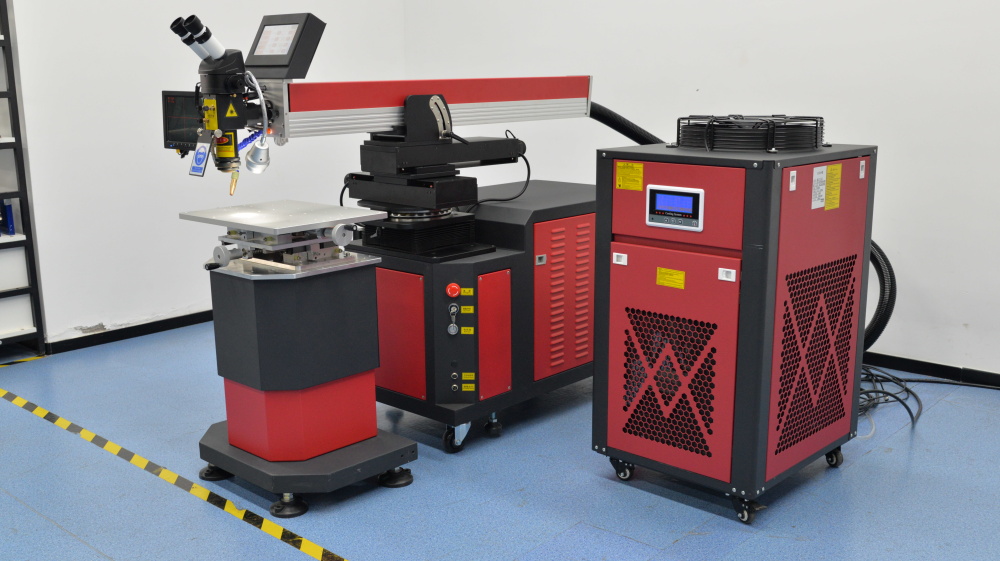
In modern manufacturing and mold repair industries, laser technology has become an important solution for extending component life, reducing downtime, and improving repair quality. Two commonly used technologies are laser cladding and mold laser welding.
Although both processes use a high-energy laser beam to bond metal materials, they serve different purposes. Understanding the differences between laser cladding and mold laser welding helps manufacturers choose the right technology for their applications.
What Is Laser Cladding?
Laser cladding is a surface enhancement process that uses a laser beam to melt a layer of powder or wire material onto the surface of a metal component. The added material forms a metallurgical bond with the base material, creating a new protective layer.
The main purpose of laser cladding is not only repair but also improving surface performance.
Common goals include:
- Increasing wear resistance
- Improving corrosion resistance
- Enhancing hardness
- Restoring large worn areas
- Extending component service life
During the process, metal powder or welding wire is continuously fed into the laser melting zone. The laser creates a molten pool where the added material and base metal combine.
What Is Mold Laser Welding?
Mold laser welding is a precision repair technology designed specifically for repairing damaged molds and dies. It uses a focused laser beam to melt welding wire and the damaged mold surface together.
Unlike traditional welding methods, mold laser welding produces minimal heat input and very little deformation.
It is widely used for:
- Injection mold repair
- Die casting mold maintenance
- Stamping die repair
- Parting line restoration
- Edge and corner rebuilding
- Crack and wear repair
Mold laser welding allows technicians to repair small damaged areas without affecting the surrounding mold structure.
Key Differences Between Laser Cladding and Mold Laser Welding
| Feature | Laser Cladding | Mold Laser Welding |
|---|---|---|
| Main Purpose | Surface enhancement and coating | Precision mold repair |
| Material Addition | Mainly metal powder, sometimes wire | Welding wire |
| Repair Area | Large surface areas | Small and precise damaged areas |
| Typical Thickness | Several millimeters or more | Usually thin repair layers |
| Heat Input | Higher | Very low |
| Precision | Medium to high | Extremely high |
| Surface Modification | Excellent | Limited |
| Mold Detail Protection | Less suitable for fine details | Ideal for complex details |
| Common Industries | Mining, aerospace, energy, automotive | Mold manufacturing, injection molding, tooling |
Difference in Applications
Laser Cladding Applications
Laser cladding is often used when a component requires improved surface properties.
Typical applications include:
1. Wear-Resistant Coatings
Industrial parts exposed to friction can be coated with harder materials to reduce wear.
Examples:
- Hydraulic components
- Shafts
- Rollers
- Mining equipment
2. Corrosion Protection
Laser cladding can create protective layers on components exposed to harsh environments.
Examples:
- Chemical equipment
- Oil and gas components
- Marine parts
3. Large Component Restoration
When large metal surfaces are worn, laser cladding can rebuild the damaged area efficiently.
Mold Laser Welding Applications
Mold laser welding focuses on accuracy rather than surface improvement.
Common repair tasks include:
1. Repairing Cracks in Injection Molds
Small cracks can cause product defects and shorten mold life. Laser welding restores the damaged area without damaging nearby structures.
2. Restoring Mold Edges and Corners
Sharp edges are critical for product accuracy. Mold laser welders can rebuild missing areas with high precision.
3. Fixing Parting Line Damage
Wear on mold parting lines may cause flashing problems. Laser welding restores the original geometry.
4. Repairing Textured and Precision Areas
Because of its small heat-affected zone, laser welding is suitable for molds with fine textures, cavities, and complex designs.
Precision Comparison: Which Is More Accurate?
For precision mold repair, mold laser welding has a clear advantage.
A mold laser welder typically uses:
- Microscope-assisted operation
- Adjustable laser spot size
- Fine welding wire
- Controlled pulse energy
This allows operators to repair areas as small as edges, corners, and detailed cavity sections.
Laser cladding is designed more for improving larger surfaces rather than repairing microscopic defects.
Heat Impact Comparison
Heat control is one of the biggest differences between the two technologies.
Traditional welding methods can create:
- Mold deformation
- Stress concentration
- Cracks
- Additional machining requirements
Mold laser welding minimizes these issues because the laser energy is concentrated in a very small area.
Benefits include:
- Small heat affected zone
- Minimal distortion
- Reduced post-processing
- Protection of precision dimensions
Laser cladding generally involves a larger melting area because it creates a thicker surface layer.
Which Technology Is Better for Mold Repair?
For mold repair applications, mold laser welding is usually the better choice.
It is especially suitable for:
- Injection mold repair shops
- Plastic mold manufacturers
- Automotive mold maintenance
- Precision tooling companies
- Die repair workshops
Laser cladding is better when the goal is to improve surface properties or restore large worn components.
Laser Cladding vs Mold Laser Welding: How to Choose?
Choose laser cladding if you need:
✔ Large-area surface coating
✔ Improved wear resistance
✔ Corrosion protection
✔ Hardness enhancement
✔ Component life extension
Choose mold laser welding if you need:
✔ Precision mold repair
✔ Crack fixing
✔ Edge rebuilding
✔ Minimal deformation
✔ Restoration of complex mold details
Conclusion
Laser cladding and mold laser welding are both advanced laser-based metal processing technologies, but they solve different problems.
Laser cladding focuses on surface improvement and protection, while mold laser welding focuses on high-precision repair and restoration.
For manufacturers that need to repair expensive molds with minimal downtime and maximum accuracy, a professional mold laser welding machine provides a more targeted and efficient solution. For large industrial components requiring enhanced surface performance, laser cladding remains the preferred technology. Choosing the right process depends on your material, repair requirements, and production goals.
Post time: Jul-15-2026
