
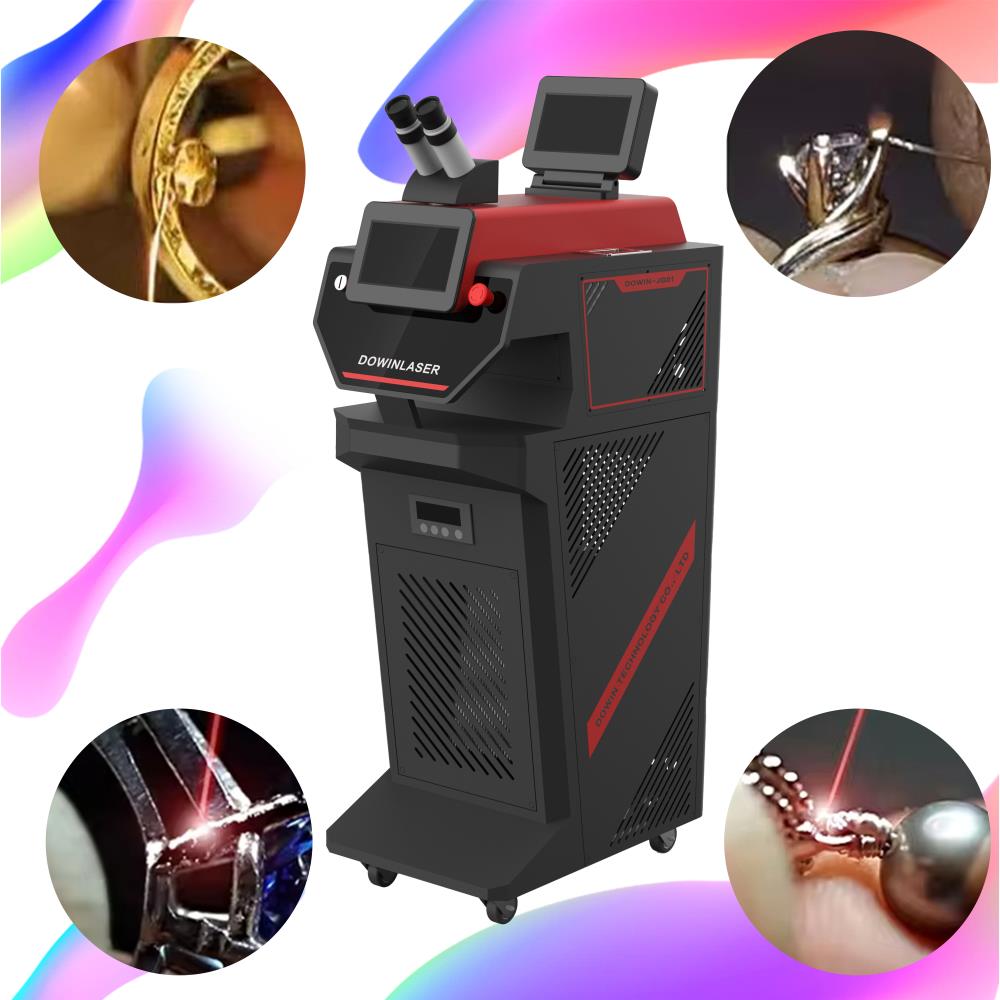
The jewelry industry has entered a new era of precision manufacturing, customization, and advanced craftsmanship. Traditional soldering and repair methods are no longer enough for many modern jewelry applications, especially as customer demand grows for personalized luxury jewelry, intricate designs, and invisible repairs.
One of the most transformative technologies driving this evolution is jewelry laser welding technology. Originally used mainly for repair work, laser welding has now expanded into a wide range of innovative applications across jewelry manufacturing, restoration, customization, and artistic design.
With exceptional precision, minimal heat impact, and high operational flexibility, jewelry laser welding machines are changing the way jewelers create and repair fine jewelry.
What Is Jewelry Laser Welding Technology?
Jewelry laser welding uses a highly concentrated laser beam to fuse metal components together with extreme accuracy.
Unlike traditional soldering, laser welding:
- Applies heat only to a localized area
- Minimizes damage to surrounding materials
- Produces cleaner welds
- Reduces oxidation
- Allows micro-level processing
Modern laser welding systems are commonly used with:
- Gold
- Silver
- Platinum
- Titanium
- Stainless steel
- Palladium alloys
The technology has become essential in both jewelry repair shops and luxury manufacturing environments.
Why Laser Welding Is Transforming the Jewelry Industry
Several trends are accelerating the adoption of laser welding technology:
- Rising demand for custom jewelry
- Growth of luxury repair services
- Increasing complexity of jewelry designs
- Higher customer expectations for invisible repairs
- Expansion of digital jewelry manufacturing
Laser welding helps jewelers achieve levels of precision and flexibility that traditional methods cannot easily provide.
1. Invisible Jewelry Repair
One of the most valuable applications of laser welding is nearly invisible repair work.
Traditional soldering often leaves:
- Visible seams
- Oxidation marks
- Surface discoloration
- Excess polishing areas
Laser welding produces:
- Tiny weld points
- Minimal heat spread
- Cleaner surfaces
- Better color consistency
This allows jewelers to restore:
- Broken chains
- Cracked rings
- Worn prongs
- Delicate antique jewelry
without significantly affecting the original appearance.
Invisible repairs are especially important in luxury and sentimental jewelry restoration.
2. Precision Prong Rebuilding
Gemstone security is critical in fine jewelry.
Over time, prongs wear down and require rebuilding to prevent stone loss.
Laser welding enables:
- Accurate micro welding
- Minimal gemstone heat exposure
- Stronger prong reinforcement
- Precise metal addition
This application is widely used for:
- Diamond rings
- High-end engagement jewelry
- Luxury gemstone settings
Many repairs can be completed without removing the gemstone, greatly improving efficiency.
3. Custom Jewelry Manufacturing
Modern consumers increasingly demand personalized jewelry.
Laser welding allows designers to create:
- One-of-a-kind pieces
- Complex geometric structures
- Lightweight luxury jewelry
- Intricate artistic details
Because the laser offers highly localized energy control, jewelers can experiment with designs that would be difficult using traditional soldering techniques.
Laser welding supports:
- Creative flexibility
- Faster prototyping
- High-precision assembly
This makes it ideal for custom jewelry studios.
4. Mixed-Metal Jewelry Design
Mixed-metal jewelry has become a major trend in luxury fashion.
Combining:
- Yellow gold
- White gold
- Rose gold
- Platinum
- Titanium
creates visually striking designs but can be difficult with conventional soldering methods.
Laser welding allows jewelers to join different metals with:
- Better heat control
- Reduced discoloration
- Cleaner transitions
- Higher precision
This opens new creative possibilities for modern jewelry designers.
5. Antique Jewelry Restoration
Restoring antique jewelry requires extreme care because older pieces are often fragile and irreplaceable.
Traditional heating methods may:
- Damage delicate structures
- Alter original finishes
- Weaken historic craftsmanship
Laser welding offers a safer restoration method due to:
- Minimal thermal impact
- Precision targeting
- Reduced mechanical stress
This technology is now widely used in:
- Vintage jewelry restoration
- Museum conservation work
- Heirloom repair
Preserving historical craftsmanship while improving structural integrity is one of laser welding’s most valuable applications.
6. Repairing Delicate Chains and Filigree
Thin jewelry structures are particularly difficult to repair traditionally.
Laser welding excels in repairing:
- Fine chains
- Hollow jewelry
- Intricate filigree
- Lightweight earrings
- Minimalist luxury pieces
The precision laser beam allows jewelers to work on extremely small areas without deforming surrounding metal.
This supports modern trends toward lightweight and delicate jewelry design.
7. Jewelry Resizing with Minimal Distortion
Ring resizing remains one of the most common jewelry services.
Traditional soldering can create:
- Visible joints
- Uneven heat distribution
- Structural distortion
Laser welding improves resizing quality by:
- Creating cleaner seams
- Reducing oxidation
- Preserving original shape
- Minimizing polishing work
Luxury jewelry customers increasingly prefer laser resizing because of the superior finish quality.
8. Combining Laser Welding with 3D Printed Jewelry
3D printing is rapidly transforming jewelry manufacturing.
Laser welding complements 3D printing by enabling:
- Precision assembly of printed components
- Structural reinforcement
- Fine-detail finishing
- Complex hybrid designs
This combination supports highly customized jewelry production with exceptional design freedom.
As digital manufacturing expands, laser welding will play an even greater role in advanced jewelry fabrication.
9. High-Precision Watch and Accessory Repair
Laser welding technology is also widely used beyond traditional jewelry.
Applications include:
- Luxury watch repair
- Eyewear frame welding
- Precision metal accessories
- Small electronic metal components
The technology’s micro-welding capability makes it ideal for high-value precision products.
10. Laser Engraving and Decorative Applications
Some advanced jewelry laser systems combine welding and engraving capabilities.
This allows jewelers to:
- Add personalized engravings
- Create decorative textures
- Apply logos and serial numbers
- Produce artistic surface effects
Integrated laser systems improve workflow efficiency and expand customization services.
Fiber Laser vs YAG Technology
Modern jewelry laser welding systems generally use:
- Fiber laser technology
- YAG laser technology
Fiber Laser Advantages
- Lower maintenance
- Higher energy efficiency
- Longer lifespan
- Faster operation
YAG Laser Advantages
- Excellent precision
- Proven jewelry repair performance
- Strong industry familiarity
Both technologies continue evolving as manufacturers improve laser control and efficiency.
Future Trends in Jewelry Laser Welding
The future of jewelry laser welding technology is closely connected to:
- Smart manufacturing
- AI-assisted precision control
- Digital jewelry production
- Automated repair systems
- Sustainable manufacturing practices
As technology advances, laser welding systems will likely become:
- More compact
- More intelligent
- More affordable
- More integrated with CAD and automation platforms
The role of laser technology in jewelry production will continue expanding rapidly.
Final Thoughts
Jewelry laser welding technology has evolved far beyond simple repair work. Today, it supports a wide range of innovative applications including invisible restoration, custom jewelry manufacturing, mixed-metal assembly, antique conservation, precision gemstone repair, and integration with modern digital production systems.
By offering exceptional precision, cleaner welds, minimal heat impact, and greater design flexibility, laser welding has become one of the most important technologies shaping the future of the jewelry industry.
As consumer demand for customization, luxury craftsmanship, and precision continues growing, innovative laser welding applications will play an increasingly central role in modern jewelry design, manufacturing, and repair.
Post time: May-28-2026
