
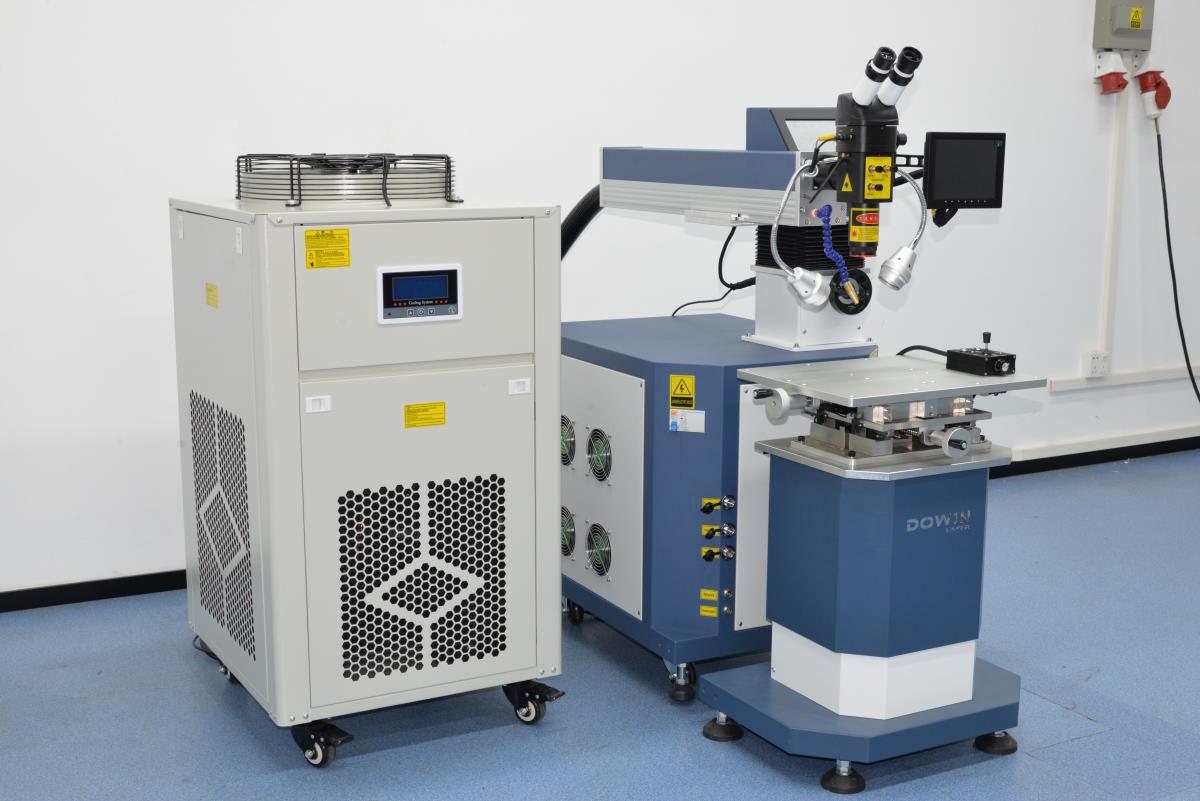
The manufacturing industry is undergoing a major transformation driven by Industry 4.0 technologies, including automation, artificial intelligence, digital monitoring, and intelligent production systems. These innovations are changing how manufacturers design, produce, maintain, and repair industrial equipment.
Mold repair welding, once heavily dependent on manual skills and traditional welding methods, is also evolving. With the development of laser welding technology, CNC control systems, and intelligent automation, modern mold repair has become more precise, efficient, and data-driven.
For industries such as automotive, electronics, medical devices, and precision manufacturing, Industry 4.0 is creating a new generation of mold repair solutions that reduce downtime, improve repair quality, and extend mold service life.
What Is Industry 4.0 in Mold Manufacturing?
Industry 4.0 refers to the integration of digital technologies into manufacturing processes to create smarter and more connected production systems.
In mold manufacturing and maintenance, Industry 4.0 technologies include:
-
Automated equipment
-
CNC-controlled systems
-
Industrial robots
-
Artificial intelligence
-
Digital twins
-
Data collection and analysis
-
Smart sensors
-
Cloud-based management systems
These technologies allow manufacturers to monitor mold conditions, predict failures, and optimize repair processes.
The Traditional Challenges of Mold Repair Welding
Before advanced laser technology became widely available, mold repair mainly relied on conventional welding methods such as TIG welding and manual arc welding.
Although experienced technicians can achieve good results, traditional methods have several limitations:
High Dependence on Skilled Operators
Traditional mold repair requires years of experience because operators must manually control:
-
Welding speed
-
Heat input
-
Material addition
-
Repair positioning
The final quality often depends on individual skill levels.
Excessive Heat Input
Traditional welding methods can generate significant heat, causing:
-
Mold deformation
-
Internal stress
-
Cracks
-
Dimensional changes
For precision molds, even small deformation can affect product quality.
Limited Repair Accuracy
Modern molds often contain:
-
Fine cavities
-
Sharp edges
-
Complex textures
-
Small precision structures
Traditional welding methods may not provide the accuracy required for these applications.
The Rise of Laser Welding in Modern Mold Repair
Laser welding has become a key technology in the evolution of mold repair.
Unlike traditional welding, mold laser welding uses a focused laser beam to generate controlled heat in a very small area.
This provides several advantages:
-
Minimal heat affected zone
-
High welding accuracy
-
Low deformation
-
Excellent surface quality
-
Ability to repair complex details
Laser welding is especially suitable for:
-
Injection molds
-
Die casting molds
-
Precision tooling
-
Automotive molds
-
Electronic component molds
How Industry 4.0 Improves Mold Laser Welding
1. Intelligent CNC Control
Modern mold laser welding machines can integrate CNC motion systems to automatically control welding positions.
Benefits include:
-
Higher repeatability
-
More consistent weld quality
-
Reduced operator error
-
Faster repair processes
Instead of relying entirely on manual movement, the machine can accurately follow programmed paths.
2. Digital Parameter Management
Advanced laser welding systems allow operators to store and manage welding parameters digitally.
Important parameters include:
-
Laser power
-
Pulse frequency
-
Welding speed
-
Wire feeding rate
-
Spot size
Manufacturers can save successful repair settings and reuse them for similar molds.
This improves production consistency and reduces setup time.
3. Automated Welding Processes
Automation is one of the most important trends in Industry 4.0.
Automatic mold laser welding machines can perform:
-
Programmable welding paths
-
Repeated repair operations
-
Multi-axis movement
-
Automated positioning
This is valuable for manufacturers handling large numbers of molds or repeated repair tasks.
4. Real-Time Monitoring and Quality Control
Smart manufacturing systems increasingly use sensors and monitoring technology.
Future mold welding systems may monitor:
-
Laser energy stability
-
Temperature changes
-
Welding conditions
-
Repair progress
Real-time data helps identify problems early and improves quality control.
Benefits of Industry 4.0 Mold Repair Welding
Improved Repair Accuracy
Digital control systems allow more precise welding operations, making it possible to repair:
-
Small cracks
-
Fine edges
-
Complex cavities
-
Precision surfaces
This is essential for high-value molds.
Reduced Production Downtime
In modern manufacturing, unexpected mold downtime can cause significant losses.
Advanced laser welding helps:
-
Repair molds faster
-
Reduce outsourcing time
-
Return molds to production quickly
Faster maintenance improves overall factory efficiency.
Extended Mold Lifespan
Molds represent a major investment for manufacturers.
Laser repair can restore:
-
Worn surfaces
-
Damaged corners
-
Cracked areas
-
Worn parting lines
Extending mold life reduces replacement costs and improves return on investment.
Better Production Data Management
With Industry 4.0 integration, manufacturers can record:
-
Repair history
-
Welding parameters
-
Maintenance schedules
-
Mold performance data
This information supports predictive maintenance and better decision-making.
Applications of Smart Mold Repair Welding
Automotive Manufacturing
Automotive companies use advanced mold welding for:
-
Interior component molds
-
Exterior plastic molds
-
Die casting tools
High production volumes make reliable mold maintenance essential.
Electronics Manufacturing
Electronic components require extremely precise molds.
Laser welding helps repair:
-
Connector molds
-
Small plastic component molds
-
Precision tooling
Medical Device Manufacturing
Medical products require strict quality standards.
Precision mold repair ensures:
-
Accurate dimensions
-
Stable production
-
Reduced defects
The Future of Mold Repair Welding
The future of mold repair will continue moving toward greater automation and intelligence.
Future developments may include:
-
AI-assisted welding parameter optimization
-
Robotic mold repair systems
-
Automatic defect detection
-
Cloud-based maintenance records
-
Fully automated repair workflows
As manufacturing becomes more connected, mold repair will no longer be only a maintenance activity but an intelligent part of the production ecosystem.
Conclusion
Industry 4.0 is transforming mold repair welding from a highly manual process into a smarter, more precise, and more efficient manufacturing solution.
The combination of laser welding technology, automation, digital control, and data management enables manufacturers to achieve higher repair quality while reducing downtime and maintenance costs.
For companies in automotive, electronics, and precision manufacturing, adopting advanced mold laser welding technology is becoming an important step toward smarter production and long-term competitiveness.
Post time: Jul-22-2026
