
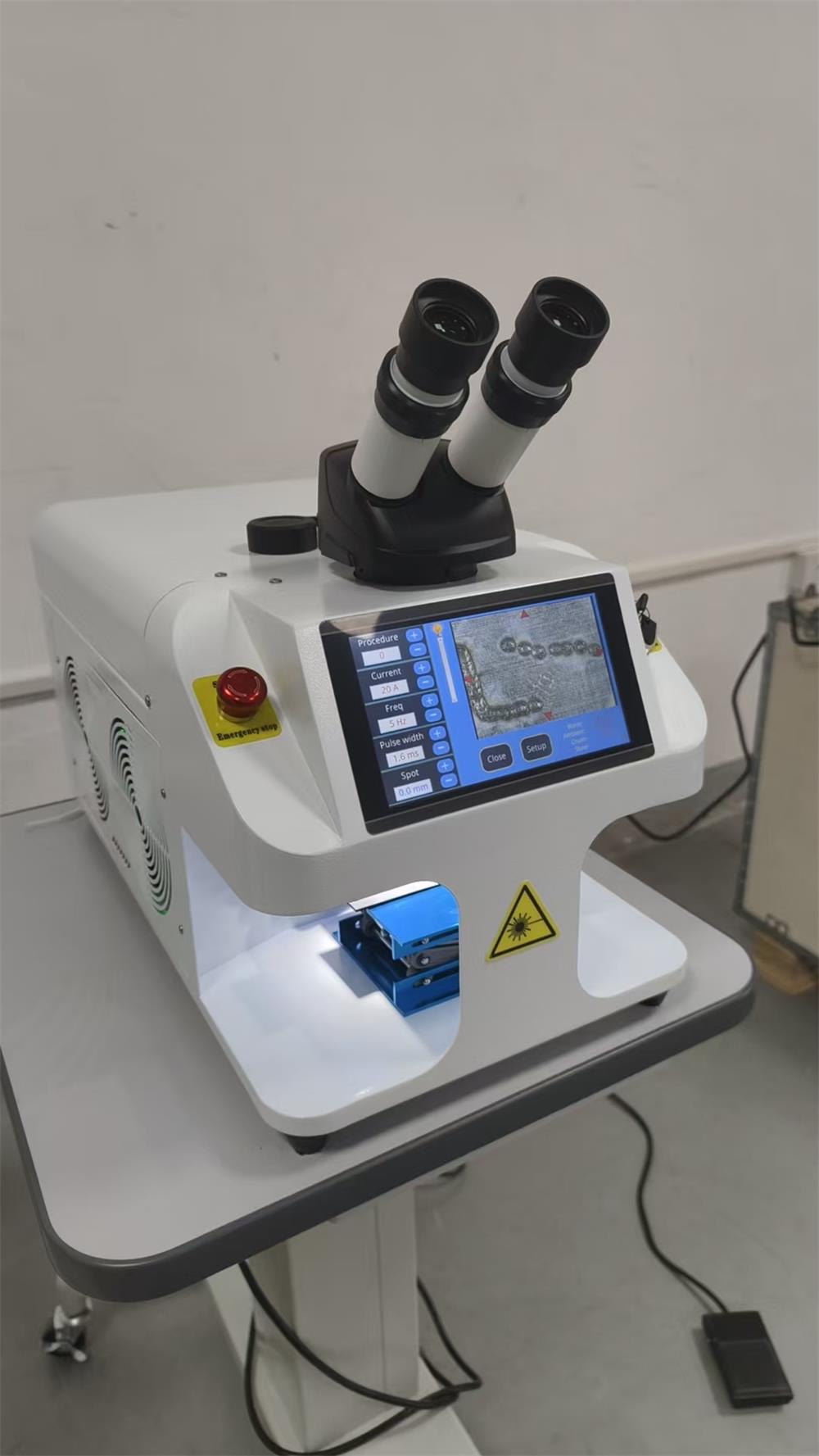
The jewelry industry is changing rapidly. Traditional soldering methods are no longer enough for many modern workshops that demand higher precision, cleaner welding points, and lower material loss. As a result, jewelry laser welding machines have become essential equipment for jewelry manufacturers, repair shops, custom jewelry studios, and luxury brands worldwide.
However, buying an advanced laser welder is only the first step. The real challenge is training staff to use the machine efficiently, safely, and professionally. A well-trained operator can dramatically improve production quality, reduce repair costs, and increase customer satisfaction. On the other hand, poor training may lead to damaged jewelry, wasted precious metals, and unstable weld quality.
This article explains how to effectively train employees to use jewelry laser welding machines and build a highly skilled jewelry welding team.
Why Proper Training Matters
Jewelry laser welding machines are precision tools. Unlike traditional welding equipment, laser welders use concentrated energy to create extremely fine and accurate welds. Even small operational mistakes can affect delicate jewelry pieces.
Proper training helps staff:
-
Understand laser welding principles
-
Avoid damaging expensive jewelry
-
Improve welding speed and consistency
-
Reduce production errors
-
Extend machine lifespan
-
Increase workplace safety
For jewelry businesses handling gold, silver, platinum, titanium, or gemstone-mounted pieces, operator skill directly impacts profitability.
Step 1: Start with Basic Laser Welding Knowledge
Before employees touch the machine, they should understand the fundamentals of laser welding technology.
Training should include:
Understanding How Laser Welding Works
Operators should learn:
-
How laser energy melts metal
-
The difference between pulse laser welding and traditional soldering
-
Why laser welding produces minimal heat deformation
-
How spot size and pulse frequency affect welding results
When staff understand the science behind the process, they make better adjustments during real production.
Learning Jewelry Material Characteristics
Different metals react differently to laser energy.
Employees should study:
-
Gold welding behavior
-
Silver reflection issues
-
Platinum heat absorption
-
Stainless steel welding settings
-
Titanium oxidation control
This knowledge prevents common beginner mistakes such as overburning or weak weld penetration.
Step 2: Provide Safety Training First
Laser welding machines are safe when used correctly, but operators must follow strict safety procedures.
Key safety topics include:
Eye Protection
Laser light can damage eyesight. Operators must wear professional laser safety glasses that match the machine wavelength.
Ventilation
Welding may produce metal fumes. Proper workshop ventilation improves operator health and working conditions.
Electrical Safety
Employees should know:
-
Proper startup procedures
-
Emergency stop operation
-
Cooling system inspection
-
Power supply requirements
Fire Prevention
Jewelry workshops often contain flammable materials such as polishing compounds or packaging materials. Staff should know how to handle fire risks near welding stations.
A safe operator is usually a more confident and productive operator.
Step 3: Teach Machine Structure and Functions
Before actual welding begins, employees should become familiar with the machine itself.
Training should cover:
-
Laser source
-
Microscope system
-
Touchscreen controller
-
Water chiller
-
Protective gas system
-
Foot pedal operation
-
Worktable positioning
New operators often feel intimidated by laser equipment. Breaking the machine into simple functional sections helps reduce fear and confusion.
Step 4: Begin with Simple Practice Materials
Never start training with expensive jewelry.
Instead, use low-cost practice metals such as:
-
Copper sheets
-
Stainless steel samples
-
Silver scraps
-
Brass plates
Practice exercises should include:
-
Straight welding lines
-
Spot welding
-
Gap filling
-
Crack repair
-
Ring resizing simulations
This stage builds hand stability and coordination between microscope viewing and foot pedal control.
Step 5: Train Operators to Adjust Parameters
One of the most important skills in jewelry laser welding is parameter adjustment.
Operators must understand how to control:
-
Laser power
-
Pulse width
-
Frequency
-
Spot diameter
-
Welding speed
For example:
-
Thin chains require lower power
-
Thick rings require deeper penetration
-
Reflective silver often needs parameter compensation
Good training includes repeated experiments so operators can observe how different settings affect weld appearance and strength.
Step 6: Introduce Real Jewelry Repair Scenarios
After basic practice, employees should move to actual jewelry applications.
Training tasks may include:
Ring Resizing
Operators learn how to weld resized ring joints smoothly without visible marks.
Prong Repair
This requires extremely precise energy control to avoid gemstone damage.
Chain Welding
Thin chains are difficult for beginners because overheating can instantly melt the material.
Porosity Repair
Laser welding is widely used to repair casting defects in jewelry manufacturing.
Real-world practice is essential because production environments differ greatly from simple test plates.
Step 7: Teach Microscope Coordination Skills
Jewelry laser welding relies heavily on microscope operation.
New operators often struggle with:
-
Hand-eye coordination
-
Focus adjustment
-
Position accuracy
-
Depth perception
Training should include long microscope practice sessions to improve visual precision.
Experienced jewelry welders develop extremely stable micro-movement control over time. This cannot be learned in a single day.
Step 8: Create Standard Operating Procedures
Professional jewelry workshops usually develop standardized welding procedures for staff.
These SOPs may include:
-
Recommended settings for different metals
-
Daily machine inspection checklists
-
Cleaning procedures
-
Maintenance schedules
-
Emergency handling instructions
Standardization helps ensure consistent weld quality even when multiple employees operate the same machine.
Step 9: Use Video-Based Training
Modern training methods increasingly rely on video demonstrations.
Recording experienced operators allows beginners to study:
-
Hand positioning
-
Welding rhythm
-
Parameter selection
-
Repair techniques
Video learning accelerates skill development because operators can repeatedly observe professional workflows.
Many successful jewelry factories now combine:
-
Classroom instruction
-
Live demonstrations
-
Video tutorials
-
Hands-on practice
This hybrid training approach improves learning efficiency significantly.
Step 10: Evaluate Welding Quality Regularly
Training should include continuous performance evaluation.
Managers can assess:
-
Weld strength
-
Surface smoothness
-
Heat affected zone size
-
Repair visibility
-
Welding speed
Employees improve faster when they receive detailed feedback.
Some workshops even create internal certification systems where operators progress from beginner to advanced levels.
Common Mistakes New Operators Make
Understanding common beginner problems can improve training effectiveness.
Excessive Power Settings
Beginners often assume more power creates better welds. In reality, excessive energy can damage jewelry surfaces.
Poor Focus Position
Incorrect focal distance reduces welding quality dramatically.
Unstable Hand Control
Shaking movements lead to inconsistent weld seams.
Ignoring Material Differences
Using identical parameters for gold and silver usually causes poor results.
Training programs should specifically address these common issues early.
How Long Does Jewelry Laser Welding Training Take?
Training time varies depending on operator background.
Typical learning periods:
-
Basic operation: 3–7 days
-
Independent repair work: 1–2 months
-
Advanced precision welding: 6–12 months
Experienced jewelers often learn faster because they already understand jewelry structures and repair techniques.
However, mastering laser welding still requires long-term practice.
The Importance of Manufacturer Support
A good jewelry laser welding machine supplier should provide technical training and after-sales support.
Professional suppliers often offer:
-
Installation guidance
-
Video tutorials
-
Remote troubleshooting
-
Parameter recommendations
-
Maintenance support
This support is extremely valuable for workshops adopting laser technology for the first time.
Future Trends in Jewelry Laser Welding Training
The future of jewelry welding training is becoming more digital and intelligent.
Emerging trends include:
-
AI-assisted parameter recommendations
-
Virtual simulation training
-
Smart welding presets
-
Automated defect detection
-
Cloud-based technical support
As laser technology evolves, operator training will become more efficient while precision requirements continue increasing.
Conclusion
Training staff to use jewelry laser welding machines is not simply about teaching button operation. It involves building technical understanding, precision control, safety awareness, and real repair experience.
A properly trained operator can transform workshop productivity and repair quality. In today’s competitive jewelry industry, skilled laser welding technicians are becoming increasingly valuable assets.
Businesses that invest in structured laser welding training often gain major advantages in product quality, repair capability, and customer trust.
For companies entering the jewelry laser welding industry, combining advanced equipment with professional operator training is the key to long-term success.
Post time: May-29-2026
