
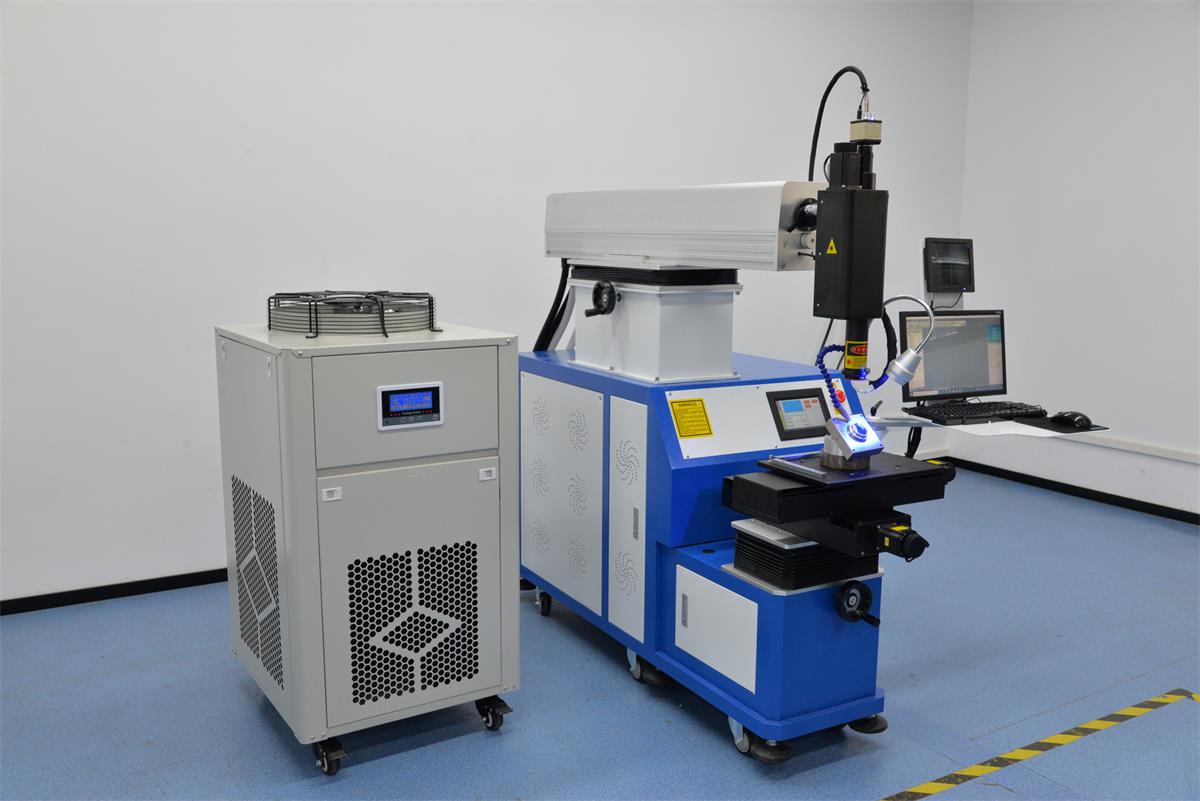
A cracked mold does not always need to be replaced. For many injection molds, stamping dies, and precision tooling components, laser welding can repair localized cracks while preserving the original mold geometry.
Compared with conventional welding, laser welding offers highly concentrated heat input, making it suitable for precision mold repair where excessive heat can cause distortion.
Can Laser Welding Repair a Cracked Mold?
Yes. A laser mold welding machine can repair certain cracks in mold steel and other compatible alloys.
The repair process typically involves removing the damaged material, filling the crack with compatible filler material, and rebuilding the surface with controlled laser pulses.
However, the mold should first be inspected to determine the crack’s depth, location and cause. Deep structural cracks may require a different repair method or replacement.
How to Repair a Cracked Mold with Laser Welding
1. Inspect the Crack
First identify the crack’s length, depth and location.
Pay particular attention to cracks around:
-
Mold cavities
-
Sharp corners
-
Cooling channels
-
Thin sections
-
Parting lines
-
High-stress areas
Understanding the cause of the crack is also important. Welding a mold without addressing excessive stress, overheating or poor mold design may result in the crack returning.
2. Clean the Damaged Area
Remove oil, dirt, rust and other contaminants from the repair area.
A clean surface helps create a more stable laser welding process and reduces the risk of contamination in the weld.
3. Prepare the Crack
Depending on the crack, the damaged area may need to be carefully opened or machined to create a suitable welding groove.
The objective is to expose sound base material and provide enough space for proper filler deposition.
4. Select Matching Filler Material
The filler wire should be compatible with the mold material and the required final properties.
Using an inappropriate filler can result in differences in hardness, cracking, polishing behavior or machining performance.
5. Set the Laser Parameters
Important parameters include:
-
Pulse energy
-
Pulse duration
-
Frequency
-
Spot diameter
-
Welding speed
-
Filler wire diameter
For precision molds, the operator normally uses controlled energy to avoid unnecessary heating of the surrounding material.
6. Fill the Crack Gradually
The laser melts a small area of the mold and filler material, creating a localized weld pool.
Rather than applying excessive heat in one operation, the damaged area can be rebuilt through multiple controlled passes or pulses.
A 3-axis automatic laser welding platform can be particularly useful when the repair path needs consistent positioning.
7. Machine and Finish the Repair
After welding, excess material can be removed through milling, grinding, polishing or EDM, depending on the mold surface.
The repaired area should ultimately match the original mold geometry and surface finish.
Why Use Laser Welding for Mold Cracks?
The main advantage is precise heat control.
A focused laser can deposit filler material exactly where it is required while limiting the heat-affected area.
This can help reduce:
-
Mold distortion
-
Excessive material removal
-
Post-welding machining
-
Damage to nearby precision features
Laser welding is therefore particularly useful for expensive molds where maintaining dimensional accuracy is critical.
What Types of Mold Damage Can Be Repaired?
Laser welding is not limited to cracks. It can also be used to repair:
-
Worn surfaces
-
Broken edges
-
Small cavities
-
Scratches
-
Dimensional errors
-
Machining mistakes
-
Damaged corners
The appropriate repair method depends on the condition and material of the mold.
Final Takeaway
Laser welding can provide a precise method for repairing localized mold cracks without replacing the entire mold.
The key is proper preparation: inspect the crack, clean and prepare the damaged area, select compatible filler material, and carefully control laser energy.
For high-value precision molds, a YAG laser mold welding machine or other suitable precision laser welding system can help restore damaged areas while minimizing thermal distortion and preserving important mold features.
Post time: Sep-01-2026
