
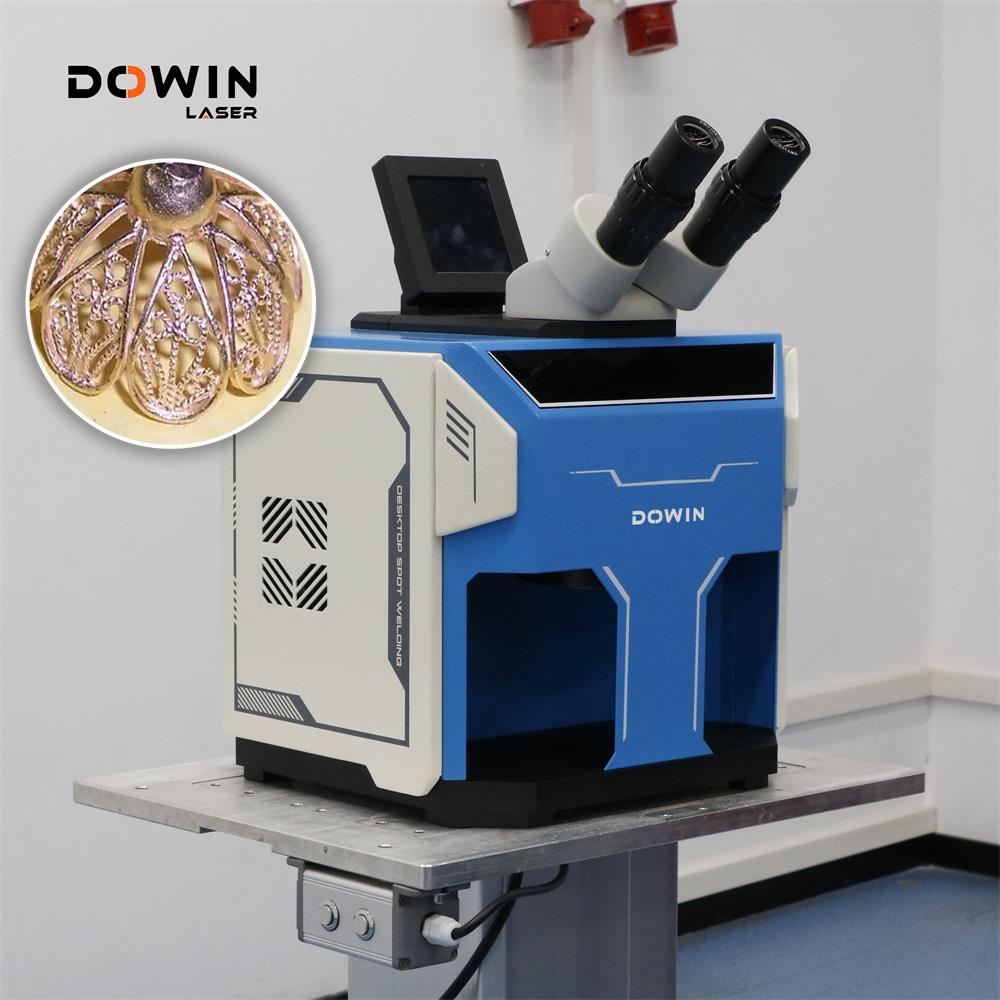
A broken gold chain can be difficult to repair with traditional soldering, especially when the chain contains very thin links, hollow sections, or delicate decorative details. Laser welding for jewelry repair provides a more precise way to reconnect damaged links while minimizing heat spread and reducing the amount of finishing required.
For jewelry repair shops, a jewelry laser welding machine can be used for gold chains, necklaces, bracelets, jump rings, and other small precious-metal components.
This guide explains the typical repair process and the factors that affect the final result.
Why Use a Laser Welder to Repair Gold Chains?
Gold chains often contain small links that are difficult to heat selectively with a torch. Excessive heat can deform thin sections or affect nearby components.
A laser welder concentrates energy into a small area, allowing the operator to target the broken section more precisely.
Key advantages include:
-
Precise heat control
-
Small heat-affected zone
-
Minimal distortion
-
Suitable for delicate chain links
-
Accurate filler material placement
-
Reduced finishing and polishing
-
Ability to work on small repair areas
-
Suitable for many gold alloys
For high-value or delicate jewelry, controlling where the heat goes can be just as important as the welding itself.
What Types of Gold Chains Can Be Laser Welded?
Laser welding can be used for many types of gold chains, depending on their construction and alloy.
Common examples include:
-
Gold curb chains
-
Rope chains
-
Box chains
-
Figaro chains
-
Cable chains
-
Fine gold necklaces
-
Gold bracelets
-
Hollow gold chains
-
Decorative chain links
The repair method should be selected according to the link design, metal thickness, break location, and condition of the surrounding material.
What Equipment Do You Need?
A professional gold chain repair setup typically includes:
Jewelry Laser Welding Machine
A laser welder provides the controlled energy required for precision welding.
Compatible Gold Filler Wire
When metal is missing, filler wire can be used to rebuild the damaged section.
Microscope or Precision Viewing System
Small chain links require accurate positioning and observation.
Fine Jewelry Tools
Tweezers, pliers, positioning tools, and other bench tools help align the broken components before welding.
Protective Equipment
Operators should follow the laser manufacturer’s safety requirements and use appropriate laser safety equipment and procedures.
Step 1: Inspect the Broken Gold Chain
Before welding, carefully examine the chain.
Determine:
-
Where the break occurred
-
Whether any metal is missing
-
Whether the link has been stretched or deformed
-
Whether the surrounding links are damaged
-
Whether the chain is solid or hollow
-
What gold alloy is being repaired
Do not immediately start welding simply because two broken ends appear to fit together.
A stretched or severely deformed link may need to be reshaped before welding.
Step 2: Clean the Repair Area
The broken area should be thoroughly cleaned before welding.
Oil, polishing compounds, oxidation, dirt, and other contaminants can interfere with the welding process.
A clean surface helps produce a more consistent weld and makes it easier for the operator to observe the repair.
For jewelry repair, cleanliness is particularly important because the weld area is extremely small.
Step 3: Align the Broken Chain Links
Carefully bring the broken ends back into their original position.
The alignment should be as accurate as possible.
For a simple broken link, the two ends may fit directly together. If a section of metal has been lost, filler material may be required to bridge the gap.
The goal is to restore the original geometry before adding significant laser energy.
Step 4: Select the Laser Parameters
Laser parameters depend on several factors:
-
Gold alloy
-
Material thickness
-
Link size
-
Solid or hollow construction
-
Break location
-
Filler wire diameter
-
Required weld depth
There is no universal setting that works for every gold chain.
A professional operator should start with parameters appropriate for the material and gradually optimize them using test pieces or scrap material when necessary.
For very thin chains, excessive energy can melt or deform the link. Lower and more controlled pulses are generally required.
Step 5: Tack the Broken Area
Once the link is properly aligned, the operator can create small initial weld points.
The purpose of tack welding is to stabilize the components before completing the repair.
Rather than immediately applying large amounts of energy to the entire joint, controlled pulses can be used to gradually establish the connection.
This approach is particularly useful for very small gold links.
Step 6: Add Gold Filler if Necessary
If the broken chain has lost material, simply fusing the two ends together may not restore the original strength or shape.
A compatible gold filler wire can be introduced into the weld zone.
The operator can use the laser to melt a small amount of filler and build the damaged area layer by layer.
This is particularly useful for:
-
Missing sections
-
Worn links
-
Thin areas
-
Enlarged gaps
-
Structural reinforcement
The filler alloy should be selected to match the jewelry’s material and desired appearance as closely as practical.
Step 7: Complete the Weld
After the initial tack welds, the operator can gradually complete the joint.
The laser should remain focused on the intended weld area.
For delicate chains, controlling pulse placement is important because repeated exposure can gradually increase heat in the surrounding metal.
A good repair should restore the connection without unnecessarily changing the shape of the original link.
Step 8: Inspect the Weld
After welding, inspect the repaired area under magnification.
Check for:
-
Cracks
-
Porosity
-
Incomplete fusion
-
Excess filler
-
Distortion
-
Sharp edges
-
Weak areas
The chain should also be checked for proper movement.
A repaired link that looks good but cannot articulate correctly may still require additional adjustment.
Step 9: Finish and Polish
One of the advantages of precision laser welding is that the amount of excess material can be minimized.
After inspection, the repair may require:
-
Filing
-
Micro-grinding
-
Sanding
-
Polishing
-
Surface finishing
The amount of finishing depends on how accurately the weld was performed.
For high-end jewelry, the final objective is to make the repair visually difficult to distinguish from the original chain.
Repairing Hollow Gold Chains
Hollow gold chains require additional caution.
Because the walls are thin, excessive laser energy can create holes or collapse the structure.
The operator should carefully evaluate:
-
Wall thickness
-
Break location
-
Internal structure
-
Amount of missing material
-
Heat accumulation
For extremely thin hollow links, parameter development and practice on similar scrap material are particularly important.
What About Gold Chains with Gemstones?
If the chain contains gemstones near the repair area, additional precautions are required.
Laser welding can provide more localized heat than torch soldering, but it does not eliminate thermal risk.
Before welding, consider:
-
Type of gemstone
-
Distance from the weld
-
Gemstone treatments
-
Existing inclusions or fractures
-
Setting construction
Some jewelry can be repaired with stones remaining in place, while other pieces should have stones removed before repair.
Laser Welding vs Soldering for Gold Chains
| Factor | Laser Welding | Traditional Soldering |
|---|---|---|
| Heat concentration | Very localized | Broad |
| Fine chain repair | Excellent | More challenging |
| Thin links | Highly suitable with proper settings | Higher melting risk |
| Filler material | Optional depending on repair | Typically required |
| Precision | Very high | Moderate to high |
| Distortion | Low when properly controlled | Higher potential |
| Finishing | Often minimal | Can require more finishing |
| Equipment cost | Higher | Lower |
| Learning curve | Requires laser training | Traditional bench skills |
Traditional soldering remains useful for many jewelry repairs. However, laser welding provides an important advantage when the repair requires precise heat placement.
Common Mistakes When Laser Welding Gold Chains
Using Too Much Laser Power
Too much energy can melt thin links instead of joining them.
Welding Contaminated Metal
Oil, dirt, and polishing residue can negatively affect the welding process.
Using the Wrong Filler
The filler should be compatible with the gold alloy and the desired finished appearance.
Poor Link Alignment
A strong weld cannot compensate for incorrectly positioned chain components.
Welding Too Quickly
Applying too many pulses without allowing the surrounding area to dissipate heat can increase thermal buildup.
Skipping Magnified Inspection
Tiny defects can be difficult to see with the naked eye.
How Strong Is a Laser-Welded Gold Chain?
A properly executed laser weld can create a strong metallurgical connection between compatible gold materials.
However, the final strength depends on:
-
Gold alloy
-
Joint geometry
-
Weld penetration
-
Filler material
-
Laser parameters
-
Material thickness
-
Operator technique
The weld should be evaluated as part of the entire chain structure rather than assuming that every laser weld has the same strength.
Why Jewelry Repair Shops Invest in Laser Welding
For shops that frequently repair fine gold chains, a jewelry laser welder can expand the range of services they can offer.
Instead of relying exclusively on torch soldering, repair technicians can use laser welding for precision work such as:
-
Broken chain links
-
Ring shanks
-
Prong rebuilding
-
Platinum repair
-
Cracked jewelry
-
Porosity filling
-
Fine settings
-
Custom jewelry fabrication
The technology is particularly valuable when a repair requires precision, controlled heat, and minimal impact on surrounding metal.
FAQ
Can you laser weld a broken gold chain?
Yes. Gold chains are one of the common applications for jewelry laser welding. The appropriate method depends on the chain’s alloy, thickness, construction, and damage.
Can a laser welder repair a very thin gold chain?
Yes, in suitable cases. Laser welding allows highly localized energy delivery, making it suitable for many fine chain repairs. Very thin or hollow chains require particularly careful parameter selection.
Do you need gold solder when laser welding a gold chain?
Not necessarily. Some breaks can be fused directly, while others require compatible gold filler wire to rebuild missing material or reinforce the joint.
Is laser welding better than soldering for gold chains?
For delicate and precision repairs, laser welding often provides better heat control. Traditional soldering can still be effective for simpler repairs and larger joints.
Can laser welding repair hollow gold chains?
Yes, but hollow chains require careful control because their walls can be extremely thin. Excessive laser energy can damage the structure.
Conclusion
Laser welding provides a precise solution for repairing broken gold chains, particularly when the chain contains thin links, delicate structures, or valuable details that are difficult to repair with a torch.
The typical process involves cleaning the damaged area, aligning the broken links, selecting appropriate laser parameters, tack welding the joint, adding compatible gold filler when necessary, completing the weld, and finally inspecting and polishing the repair.
For jewelry repair businesses, a professional jewelry laser welding machine can turn difficult chain repairs into a more controlled and repeatable process while expanding the range of precision services available to customers.
Post time: Aug-17-2026
