
How Much Does a Jewelry Laser Welding Machine Cost?
A jewelry laser welding machine is an important investment for jewelry repair shops, goldsmiths, jewelry manufacturers, and precious-metal workshops. Whether you need to repair gold rings, rebuild worn prongs, weld fine chains, or manufacture delicate jewelry components, choosing the right machine depends on both your budget and your actual welding requirements.
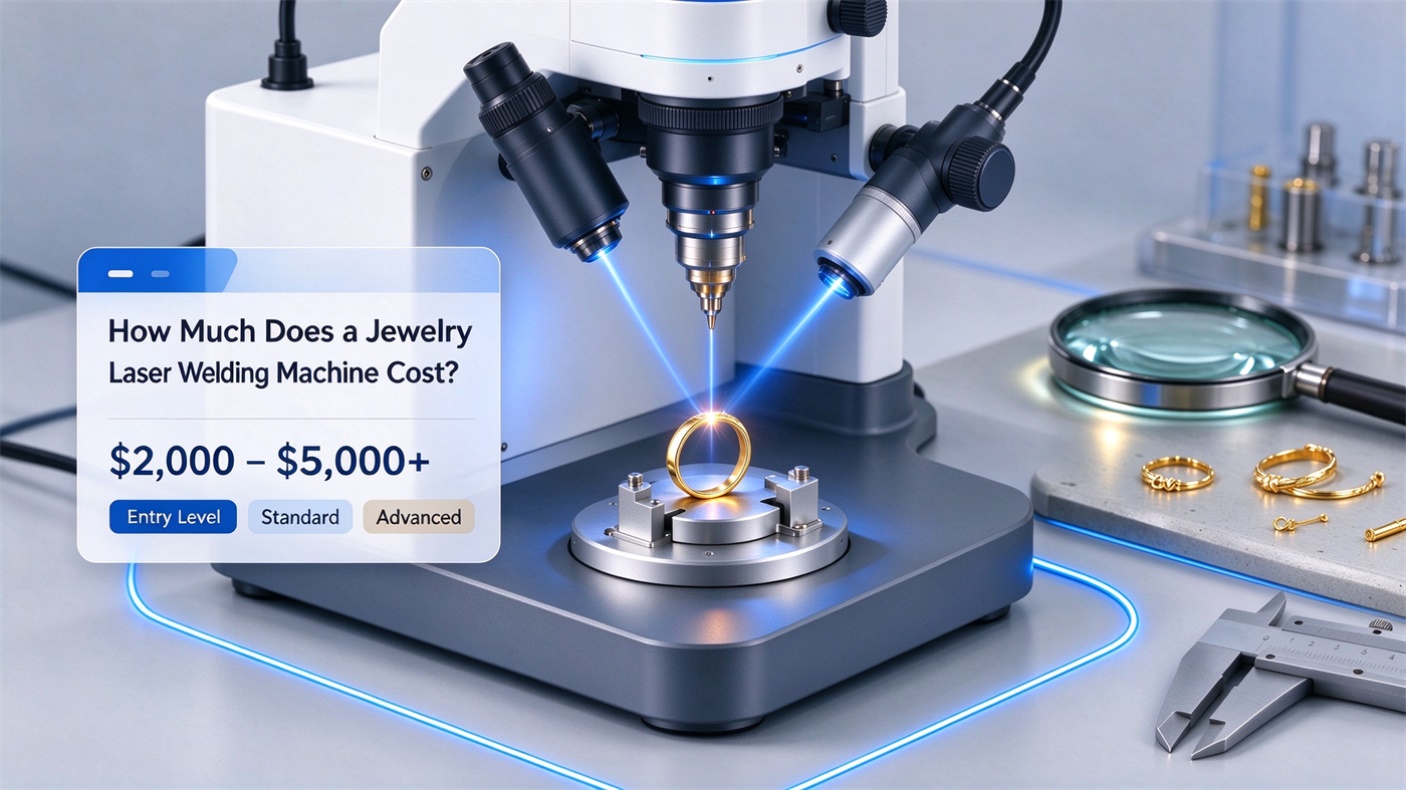
So, how much does a jewelry laser welding machine cost? Based on publicly listed prices available in 2026, many desktop YAG pulsed laser welding machines for jewelry fall within approximately $2,000–$7,000, depending on the model, laser power, optical system, cooling configuration, and included features. Some specialized or premium systems may cost more.
1. Jewelry Laser Welding Machine Price Range
The price of a jewelry laser welder varies considerably between manufacturers and configurations. The following ranges provide a general purchasing guide rather than fixed market prices.
| Machine Type | Indicative Price Range |
|---|---|
| Entry-level jewelry laser welder | $2,000–$3,000 |
| Standard 100W–150W YAG laser welder | $2,800–$4,000 |
| Professional 150W–200W jewelry laser welder | $3,500–$5,500 |
| Advanced machine with enhanced positioning or imaging | $4,500–$7,000+ |
These ranges are approximate. Actual quotations depend on the supplier, configuration, order quantity, shipping terms, and after-sales service. Always confirm whether the advertised price covers the complete machine or only a deposit, component, or basic configuration.
2. What Factors Affect the Price of a Jewelry Laser Welder?
Laser Power and Pulse Energy
Laser power is one factor affecting machine cost, but it should not be the only consideration. Jewelry welding machines commonly use pulsed YAG laser technology, with different models offering different pulse energies and durations.
A 100W machine may be sufficient for many small jewelry repairs, including fine chains and light components. A 150W or 200W machine may offer greater flexibility for rebuilding prongs, repairing thicker ring sections, and handling more demanding repair work.
However, higher power does not automatically mean better results. Pulse energy, pulse duration, spot size, and operator technique all influence weld quality.
Microscope and Positioning System
Accurate positioning is essential when repairing small jewelry components. A conventional optical microscope allows the operator to observe the welding point closely, while additional imaging or positioning features may increase the overall machine price.
For jewelers who frequently repair delicate settings, thin metal sections, or intricate decorative details, a clear optical system can be worth prioritizing.
Cooling System
Jewelry laser welders may use air cooling or water cooling, depending on the machine design and operating requirements.
The cooling configuration can influence equipment cost, maintenance requirements, and installation. Before purchasing, check whether the cooling system is integrated into the machine or supplied separately.
Machine Quality and After-Sales Support
Two machines with similar power ratings may have substantially different prices. Differences can include laser source quality, electrical components, optical stability, manufacturing standards, warranty coverage, and technical support.
For a business that relies on daily jewelry repairs, reliable operation and access to replacement parts may matter more than the lowest initial purchase price.
3. Is a 100W, 150W, or 200W Jewelry Laser Welder Better?
The best choice depends on the materials, thicknesses, and types of jewelry you handle.
100W jewelry laser welder: A practical starting point for workshops that primarily repair small components, fine chains, and lightweight gold or silver jewelry.
150W jewelry laser welder: A versatile option for jewelry repair businesses handling a wider range of jobs, including ring repairs, prong rebuilding, and localized metal buildup.
200W jewelry laser welder: Worth considering for workshops that frequently handle thicker sections, more demanding repairs, or a broader range of jewelry manufacturing tasks.
These are general guidelines, not strict limits. Compare pulse energy, maximum pulse duration, spot-size range, and the manufacturer’s recommended applications before making a decision.
4. What Additional Costs Should You Consider?
The purchase price is only one part of the total investment. Depending on your supplier and location, you may also need to budget for:
-
International shipping and insurance
-
Import duties and local taxes
-
Installation and operator training
-
Protective equipment and workplace safety arrangements
-
Replacement lamps or other service parts, where applicable
-
Routine maintenance and technical support
Ask for a complete quotation that identifies the machine configuration, included accessories, warranty, delivery terms, and any additional charges. This makes it easier to compare offers from different manufacturers fairly.
5. Is a Jewelry Laser Welding Machine Worth the Investment?
For jewelry businesses that regularly perform precision repairs, a laser welding machine can help expand the range of services they offer.
Typical applications include ring resizing, chain and clasp repair, prong rebuilding, crack filling, casting defect repair, and restoring delicate or antique jewelry.
Because laser welding concentrates energy in a localized area, it can reduce unnecessary heating of surrounding metal compared with broader heating methods. This is particularly useful for intricate components. However, gemstone safety must still be assessed individually, and some stones may need to be removed before welding.
The financial return depends on repair volume, local service prices, labor savings, and machine utilization. A workshop that performs frequent precision repairs may recover its investment more quickly than one that only occasionally needs laser welding.
6. How to Choose a Cost-Effective Jewelry Laser Welding Machine
Instead of choosing a machine based on price alone, compare the specifications and support that matter to your business.
Before placing an order, check the following:
-
Is the machine designed specifically for jewelry welding?
-
Does the pulse-energy range suit your typical repair work?
-
Is the microscope clear and comfortable for extended use?
-
Are the spot size and pulse duration adjustable?
-
Is the cooling system included?
-
What warranty and technical support are provided?
-
Can the supplier demonstrate welding results on your actual materials?
Requesting sample welds on gold, silver, or other materials relevant to your work is a useful way to assess performance before making a purchase.
7. Where Can You Buy an Affordable Jewelry Laser Welding Machine?
Jewelry laser welding machines are available from specialized laser equipment manufacturers and industrial machinery suppliers. Buying directly from a manufacturer may provide more configuration options and direct technical support, although the final value depends on the supplier’s service quality and shipping arrangements.
Dowin offers jewelry laser welding solutions for precision jewelry repair and manufacturing. Its product range includes machines designed for different workshop requirements, from portable jewelry welding equipment to higher-capacity pulsed YAG systems.
When comparing models, consider the Dowin 60W Portable Jewelry Welding Machine for compact jewelry repair applications and explore the available specifications to determine whether it suits your workload.
For a more demanding repair setup, you can also review Dowin’s 200W YAG Pulsed Jewelry Laser Welder and request a quotation based on your required configuration.
Conclusion
A jewelry laser welding machine typically costs around $2,000–$7,000 based on publicly listed 2026 prices, although the final price depends on machine specifications, accessories, and supplier terms.
For small repair shops, a 100W or 150W machine may provide a practical balance between cost and capability. Businesses that frequently handle thicker components or more demanding repairs may prefer a 200W model.
The best investment is not necessarily the machine with the highest power or the lowest price. It is the machine that matches your repair workload, delivers consistent welding results, and comes with dependable technical support.
Frequently Asked Questions
How much does a 200W jewelry laser welding machine cost?
Publicly listed prices for 200W jewelry laser welders commonly range from approximately $3,500 to $7,000, depending on the model, imaging system, cooling configuration, and included features.
Is a cheap jewelry laser welder worth buying?
A lower-priced machine may be suitable for basic applications, but buyers should verify its specifications, build quality, warranty, and technical support. Extremely low advertised prices should be checked carefully to ensure they represent the complete machine rather than a deposit or component.
Is 150W enough for jewelry repair?
A 150W pulsed YAG machine can handle many common jewelry repair tasks. Suitability depends on metal thickness, required pulse energy, joint design, and the type of repair.
Does a jewelry laser welding machine require special training?
Yes. Operators should receive training in machine settings, material preparation, welding techniques, laser safety, and gemstone-related precautions. Correct training helps improve weld quality and reduces the risk of damaging valuable jewelry.
How can I get an accurate quotation?
Provide the supplier with your preferred power rating, typical jewelry materials, repair applications, required positioning system, destination country, and any installation or training requirements. This allows the supplier to quote the appropriate configuration and associated costs.
Post time: Oct-09-2026
