
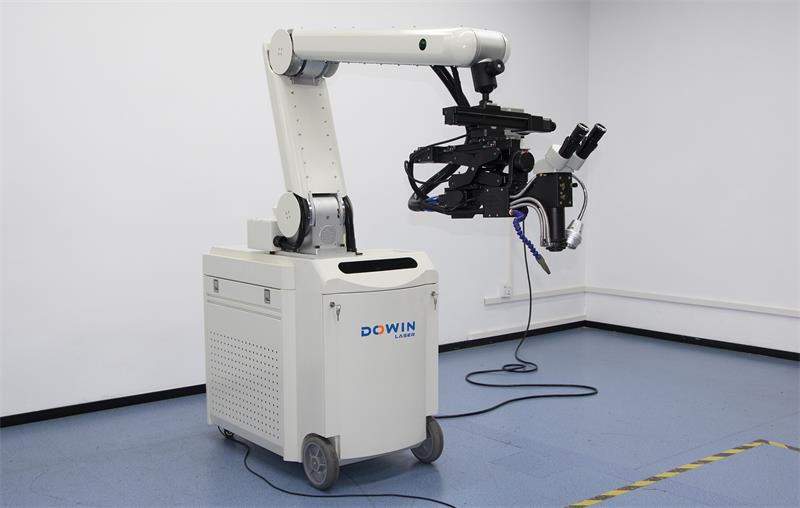
In 2026, manufacturers face rising tooling costs, longer lead times, and tighter production deadlines. For injection molding, die-casting, stamping, and precision tooling plants, replacing damaged molds has become significantly more expensive than repairing them. This is why mold laser welding machines are moving from “nice-to-have equipment” to a strategic cost-control asset.
Instead of scrapping worn or cracked molds, companies now restore them with precision laser welding, extending service life and avoiding unnecessary capital spending.
The Real Cost of Mold Replacement in 2026
Replacing a production mold is rarely just the price of the mold itself. Total replacement cost often includes:
- New mold manufacturing
- Engineering redesign or reverse engineering
- Machine downtime during waiting periods
- Production delays and missed deliveries
- Trial runs and quality revalidation
- Scrap generated during restart
For many factories, downtime now costs more than the tool itself. That makes repair speed critical. Industry sources note that mold laser welding is widely adopted because it restores tooling without requiring full remanufacture.
Why Laser Welding Is Different from Traditional Repair
Traditional TIG or arc welding can repair molds, but often creates excessive heat. That heat may cause:
- Distortion
- Surface sink marks
- Hardness loss
- Cracking around the repair zone
- Additional machining afterward
Laser welding concentrates energy into a very small area, producing a minimal heat-affected zone. This allows localized repairs while preserving surrounding geometry and hardness.
5 Ways Mold Laser Welding Machines Reduce Replacement Costs
1. Extend Mold Service Life
Minor wear, chipped corners, gate erosion, vent damage, and surface pitting no longer mean end-of-life for a mold. Laser buildup restores these areas repeatedly, helping tools remain productive for more cycles.
A mold that survives two extra production years can generate major ROI compared with immediate replacement.
2. Reduce Emergency Downtime
Waiting weeks for a new mold is expensive. Laser repair can often return tooling to production far faster than replacement, especially for localized damage.
For many factories, fast repair means maintaining customer delivery schedules.
3. Save High-Value Precision Molds
Medical, electronics, automotive, and thin-wall molds can cost tens of thousands—or much more. Replacing them because of one cracked edge is poor economics.
Laser welding allows micron-level restoration of precision sections that would be risky with conventional welding. Real-world operators highlight repairs around 0.3 mm features and threaded details.
4. Lower Post-Processing Costs
Because laser welds are highly targeted, there is often less grinding, polishing, and re-machining after repair compared with arc welding methods.
That means fewer labor hours and faster restart.
5. Support Engineering Changes
In 2026, many manufacturers modify molds more often due to shorter product cycles. Laser welding can add material for:
- Dimension corrections
- Parting line changes
- Cavity adjustments
- Design updates
- Prototype-to-production modifications
Instead of ordering a new tool, shops upgrade the existing one.
Industries Seeing the Biggest Savings
Mold laser welding machines are especially valuable in:
- Plastic injection molding
- Die casting
- Automotive tooling
- Electronics connectors
- Packaging molds
- Consumer product molds
- Medical device tooling
These industries depend on uptime, repeatability, and tight tolerances.
ROI Example
If a mold replacement costs $18,000 and laser repair costs $1,500:
- One avoided replacement = $16,500 saved
- Four repairs over two years may still cost less than one new mold
- Production continuity adds hidden savings beyond the invoice price
That is why many shops now budget for repair first, replacement second.
What Buyers Want in 2026
Factories purchasing mold laser welders now prioritize:
- Stable fiber laser source
- Fine spot size control
- Microscope or camera viewing system
- Easy parameter storage
- Low maintenance design
- Skilled service support
- Energy efficiency
Recent buying guides show growing preference for fiber systems with adjustable precision controls for tool repair workloads.
Final Verdict
In 2026, the smartest mold strategy is no longer “replace when damaged.” It is “repair early, repair precisely, replace only when necessary.”
Mold laser welding machines reduce replacement costs by extending tool life, cutting downtime, preserving precision molds, and delaying capital expenditure. For many manufacturers, one saved mold can justify the machine.
Post time: Apr-27-2026
