
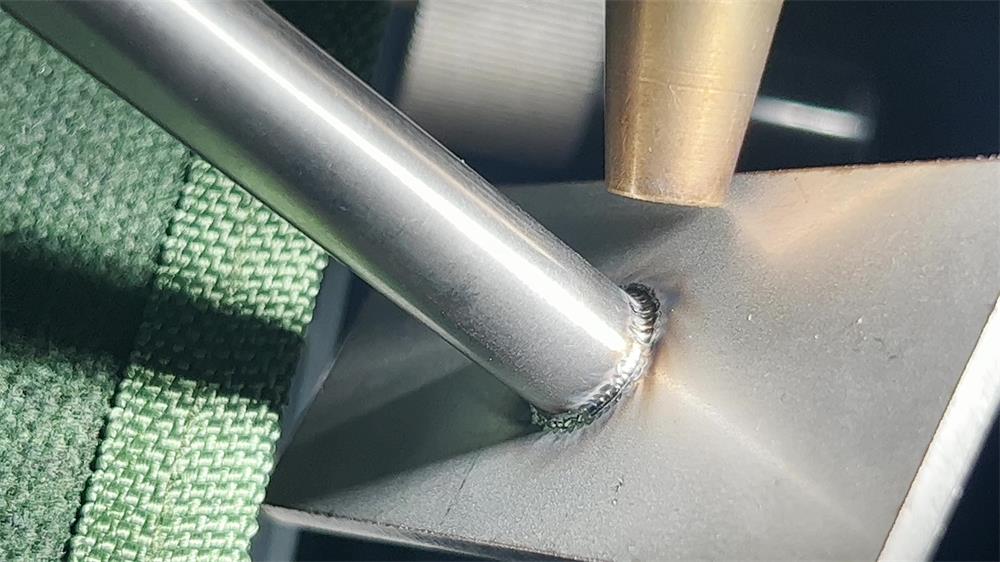
In modern manufacturing, mold quality directly affects product quality, production efficiency, and operating costs. Industries such as automotive, electronics, medical devices, aerospace, and consumer goods rely heavily on precision molds to maintain consistent production standards. However, even the highest-quality molds eventually suffer from wear, cracks, chipping, deformation, or dimensional damage after prolonged use.
Traditional repair methods often struggle to restore molds to their original specifications without introducing new defects. This challenge has led many manufacturers to adopt mold laser welding machines as a superior repair solution. Thanks to their exceptional precision and controlled heat input, laser welding systems have revolutionized mold maintenance by significantly improving repair accuracy while reducing downtime and costs.
The Importance of Repair Accuracy in Mold Maintenance
A mold is essentially a precision tool. Even a minor dimensional error can lead to product defects, increased scrap rates, and production interruptions.
Common mold defects include:
- Surface wear
- Fine cracks
- Corner damage
- Chipped edges
- Machining errors
- Design modifications
- Erosion caused by repetitive molding cycles
When repairing these defects, maintaining the original geometry of the mold is critical. Excessive material deposition, thermal distortion, or inaccurate welding can require extensive post-processing and may even render the mold unusable.
This is where mold laser welding machines demonstrate their greatest advantage.
Precision Energy Delivery
Unlike conventional welding methods that spread heat over a large area, laser welding concentrates energy into an extremely small spot.
The laser beam can be precisely focused on the damaged section while leaving surrounding areas virtually unaffected.
This controlled energy delivery allows technicians to:
- Repair microscopic defects
- Weld narrow grooves
- Restore fine edges
- Build up worn surfaces accurately
- Minimize excess material deposition
The result is a repair process that closely matches the original mold dimensions and significantly improves overall accuracy.
Reduced Heat-Affected Zone
One of the primary reasons mold laser welding machines improve repair accuracy is their minimal heat-affected zone (HAZ).
Traditional TIG welding often generates substantial heat, causing:
- Thermal expansion
- Distortion
- Hardness changes
- Internal stress
These effects can alter mold dimensions and require additional machining after repair.
Laser welding, by contrast, produces highly localized heating. The surrounding material remains relatively cool, preserving the original structure of the mold.
This reduction in thermal distortion enables manufacturers to achieve more accurate repairs with less rework.
Exceptional Control Over Weld Parameters
Modern mold laser welding systems offer precise control over welding variables, including:
- Pulse energy
- Pulse width
- Frequency
- Spot diameter
- Welding speed
Operators can adjust these settings according to:
- Mold material
- Defect size
- Repair depth
- Surface requirements
This level of customization ensures optimal welding performance for each repair task.
Fine-tuning the laser parameters allows technicians to deposit exactly the amount of material needed, reducing overfilling and improving dimensional accuracy.
Accurate Material Build-Up
Many mold repairs require adding material to worn or damaged surfaces.
Traditional welding methods often deposit excessive filler material, requiring extensive grinding and polishing afterward.
Laser welding machines excel at controlled material build-up.
The focused laser beam enables technicians to:
- Add material layer by layer
- Repair tiny defects precisely
- Restore critical dimensions
- Minimize finishing work
This capability is especially valuable for high-precision molds used in medical devices, electronics, and automotive components.
Enhanced Visibility Through Microscope Systems
Most professional mold laser welding machines are equipped with high-magnification microscope systems.
These optical systems allow operators to:
- Clearly identify defects
- Precisely position the laser beam
- Monitor weld quality in real time
- Inspect repair progress immediately
The ability to observe the welding area in detail dramatically improves repair precision compared to conventional welding methods.
Microscope-assisted operation is particularly useful when repairing:
- Small mold cavities
- Fine engraving details
- Sharp corners
- Intricate mold structures
Better Results on Complex Mold Geometries
Modern injection molds often feature complex three-dimensional designs with deep cavities, narrow channels, and detailed contours.
Repairing these areas using traditional welding equipment can be difficult due to limited accessibility and poor control.
Mold laser welding machines are specifically designed to handle intricate geometries.
The focused laser beam can access difficult-to-reach areas while maintaining high accuracy.
As a result, manufacturers can repair complex mold structures without compromising dimensional integrity.
Improved Consistency and Repeatability
Consistency is essential in industrial mold repair.
A repair process that produces different results each time can create quality control problems and increase maintenance costs.
Laser welding systems offer excellent repeatability because welding parameters can be stored and reused for similar repairs.
Benefits include:
- Uniform repair quality
- Reduced operator variability
- Improved process control
- More predictable results
This consistency helps manufacturers maintain high production standards across multiple repair cycles.
Applications Requiring High Repair Accuracy
The accuracy advantages of mold laser welding machines are particularly valuable in industries where precision is critical.
Automotive Industry
Automotive molds require tight tolerances to ensure component consistency.
Laser welding helps restore damaged mold surfaces while maintaining dimensional accuracy.
Medical Device Manufacturing
Medical molds often contain microscopic features that demand precise repair techniques.
Laser welding provides the accuracy necessary to preserve critical dimensions.
Electronics Industry
Electronic components frequently rely on highly detailed molds.
Laser repair enables manufacturers to maintain precision without affecting surrounding structures.
Aerospace Applications
Aerospace molds often involve expensive tooling and strict quality requirements.
Accurate laser welding repairs help extend mold life while meeting demanding performance standards.
Lower Post-Processing Requirements
Because laser welding minimizes distortion and allows precise material deposition, less finishing work is required after repair.
Manufacturers benefit from:
- Reduced grinding
- Less polishing
- Lower machining costs
- Faster turnaround times
This not only improves repair accuracy but also increases overall productivity.
Conclusion
Mold laser welding machines have become an essential tool for modern mold maintenance because of their ability to deliver exceptional repair accuracy. Through concentrated energy delivery, minimal heat input, precise parameter control, microscope-assisted operation, and accurate material build-up, these systems outperform traditional repair methods in nearly every aspect.
For manufacturers seeking to extend mold life, reduce downtime, and maintain strict dimensional tolerances, investing in advanced mold laser welding technology is a strategic decision. As production standards continue to rise across industries, laser welding machines will remain one of the most effective solutions for achieving high-precision mold repairs and maximizing tooling performance.
Post time: Jun-05-2026
