
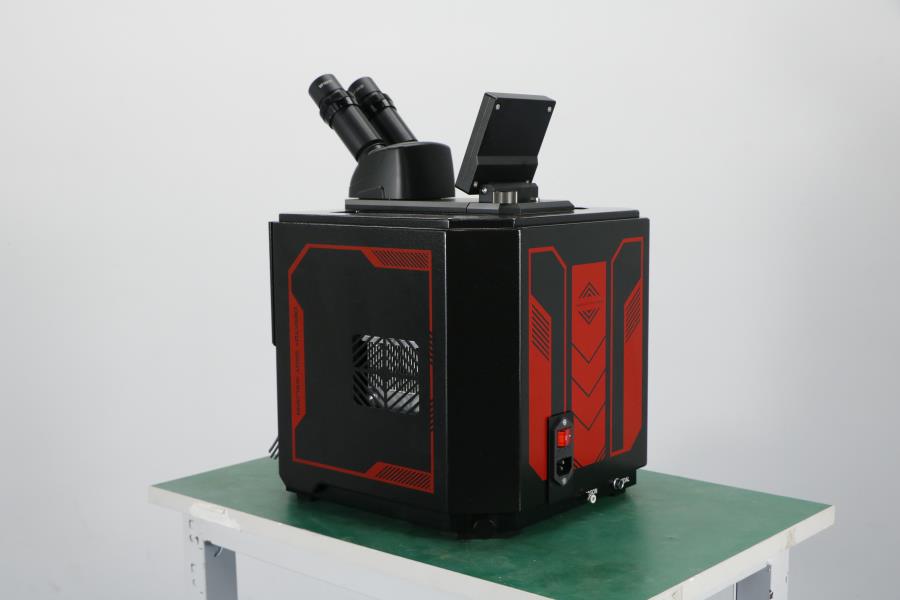
Laser welding technology has become a key process in modern jewelry manufacturing and repair, especially when working with high-value precious metals such as gold, platinum, and silver. These materials require extreme precision because any excess heat, contamination, or deformation can reduce both aesthetic quality and market value.
A laser welding system offers a controlled, non-contact solution that ensures strong joints while preserving the original structure and appearance of precious metals.
Precision Energy Delivery for Delicate Metals
The core advantage of laser welding lies in its ability to deliver highly concentrated energy to a microscopic area. The laser beam is focused to a very small spot size, allowing the operator to target only the joint that needs repair.
This precision ensures:
-
Only the weld zone melts
-
Surrounding metal remains unaffected
-
Minimal risk of distortion or overheating
For high-value jewelry, this level of control is essential because even slight structural changes can reduce resale or appraisal value.
Minimal Heat-Affected Zone (HAZ)
Traditional soldering and torch welding expose a wide area to heat, often causing discoloration, oxidation, or weakening of the metal structure. Laser welders significantly reduce this risk by creating a very small heat-affected zone.
Benefits include:
-
No discoloration of gold alloys
-
Reduced risk of warping thin jewelry parts
-
Preservation of original polish and finish
-
Stronger structural integrity after repair
This makes laser welding especially suitable for luxury jewelry pieces and fine craftsmanship work.
Non-Contact Welding Protects Valuable Designs
Laser welding is a non-contact process, meaning no physical force is applied to the workpiece. This is especially important for delicate or highly detailed jewelry designs.
It helps protect:
-
Gemstone settings and prongs
-
Fine chains and micro-links
-
Engraved or polished surfaces
-
Intricate filigree structures
Because there is no mechanical pressure, the risk of damage during repair is greatly reduced.
Ideal for Gold, Platinum, and Silver Processing
Different precious metals react differently to heat, and laser welding systems allow precise parameter control to match each material.
Gold
Gold alloys require controlled pulse settings to prevent:
-
Color shift
-
Porosity formation
-
Excess melting
Platinum
Platinum has a very high melting point, requiring higher energy input but still benefiting from localized heating.
Silver
Silver conducts heat quickly, so short, controlled pulses are used to prevent heat spreading and surface damage.
Advanced systems such as a professional-grade Jewelry Laser Welding Machine allow fine adjustment of pulse width, frequency, and energy output for each material type.
Micro-Scale Repair Capability
One of the strongest advantages of laser welding in jewelry applications is its ability to perform micro-scale repairs under magnification. Operators can precisely control the weld area while viewing it through a microscope system.
Common applications include:
-
Repairing micro cracks in rings
-
Fixing broken clasps and hinges
-
Adjusting prongs holding gemstones
-
Reinforcing thin or worn metal sections
This level of precision is impossible with conventional flame-based methods.
No Contamination and Minimal Material Loss
Laser welding often eliminates the need for filler materials, depending on the application. This reduces contamination risk and helps preserve the purity of precious metals.
Key advantages:
-
No flux or solder residue
-
Maintains original metal composition
-
Reduces cleaning and post-processing
-
Preserves weight in high-value pieces
For investment-grade jewelry, maintaining material purity is critical.
Value Preservation in High-End Jewelry
The most important benefit of laser welding in precious metal processing is value preservation. By minimizing heat exposure, distortion, and material loss, laser welding ensures that the finished or repaired piece retains its original value.
It helps maintain:
-
Metal weight and integrity
-
Surface finish and polish quality
-
Gemstone security and alignment
-
Overall aesthetic consistency
For jewelers and manufacturers, this translates into higher customer satisfaction and reduced rework costs.
Conclusion
Laser welders provide a highly controlled, precise, and non-invasive method for working with high-value precious metals. Their ability to focus energy at a micro level, minimize heat damage, and preserve material integrity makes them essential in modern jewelry manufacturing and repair.
As demand for high-quality craftsmanship increases, laser welding continues to replace traditional methods, offering superior accuracy, efficiency, and value protection in gold, platinum, and silver processing.
Post time: Jun-24-2026
