
Smart Cutting Redefined:
The global surge in TPU (Thermoplastic Polyurethane) and DTF (Direct-to-Film) applications is no longer a trend—it is a structural shift. From footwear cushioning systems and performance apparel to advertising graphics and on-demand textile printing, flexible materials are rapidly replacing rigid production paradigms.
But while materials have evolved, cutting technology has lagged behind.
Manual trimming, semi-automatic plotters, and outdated die-cutting systems are struggling to keep up with the demands of high-mix, short-run, precision-driven production. The result is predictable: wasted material, inconsistent quality, and rising labor costs.
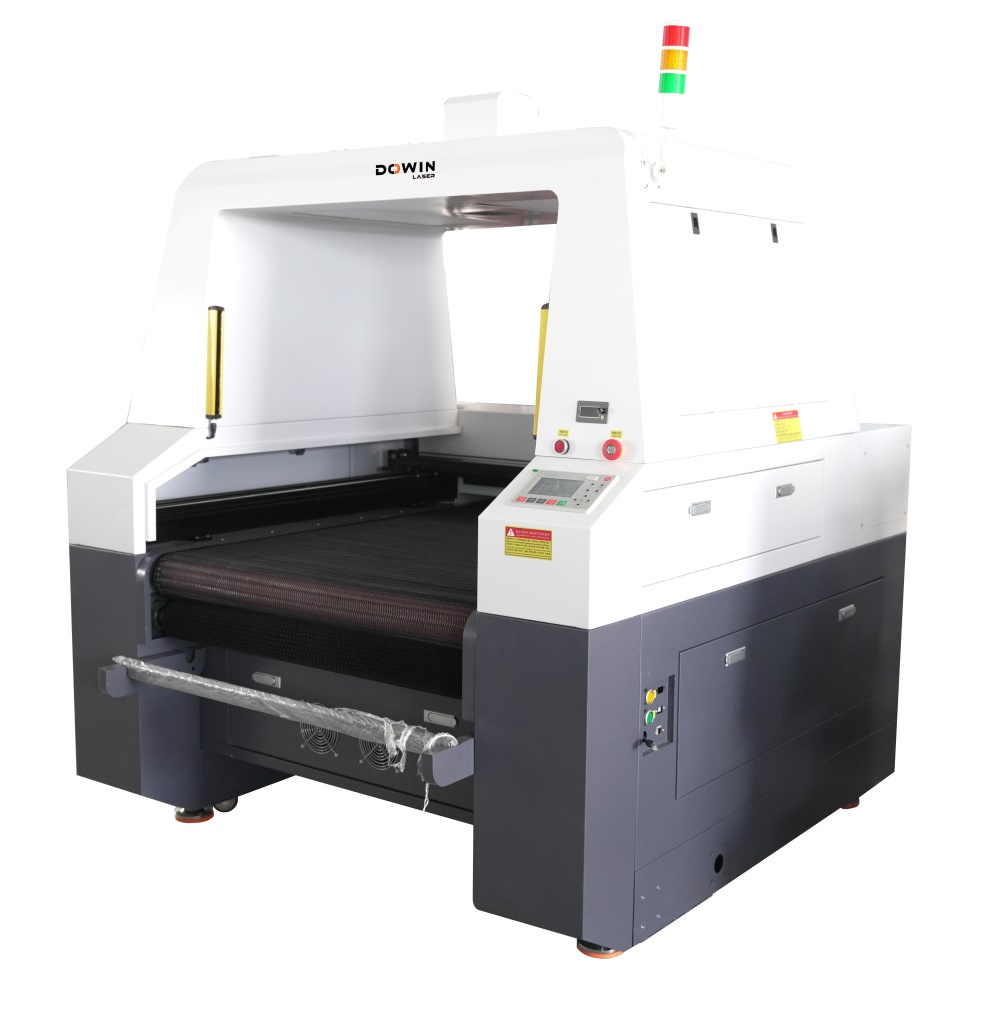
Against this backdrop, the launch of a 900×700mm intelligent vision automatic feeding and cutting machine signals more than a product upgrade—it marks a process revolution.
The Industry Bottleneck: Precision vs Efficiency
Data from the digital printing and footwear supply chain reveals three persistent challenges:
-
Up to 20% material waste due to misalignment and manual cutting errors
-
Labor-intensive workflows, especially in DTF film trimming
-
Inconsistent precision, particularly for small, complex patterns
As TPU and DTF adoption accelerates, these inefficiencies scale with it. The industry is no longer asking for faster machines—it is demanding smarter systems.
Vision-Guided Cutting: Precision at the Algorithm Level
At the core of this new system is a high-resolution industrial vision module combined with intelligent recognition algorithms.
Instead of relying on fixed paths or manual alignment, the machine:
-
Automatically detects black contour lines and positioning marks
-
Dynamically adjusts cutting paths in real time
-
Achieves ±0.1mm accuracy, even on complex geometries
This level of precision is not incremental—it fundamentally changes output quality.
Small text, curved edges, and intricate TPU structures that were once prone to deformation or error can now be executed with repeatable perfection.
Precision is no longer dependent on operator skill—it is embedded in the system.
900×700mm Format: A Strategic Balance
The chosen working size—900×700mm—is not arbitrary. It reflects a deep understanding of market demand.
-
Large enough for batch production of footwear components and apparel panels
-
Flexible enough for small and medium custom orders
-
Eliminates the need for secondary splicing or repositioning
In a production environment increasingly defined by customization, this format delivers something rare:
Scale without rigidity.
Automatic Feeding: From Interruption to Continuity
One of the most overlooked inefficiencies in traditional cutting is material handling.
This system integrates a fully automatic feeding platform, designed specifically for roll-based TPU and DTF materials:
-
Continuous, stable material transport
-
Synchronized front and rear dual-drive systems
-
աջակց 24-hour uninterrupted operation
When combined with intelligent nesting software:
-
Material utilization increases by over 30%
-
Daily output can reach 2–3× traditional systems
This is not just automation—it is workflow elimination.
Manual loading, repositioning, and correction steps are removed entirely.
Real-World Impact: From 200 to 800 Meters per Day
Field data confirms the transformation.
A production manager in a large-scale digital printing facility reported:
-
Manual cutting capacity: ~200 meters/day
-
After implementation: 800+ meters/day
-
Operator efficiency: 1 person managing 3 machines
-
Waste: nearly eliminated
More importantly, the improvement was not just in speed—but in consistency.
Even highly detailed cuts—such as small rounded text in DTF transfers—maintained uniform quality across large volumes.
Beyond Hardware: A Shift in Manufacturing Logic
This machine represents more than a technical upgrade. It reflects a broader shift in how production is defined:
| Traditional Model | Intelligent Model |
|---|---|
| Manual alignment | Vision-based positioning |
| Batch rigidity | Flexible production |
| Labor-dependent | System-driven |
| Reactive correction | Real-time optimization |
The difference is philosophical:
Traditional cutting reacts to errors.
Intelligent cutting prevents them.
Why This Matters Now
The timing of this innovation is critical.
Global trends are converging:
-
On-demand manufacturing is reducing order sizes but increasing complexity
-
Labor costs are rising across major production regions
-
Sustainability pressures demand higher material efficiency
In this environment, machines are no longer judged by speed alone—but by their ability to adapt, optimize, and scale intelligently.
Breaking the Old Mindset
Many manufacturers still evaluate equipment based on a simple question:
“How fast can it cut?”
This is outdated.
The real question is:
“How much inefficiency can it eliminate?”
Because in modern production:
-
Speed without precision creates waste
-
Automation without intelligence creates bottlenecks
-
Capacity without flexibility creates risk
This is where vision-guided, auto-feeding systems redefine the standard.
Final Insight
The 900×700mm intelligent vision automatic feeding and cutting machine is not just a response to industry demand—it is a preview of the future.
A future where:
-
Materials are processed with data-level precision
-
Production runs continuously, not intermittently
-
Human effort shifts from execution to supervision
From manual to intelligent, from fragmented to integrated, from inefficient to optimized—
this is not just a machine. It is a new operating system for flexible material processing.
Post time: Apr-09-2026
