
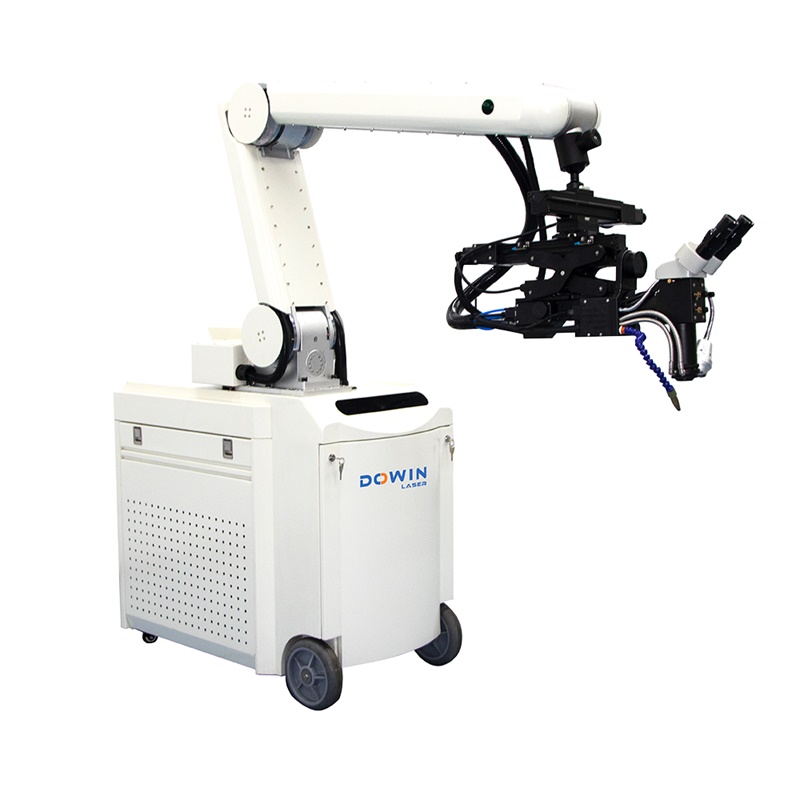
Mold maintenance plays a critical role in the longevity and performance of molds used across various industries, including automotive, aerospace, and plastics. In recent years, advancements in welding technology have significantly improved the way molds are repaired and maintained. Among these innovations, the fiber laser mold welding machine has emerged as a game-changer, offering exceptional precision, speed, and cost-efficiency for mold repair and maintenance.
What is a Fiber Laser Mold Welding Machine?
A fiber laser mold welding machine is a cutting-edge technology that uses a fiber-optic laser to weld metal parts with high precision. Unlike traditional welding methods, which can introduce unwanted heat distortion and affect the integrity of the mold, fiber laser welding delivers highly concentrated laser energy in short, controlled pulses. This allows for precise, localized welding with minimal heat affected zones, making it perfect for delicate mold repairs.
Key Advantages of Fiber Laser Welding for Mold Maintenance
1. Unmatched Precision and Detail
One of the most significant advantages of fiber laser welding is its precision. The fiber laser is capable of delivering fine, focused beams of light, which enables it to work on small and intricate areas of molds that other welding methods might struggle with. This high level of accuracy ensures that even the most complex mold shapes can be repaired with ease, without compromising the integrity of the mold.
2. Minimal Heat-Affected Zone (HAZ)
Traditional welding methods often generate excessive heat that can cause surrounding areas of the mold to warp or distort. With fiber laser welding, the heat-affected zone (HAZ) is minimized, meaning there is less risk of damaging the mold’s original surface or geometry. This is crucial in mold maintenance, as precision is key to ensuring that the mold performs as expected after repair.
3. Faster Turnaround Time
The speed of fiber laser welding significantly reduces repair time. Unlike conventional methods that may require lengthy processes and multiple passes, fiber laser welding allows for quick and efficient welding with minimal rework. This increased speed leads to faster turnaround times, enabling manufacturers to return to production sooner and reduce downtime.
4. Versatility and Adaptability
Fiber laser welding machines are incredibly versatile, capable of working on a variety of metals used in mold manufacturing, including steel, aluminum, and alloys. This flexibility makes fiber laser welding a universal solution for different mold materials and industries. Whether you’re dealing with intricate automotive molds or complex plastic injection molds, a fiber laser machine can handle it with precision and ease.
5. Cost-Effective Maintenance
Mold repairs are often expensive, especially when molds are large or complicated. However, fiber laser welding offers a cost-effective solution by reducing the need for mold replacements. Instead of discarding worn-out molds, businesses can extend the lifespan of their equipment by conducting efficient, precise repairs, saving money in the long run.
6. Improved Quality and Durability
Fiber laser welding produces clean, smooth welds that are often stronger and more durable than those created by traditional welding methods. The controlled, high-energy pulses result in better bond quality, which enhances the overall strength and durability of the mold after repair. This leads to fewer maintenance requirements over time, improving the mold’s longevity.
The Future of Mold Maintenance: Trends and Innovations
As fiber laser technology continues to evolve, we can expect even greater advancements in the field of mold repair. The following trends indicate how fiber laser welding will shape the future of mold maintenance:
1. Automation Integration
Incorporating automation and robotic systems with fiber laser welding machines will allow for even greater efficiency in mold repair. Automated systems will reduce human error, speed up the repair process, and ensure that molds are repaired with consistent quality every time. The combination of fiber laser precision and automation will revolutionize the speed and scalability of mold maintenance.
2. Hybrid Technologies
In the near future, we may see hybrid laser welding machines that combine fiber laser welding with other technologies, such as 3D printing or ultrasonic welding, to create even more advanced solutions for mold repair. These hybrid machines could offer further customization and precision, allowing for repairs on molds with highly specialized or complex geometries.
3. Improved Materials and Laser Power
With continuous advancements in materials science and laser technology, the power and efficiency of fiber lasers will continue to improve. Higher-powered lasers will be capable of handling thicker and more robust mold materials, further enhancing the range of applications for fiber laser welding machines.
Conclusion: Why Fiber Laser Welding is the Future of Mold Maintenance
Fiber laser welding machines have proven themselves to be an essential tool for modern mold maintenance. With their unmatched precision, minimal heat distortion, and speed, they offer an innovative solution that enhances the repair process while reducing downtime and costs. As the technology continues to advance, fiber laser welding will become an even more integral part of the mold repair industry, providing businesses with the tools they need to maintain the integrity and longevity of their molds.
For industries that rely on high-precision molds, adopting fiber laser welding technology is no longer just a smart choice—it’s the future of efficient, cost-effective mold maintenance.
Post time: Apr-30-2026
