
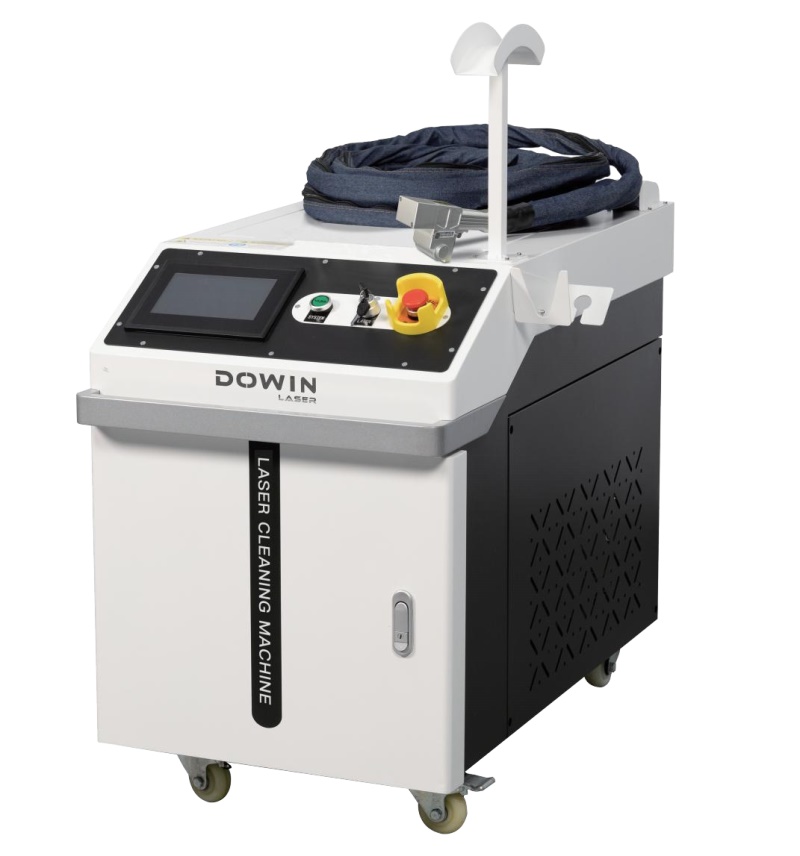
The global industrial cleaning industry is undergoing a major transformation. Factories that once depended on chemical solvents, abrasive blasting, and labor-intensive grinding are rapidly moving toward laser-based surface treatment technologies.
Among all laser cleaning systems, continuous laser cleaning machines are becoming one of the most widely adopted solutions for heavy industrial applications.
Why?
Because modern manufacturing no longer wants cleaning methods that are slow, wasteful, and environmentally dangerous. Industries now demand:
- high-speed processing,
- automation compatibility,
- low operating costs,
- and stable large-area cleaning performance.
Continuous laser cleaning machines meet these demands exceptionally well.
But many buyers misunderstand how these systems should actually be used.
Continuous laser cleaning is not simply “a stronger laser.”
It is a completely different industrial strategy compared with pulsed laser cleaning.
Understanding where continuous laser cleaning excels — and where it does not — is the key to maximizing productivity and avoiding expensive mistakes.
What Is a Continuous Laser Cleaning Machine?
A continuous laser cleaning machine uses a continuous-wave (CW) fiber laser to emit uninterrupted laser energy onto a material surface.
Unlike pulsed laser systems, which release energy in ultra-short bursts, continuous lasers provide stable, constant heat output during operation.
This creates:
- higher average cleaning efficiency,
- deeper thermal interaction,
- and faster large-area processing capability.
Continuous systems are especially effective for:
- rust removal,
- paint stripping,
- oxide cleaning,
- weld seam pretreatment,
- heavy grease removal,
- and industrial surface preparation.
In modern factories, continuous laser cleaning is increasingly replacing:
- sandblasting,
- chemical degreasing,
- angle grinding,
- and dry ice blasting.
Why Continuous Laser Cleaning Is Growing So Fast
The industrial world is facing three simultaneous pressures:
1. Environmental Regulations
Traditional cleaning methods generate:
- chemical waste,
- abrasive dust,
- wastewater,
- and hazardous emissions.
Governments worldwide are tightening environmental compliance standards, especially in manufacturing-heavy industries.
Laser cleaning dramatically reduces:
- chemical consumption,
- secondary waste,
- consumable dependency,
- and disposal costs.
For many factories, laser cleaning is no longer optional innovation.
It is becoming a compliance necessity.
2. Labor Costs Are Rising
Manual grinding and chemical cleaning require significant labor.
Continuous laser cleaning systems reduce operator workload through:
- automation,
- robotic integration,
- and high-speed processing.
A single laser cleaning workstation can often replace multiple traditional cleaning steps.
3. Manufacturing Speed Demands
Modern production lines cannot tolerate excessive downtime.
Continuous laser systems excel in high-throughput industrial environments because they clean quickly across large surfaces.
In industries like:
- shipbuilding,
- steel fabrication,
- automotive manufacturing,
- and heavy equipment production,
speed matters as much as precision.
Continuous laser cleaning was built for exactly these conditions.
How Continuous Laser Cleaning Works
The process is based on controlled thermal interaction.
When the continuous laser beam contacts contaminants such as:
- rust,
- paint,
- oil,
- oxidation,
- or coatings,
the surface rapidly absorbs heat energy.
The contamination layer either:
- vaporizes,
- melts,
- fractures,
- or separates from the substrate.
Because CW lasers deliver stable energy continuously, they can process large contaminated areas much faster than many pulsed systems.
However, this also means continuous lasers generate more heat accumulation.
That creates both advantages and limitations.
Best Applications for Continuous Laser Cleaning Machines
Heavy Rust Removal
This is one of the strongest application areas for continuous laser systems.
Industrial steel structures often accumulate:
- thick oxidation,
- corrosion layers,
- and weathered contaminants.
Continuous laser cleaning removes these layers efficiently while preparing surfaces for:
- welding,
- coating,
- or repainting.
Industries benefiting include:
- shipyards,
- construction equipment manufacturing,
- steel processing plants,
- and infrastructure maintenance.
Paint and Coating Removal
Continuous laser systems are highly effective for removing:
- industrial paint,
- anti-corrosion coatings,
- powder coatings,
- and protective layers.
Unlike chemical stripping, laser cleaning avoids hazardous solvents and reduces environmental cleanup costs.
Large metal structures such as:
- pipelines,
- storage tanks,
- bridges,
- and machinery frames
are increasingly cleaned using CW laser systems.
Weld Pretreatment and Post-Treatment
Surface contamination directly affects weld quality.
Continuous laser cleaning is widely used before welding to remove:
- oil,
- rust,
- oxide layers,
- and surface impurities.
After welding, laser systems can also clean:
- discoloration,
- oxidation,
- and weld residue.
This improves both weld appearance and structural reliability.
Industrial Mold Cleaning
Large industrial molds often accumulate:
- carbon deposits,
- grease,
- and release agents.
Continuous laser cleaning can restore mold surfaces quickly without abrasive damage.
In high-volume production environments, reduced downtime becomes a major economic advantage.
Where Continuous Laser Cleaning Is NOT Ideal
This is where many buyers make mistakes.
Continuous laser cleaning is not always the best choice for delicate materials.
Because CW systems generate continuous heat, they are less suitable for:
- ultra-thin metals,
- precision electronics,
- delicate wood restoration,
- historical artifacts,
- and microscopic surface cleaning.
For these applications, pulsed laser cleaning usually provides:
- lower heat impact,
- higher precision,
- and reduced substrate risk.
Choosing the wrong laser type can damage sensitive materials.
The smartest manufacturers understand that laser cleaning is application-specific — not one-size-fits-all.
Continuous vs Pulsed Laser Cleaning
Continuous Laser Cleaning Advantages
- Faster large-area cleaning
- Lower equipment cost in many cases
- Excellent heavy rust removal
- Strong industrial throughput
- Better for thick contamination
Pulsed Laser Cleaning Advantages
- Higher precision
- Lower thermal damage
- Better for delicate surfaces
- Superior micro-cleaning capability
- Ideal for high-value precision industries
The future market will likely see both technologies coexist rather than replace one another.
How to Choose the Right Continuous Laser Cleaning Machine
Choosing a machine depends on several factors.
Cleaning Material
Different materials absorb laser energy differently.
For example:
- carbon steel tolerates aggressive cleaning,
- aluminum requires more control,
- stainless steel reacts differently to heat accumulation.
Understanding substrate behavior is critical.
Contamination Type
Thick rust requires different parameters than oil or paint.
Buyers should evaluate:
- contamination thickness,
- adhesion strength,
- and required cleaning speed.
Production Volume
Continuous laser cleaning performs best in:
- high-throughput,
- repetitive,
- industrial-scale operations.
Small workshops may not fully utilize large CW systems.
Automation Needs
Modern continuous laser systems increasingly support:
- robotic arms,
- conveyor integration,
- CNC control,
- and automated scanning systems.
Factories planning smart manufacturing upgrades should prioritize automation compatibility.
The Rise of Intelligent Laser Cleaning
The next stage of the industry is intelligent automation.
New-generation continuous laser cleaning systems increasingly integrate:
- AI-assisted parameter adjustment,
- real-time contamination monitoring,
- automated scanning optimization,
- and cloud production management.
Future systems may automatically identify:
- contamination type,
- surface condition,
- cleaning depth,
- and optimal laser settings.
This transforms cleaning from a manual process into a data-driven manufacturing operation.
Cleaning is no longer just maintenance.
It is becoming part of intelligent production infrastructure.
Final Thoughts
Continuous laser cleaning machines are reshaping industrial surface treatment because they combine:
- speed,
- automation,
- environmental sustainability,
- and high-volume efficiency.
But their real value lies deeper.
Traditional cleaning methods rely on consumables, abrasion, and chemicals.
Continuous laser cleaning relies on controlled energy.
That shift represents a broader industrial transformation.
Factories are moving away from dirty, labor-heavy maintenance systems toward programmable, automated, precision cleaning technologies.
The companies that understand how to properly apply continuous laser cleaning today will likely dominate tomorrow’s manufacturing efficiency standards.
Post time: May-14-2026
