
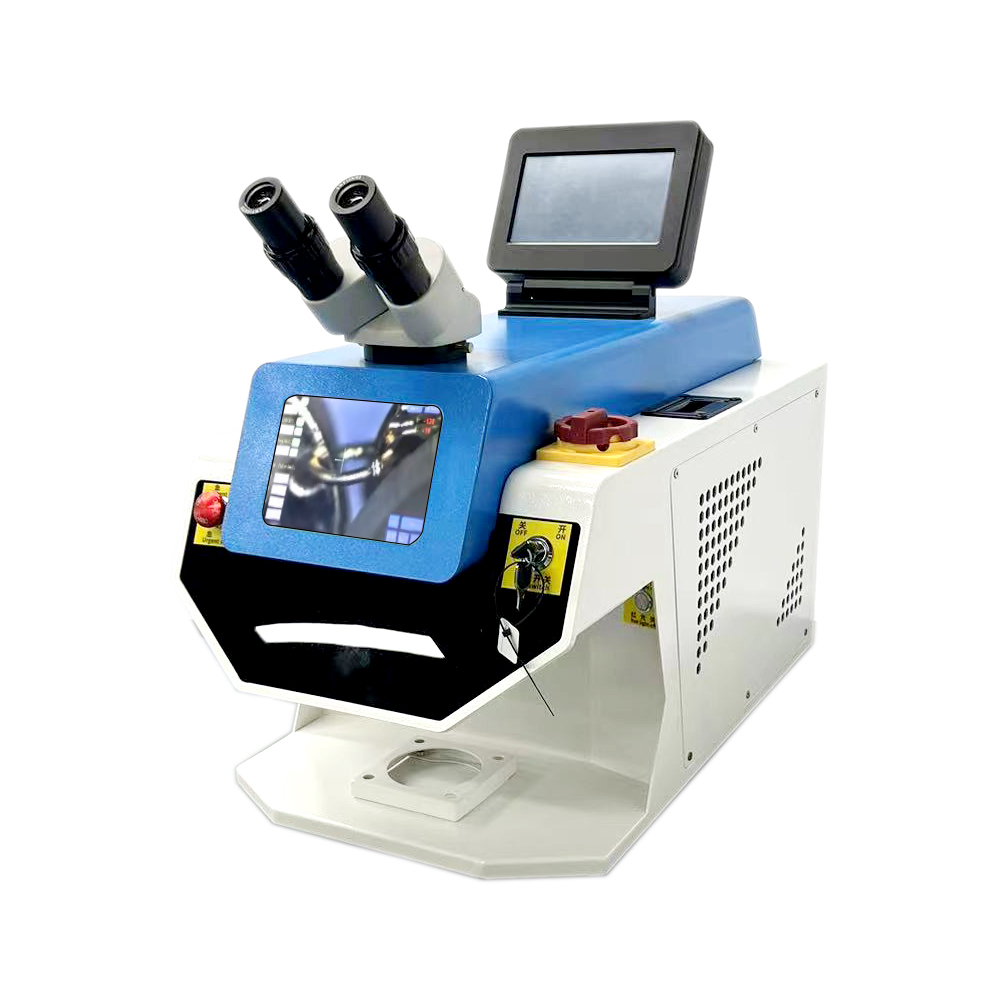
Platinum is one of the most valuable and challenging metals used in fine jewelry. Its exceptionally high melting point, distinctive physical properties, and sensitivity to improper heat treatment make platinum jewelry repair different from working with gold or silver.
So, can you laser weld platinum jewelry? Yes. In fact, platinum is particularly well suited to precision laser welding. A properly configured jewelry laser welder can repair platinum rings, chains, prongs, bezels, clasps, and other delicate components while keeping the heat-affected zone extremely small.
Research on platinum jewelry alloys has shown that their relatively low thermal diffusivity allows laser energy to be concentrated into a small area, making controlled laser welding highly effective.
Why Is Platinum Suitable for Laser Welding?
Platinum has a melting point of approximately 1,770°C (3,220°F), depending on the alloy. This is considerably higher than the melting points of gold and silver. At the same time, platinum jewelry alloys have relatively low thermal diffusivity.
This combination is important for laser welding.
A focused laser beam can deliver a high concentration of energy to a tiny spot, melting the platinum locally without heating a large portion of the surrounding jewelry. Studies comparing joining methods have found that laser welding can produce a much narrower heat-affected zone than conventional welding techniques.
For jewelry manufacturers and repair workshops, this means greater control over:
-
Weld location
-
Penetration depth
-
Heat input
-
Filler material
-
Weld size
-
Surface finish
-
Distortion
The result can be a strong and visually clean repair when the machine parameters and welding technique are properly matched to the platinum alloy.
What Platinum Jewelry Can Be Laser Welded?
A jewelry laser welding machine can be used for many common platinum repair and manufacturing applications.
Platinum Ring Repair
Laser welding is suitable for repairing cracked or broken platinum ring shanks, rebuilding worn areas, and joining sections during ring resizing.
For example, GIA has documented laser welding techniques for resizing platinum-cobalt rings containing diamonds. The joint can be laser bonded, filled with compatible platinum alloy wire, and subsequently filed and finished.
Platinum Prong Repair
Worn or damaged prongs can sometimes be rebuilt with platinum filler wire and laser welded into the existing structure.
Because the laser concentrates energy into a small area, it can provide considerably more control than heating an entire jewelry piece with a torch.
Platinum Chain Repair
Fine platinum chains contain small links and delicate connection points that can be difficult to repair using conventional methods.
Laser welding allows individual areas to be targeted with small, controlled welds. Platinum laser welding has also been used in chain-making and repair applications.
Platinum Clasp and Setting Repair
Clasps, bezels, settings, catches, and other small components can also benefit from precision laser welding.
The ability to position the laser accurately is particularly useful when a repair area is located close to another component or gemstone.
Can You Laser Weld Platinum Jewelry Without Removing the Stones?
In many cases, yes—but it depends on the stone, its condition, the distance from the weld, and the operator’s technique.
One of the major advantages of laser welding for platinum jewelry is its localized heat input. Technical literature on platinum jewelry laser welding reports that the laser can approach very close to delicate stones, and that gemstones do not necessarily need to be removed for many repairs.
This makes laser welding attractive for repairs involving:
-
Diamond rings
-
Platinum engagement rings
-
Gemstone settings
-
Prongs
-
Bezels
-
Fine chain components
However, “laser welding is safe near gemstones” does not mean every gemstone is automatically safe under every condition.
The jewelry must be inspected first, and laser parameters need to be selected according to the material, geometry, stone type, and distance from the welding area.
Platinum Laser Welding vs. Traditional Torch Soldering
Traditional torch soldering and laser welding both have their place in jewelry manufacturing and repair, but they behave very differently.
| Feature | Platinum Laser Welding | Traditional Torch Soldering |
|---|---|---|
| Heat concentration | Extremely localized | Broad heat distribution |
| Heat-affected zone | Very small | Generally larger |
| Filler material | Can use matching platinum alloy | Uses solder |
| Color mismatch | Minimal when matching alloy is used | Possible depending on solder |
| Precision | Very high | Moderate |
| Work near components | Excellent control | More difficult |
| Gemstone-sensitive repairs | Often advantageous | Requires greater heat management |
| Complex micro-repairs | Excellent | More challenging |
| Operator skill | Requires specialized training | Requires traditional bench skills |
Research comparing conventional, laser, and spot welding of platinum alloys found that laser welding produced a narrow heat-affected zone, while conventional welding could cause much broader annealing and softening.
Laser welding therefore isn’t simply a replacement for soldering. Instead, it provides another joining method that is particularly useful when precision and localized heat control are important.
What Are the Benefits of Laser Welding Platinum Jewelry?
1. Minimal Heat-Affected Zone
The laser delivers energy to a very small area. This reduces unnecessary heat transfer into the surrounding jewelry.
For platinum repair, this is especially valuable because excessive heating can affect the material’s properties and increase the risk of distortion or damage to nearby components.
2. High Precision
A jewelry laser welder can produce very small weld spots, allowing the operator to work on fine details that would be difficult to control with a torch.
This is useful for repairing:
-
Thin ring shanks
-
Fine chains
-
Small prongs
-
Delicate settings
-
Tiny cracks
-
Worn surfaces
3. Excellent Control of Weld Penetration
Laser parameters such as pulse energy, pulse duration, and beam diameter influence penetration and heat distribution.
Technical research has demonstrated that increasing pulse energy can increase penetration, while changes in pulse duration and beam diameter influence heat flow and the size of the affected area.
This gives skilled operators much more control over the repair process.
4. Matching Platinum Filler Can Be Used
When additional material is required, platinum alloy wire can be introduced into the weld.
Using a compatible filler can help maintain the appearance and metallurgical consistency of the repair rather than relying on a visibly different solder joint.
5. Reduced Finishing Work
Because laser welding can create small and controlled welds, less surrounding material may need to be removed during filing and polishing.
For high-value platinum jewelry, reducing unnecessary finishing work can save time and preserve the original design.
What Laser Settings Are Used for Platinum?
There is no single laser setting that works for every platinum jewelry piece.
Platinum jewelry is available in different alloy compositions, including platinum-ruthenium, platinum-iridium, platinum-cobalt, and other formulations. Their melting behavior and welding response can differ.
Published technical data gives example laser parameters for platinum jewelry, but these should be treated as starting points rather than universal settings. Beam diameter, pulse duration, energy, material thickness, joint geometry, and alloy composition all affect the result.
A professional jewelry laser welding machine should therefore provide adjustable parameters such as:
-
Laser power or pulse energy
-
Pulse duration
-
Spot diameter
-
Frequency
-
Welding mode
-
Filler wire control
-
Microscope magnification
-
Shielding gas control
The correct approach is to test parameters on scrap material or a representative sample of the same platinum alloy before working on a valuable piece.
Can a Laser Welder Repair Platinum Rings With Diamonds?
Yes, laser welding is widely used for platinum jewelry repairs involving diamonds.
A major advantage is that the laser can concentrate its energy at the metal joint rather than heating the entire ring.
GIA has specifically demonstrated laser welding for platinum-cobalt ring sizing with diamonds present in the shank.
However, the operator still needs to evaluate the diamond and setting carefully. The laser should not be treated as a guarantee against gemstone damage. Existing inclusions, poor stone condition, excessive heat, reflections, and inappropriate welding technique can still create risks.
For valuable jewelry, professional inspection and proper laser welding procedures are essential.
What Are the Limitations of Platinum Laser Welding?
Laser welding is highly versatile, but it is not suitable for every jewelry joining operation.
Line-of-Sight Access
The laser beam needs access to the welding location. Deep internal seams, hidden joints, or areas blocked by other components can be difficult or impossible to reach.
This is one of the recognized limitations of laser welding compared with some traditional joining methods.
Thick Sections
Very thick platinum components may require multiple passes, additional preparation, or another joining method.
Research comparing platinum welding techniques also notes that achieving complete joining can become more difficult as section thickness increases.
Alloy Differences
Platinum jewelry is not always pure platinum. Different alloys can have different melting characteristics and welding responses.
A machine operator must identify the alloy whenever possible and adjust the parameters accordingly.
Operator Experience
A laser welder provides precision, but it does not automatically produce a perfect weld.
The operator needs to understand:
-
Platinum alloy behavior
-
Weld penetration
-
Heat management
-
Filler wire selection
-
Pulse control
-
Joint preparation
-
Gemstone protection
-
Post-weld finishing
For high-value platinum jewelry, operator skill is just as important as the machine itself.
What Type of Laser Welder Is Best for Platinum Jewelry?
For jewelry repair and manufacturing, a dedicated jewelry laser welding machine is generally preferable to a general-purpose industrial welding system.
Important features include:
High-Precision Optical System
A microscope or high-magnification viewing system allows the operator to position the laser accurately on very small jewelry components.
Adjustable Pulse Parameters
Platinum requires precise energy control. Adjustable pulse energy, duration, frequency, and spot size provide greater flexibility across different platinum alloys and thicknesses.
Small Spot Diameter
A smaller laser spot helps concentrate energy and perform detailed repairs.
Filler Wire Capability
A practical jewelry laser welder should allow controlled addition of compatible platinum filler wire for rebuilding prongs, filling gaps, or restoring worn areas.
Stable Laser Output
Consistent pulse energy is important when producing multiple overlapping welds on the same component.
Is Laser Welding Better Than Soldering for Platinum Jewelry?
There is no universal answer.
Laser welding is often better when precision, localized heat, and minimal finishing are priorities. Traditional soldering may still be preferable for certain large-area joints, hidden seams, or situations where laser access is limited.
For example, laser welding is particularly attractive for:
-
Platinum ring sizing
-
Prong rebuilding
-
Chain repair
-
Clasp repair
-
Small cracks
-
Setting repair
-
Adding platinum material
-
Repairs close to gemstones
Traditional joining methods can remain useful for applications where broad heating or full seam access is required.
The best jewelry workshops often choose the joining technique according to the specific repair rather than relying on one method for every job.
How Does Platinum Laser Welding Work?
A typical platinum laser welding process involves several stages.
Step 1: Identify the Platinum Alloy
Determine the platinum purity and alloy composition whenever possible.
Step 2: Clean the Repair Area
Remove contaminants, polishing compounds, oils, and oxides from the welding area.
Step 3: Prepare the Joint
The damaged area may need to be opened, aligned, chamfered, or otherwise prepared depending on the repair.
Step 4: Select Initial Laser Parameters
Choose appropriate pulse energy, duration, spot size, and frequency based on the alloy and thickness.
Step 5: Tack Weld
Small initial welds can hold the components in their correct position.
Step 6: Build the Weld
Additional pulses or compatible platinum filler wire can be used to build the joint.
Step 7: Inspect the Weld
The operator should inspect penetration, alignment, surface quality, and surrounding areas under magnification.
Step 8: File and Polish
After the weld is complete, excess material can be carefully filed and the jewelry returned to its desired finish.
Frequently Asked Questions About Platinum Laser Welding
Can platinum be welded with a laser?
Yes. Platinum is well suited to precision laser welding because its material properties allow laser energy to be concentrated into a small area.
Can you laser weld platinum rings?
Yes. Laser welding can be used for platinum ring sizing, crack repair, shank repair, prong rebuilding, and other restoration work.
Can platinum be laser welded with diamonds in place?
In many cases, yes. Laser welding’s localized heat input can allow repairs close to mounted gemstones, but the stone and repair geometry must be evaluated by a skilled operator first.
Does platinum laser welding require filler wire?
Not always. Some cracks or joints can be fused directly. Filler wire is useful when material must be added, such as rebuilding worn prongs or filling a gap.
Is platinum laser welding stronger than soldering?
Laser welding creates a fusion joint in the base metal, while soldering joins components using a lower-melting filler. The appropriate method depends on the joint design and application. Research has shown that laser welding can produce strong platinum joints with a narrow heat-affected zone.
Can a laser welder repair platinum chain links?
Yes. The precision of laser welding makes it suitable for delicate chain links and small connection points.
What power laser is needed to weld platinum jewelry?
The required laser power depends on the machine architecture, pulse characteristics, alloy, thickness, and application. Jewelry laser welders are typically designed around precise pulsed energy rather than simply maximizing wattage. Published platinum jewelry welding research demonstrates that pulse energy, duration, and beam diameter all influence the weld.
Conclusion: Is Laser Welding a Good Choice for Platinum Jewelry?
Yes. Laser welding is one of the most effective precision joining technologies for platinum jewelry repair and manufacturing.
Its combination of localized energy, small heat-affected zones, high positioning accuracy, and compatibility with platinum alloys makes it particularly useful for delicate jewelry work.
For platinum rings, chains, prongs, clasps, settings, and gemstone-adjacent repairs, a dedicated jewelry laser welding machine can provide a level of control that is difficult to achieve with conventional torch techniques.
The key is not simply choosing a powerful laser. The right combination of laser parameters, platinum alloy knowledge, joint preparation, optical precision, and operator skill determines the quality of the final weld.
For jewelry manufacturers and professional repair workshops handling platinum regularly, investing in a precision jewelry laser welder can expand repair capabilities while improving control, consistency, and finishing efficiency.
If you are looking for a jewelry laser welding machine for platinum, gold, silver, and other precious-metal repairs, choose a system with precise pulse control, adjustable spot size, microscope-assisted operation, and reliable filler-wire feeding.
Post time: Aug-18-2026
