
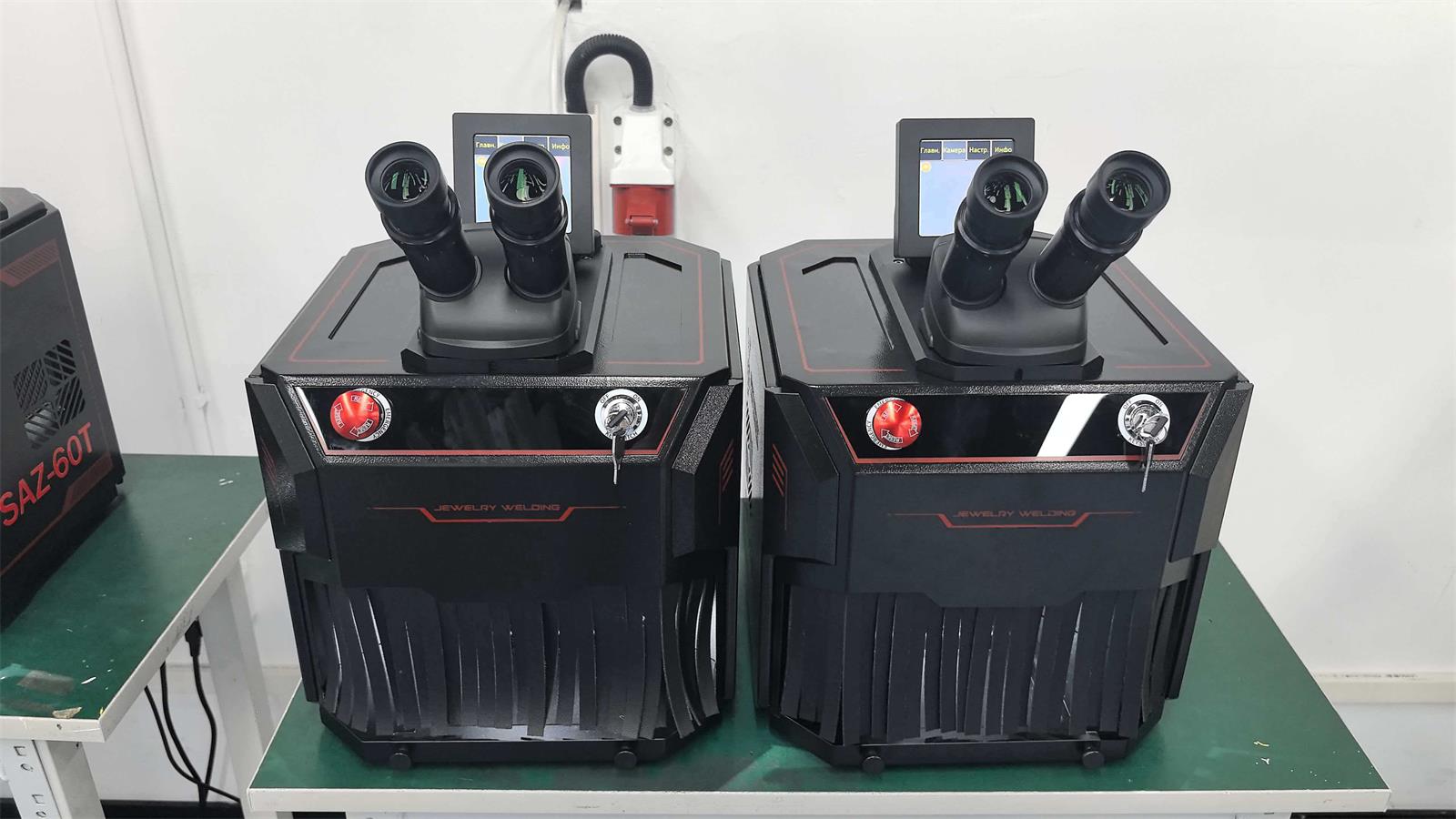
Yes. Both gold jewelry and silver jewelry can be laser welded when the appropriate laser parameters, filler material, and welding technique are used.
A jewelry laser welding machine can repair rings, chains, bracelets, prongs, clasps, settings, and other precious-metal components with highly localized heat. Compared with traditional torch soldering, laser welding gives jewelers much greater control over where heat is applied.
However, gold and silver behave differently during laser welding. Understanding these differences is important for achieving clean, strong, and consistent repairs.
Can You Laser Weld Gold Jewelry?
Gold is one of the most widely used materials for jewelry laser welding.
A laser welder can be used on many gold alloys, including:
-
24K gold
-
22K gold
-
18K gold
-
14K gold
-
Yellow gold
-
White gold
-
Rose gold
The exact welding parameters depend on the alloy, thickness, geometry, and repair location.
Gold has excellent laser weldability, making it suitable for both jewelry repair and manufacturing.
Common Gold Jewelry Laser Welding Applications
A jewelry laser welding machine can be used for:
-
Broken gold chains
-
Ring shank repair
-
Prong rebuilding
-
Cracked rings
-
Gold bracelet repair
-
Clasp repair
-
Porosity filling
-
Rebuilding worn areas
-
Repairing delicate settings
-
Custom jewelry fabrication
Because the laser can be focused onto a very small area, it is particularly useful when repairing fine or expensive gold jewelry.
Can You Laser Weld Silver Jewelry?
Yes, silver jewelry can also be laser welded, but silver generally requires more careful parameter control than gold.
Silver has high thermal conductivity and reflects a significant portion of certain laser wavelengths. As a result, heat can be distributed away from the welding zone more quickly, making the process more demanding.
This does not mean silver cannot be laser welded. It means that the operator needs to optimize the welding parameters for the specific silver alloy and application.
Common materials include:
-
Sterling silver
-
Fine silver
-
Silver jewelry alloys
-
Silver components used in custom jewelry
Gold vs Silver: Which Is Easier to Laser Weld?
Gold is generally easier to laser weld than silver because of differences in thermal conductivity and optical properties.
| Property | Gold Jewelry | Silver Jewelry |
|---|---|---|
| Laser weldability | Excellent | Good with proper settings |
| Thermal conductivity | Lower than silver | Very high |
| Heat control | Relatively easy | More demanding |
| Reflectivity | High | Very high |
| Parameter sensitivity | Moderate | Higher |
| Fine jewelry repair | Excellent | Excellent when optimized |
| Filler wire | Often useful | Often useful |
| Operator skill | Important | Especially important |
For a jewelry workshop, the key is not simply choosing a laser with sufficient power. Parameter optimization is critical, especially when switching between gold and silver.
Why Is Silver More Difficult to Laser Weld?
Silver’s high thermal conductivity allows heat to spread quickly away from the laser spot.
Imagine trying to heat a small area while the surrounding material continuously carries the heat away. The laser must deliver enough energy to create proper fusion without overheating or damaging the surrounding jewelry.
Silver’s high reflectivity can also affect how efficiently laser energy is absorbed.
For this reason, silver welding may require careful adjustment of:
-
Pulse energy
-
Pulse duration
-
Frequency
-
Spot size
-
Welding speed
-
Focal position
-
Filler wire size
The correct combination depends on the machine and the particular silver component.
What Happens If You Use Too Much Laser Power on Silver?
Excessive energy can cause several problems.
The silver may:
-
Melt excessively
-
Develop a larger heat-affected area
-
Deform
-
Produce an oversized weld pool
-
Lose fine details
-
Require additional finishing
The objective is not to use the highest available power.
Instead, the operator should use controlled energy sufficient to achieve the required penetration and fusion.
This principle applies to both gold and silver jewelry.
Can Laser Welding Repair Gold Chains?
Yes. Gold chains are particularly well suited to precision laser welding.
Fine chains can contain extremely small links that are difficult to repair with a torch without affecting nearby sections.
Laser welding allows the operator to target the broken link and gradually rebuild the connection.
This can be useful for:
-
Fine gold necklaces
-
Curb chains
-
Rope chains
-
Box chains
-
Figaro chains
-
Gold bracelets
-
Small jump rings
If material is missing, compatible gold filler wire can be added during the welding process.
Can Laser Welding Repair Silver Chains?
Yes, but silver chains generally require more careful parameter optimization.
Because silver conducts heat quickly, thin silver links can be challenging to weld without excessive melting.
A properly configured jewelry laser welder can nevertheless provide precise control for suitable silver chain repairs.
For very thin or hollow chains, testing parameters on comparable material before repairing a valuable piece is especially important.
Can You Laser Weld Gold Jewelry with Stones in Place?
In suitable cases, yes.
One of the major advantages of laser welding is its localized heat input.
For example, a jeweler may be able to repair:
-
A worn prong
-
A cracked ring shank
-
A small setting defect
-
A localized structural crack
without removing a suitable gemstone.
However, gemstone safety depends on the specific stone, its treatment, location, and the amount of heat required.
Laser welding reduces thermal exposure; it does not eliminate heat.
Diamonds and some other gemstones can tolerate certain repair conditions, while heat-sensitive or treated stones may require removal before welding.
Can You Laser Weld Silver Jewelry with Stones?
Potentially, yes.
The same principle applies to silver jewelry: the repair location and gemstone characteristics must be evaluated before welding.
Because silver transfers heat rapidly, thermal management is particularly important.
For any gemstone-set piece, the jeweler should evaluate the stone and repair before deciding whether it is appropriate to leave the stone in place.
Do You Need Filler Wire for Gold and Silver?
Not always.
Some cracks or breaks can be repaired by fusing the existing metal directly.
Filler wire becomes useful when:
-
Metal is missing
-
A worn area needs rebuilding
-
A prong needs to be reconstructed
-
A gap must be filled
-
Additional material is needed for structural reinforcement
The filler should be compatible with the base metal and selected according to the desired mechanical and visual result.
For gold jewelry, matching the filler to the appropriate gold alloy can also help achieve a seamless finish.
Laser Welding vs Soldering for Gold and Silver
Traditional soldering remains an important jewelry repair technique.
However, laser welding offers several advantages when precision is the priority.
| Feature | Laser Welding | Traditional Soldering |
|---|---|---|
| Heat affected area | Very small | Larger |
| Precision | Very high | Moderate to high |
| Gold repair | Excellent | Excellent |
| Silver repair | Excellent with optimized settings | Excellent |
| Fine chain repair | Very suitable | More challenging |
| Prong rebuilding | Excellent | Possible |
| Work near gemstones | Suitable for selected repairs | More heat exposure |
| Filler | Optional | Required |
| Finishing | Often reduced | Often more finishing |
| Equipment investment | Higher | Lower |
The two technologies should not necessarily be viewed as competitors.
For many professional workshops, laser welding and traditional soldering complement each other.
What Type of Laser Is Used for Jewelry Welding?
Jewelry laser welding machines commonly use pulsed laser technology designed for precision applications.
A pulsed laser can deliver short bursts of energy rather than continuously heating the workpiece.
This is particularly useful for jewelry because the operator can control energy input on a pulse-by-pulse basis.
Important machine considerations include:
-
Laser power
-
Pulse energy
-
Pulse duration
-
Frequency
-
Spot size
-
Microscope or viewing system
-
Filler wire compatibility
-
Cooling system
-
Working chamber design
The correct machine should be selected according to the jewelry workshop’s typical materials and repair requirements rather than simply choosing the highest wattage.
How to Choose a Jewelry Laser Welder for Gold and Silver
If your workshop repairs both gold and silver, look for a machine that provides a wide range of adjustable parameters.
Useful features include:
Adjustable Pulse Energy
Allows the operator to adapt the laser to different material thicknesses.
Adjustable Pulse Duration
Helps control heat input during delicate repairs.
Variable Frequency
Useful when working with different metals and repair conditions.
Precision Viewing System
A microscope or high-quality optical system is important when working on small jewelry components.
Stable Beam Delivery
Consistent laser performance helps produce repeatable welds.
Easy Parameter Adjustment
Gold and silver require different settings, so fast and precise parameter adjustment can improve workflow efficiency.
Common Problems When Laser Welding Gold or Silver
Problem 1: Excessive Melting
Usually indicates excessive energy or unsuitable parameter settings.
Problem 2: Poor Fusion
Can result from insufficient energy, poor surface preparation, incorrect focal position, or unsuitable welding technique.
Problem 3: Porosity
May be associated with contamination, material condition, shielding, or welding parameters.
Problem 4: Distortion
More common when thin jewelry is exposed to excessive heat.
Problem 5: Inconsistent Welds
Can result from unstable positioning, inconsistent filler feeding, or unsuitable laser settings.
These issues can generally be reduced through proper machine setup, material preparation, and operator training.
Is Laser Welding Better for Gold or Silver?
For most jewelry workshops, gold is generally easier to laser weld, while silver requires more careful control because of its thermal and optical properties.
But this does not make laser welding unsuitable for silver.
A properly configured jewelry laser welding machine can provide excellent results on both materials.
The real advantage comes from having enough parameter control to adapt the laser to different alloys, thicknesses, and repair geometries.
FAQ
Can a jewelry laser welder weld 18K gold?
Yes. 18K gold is commonly suitable for laser welding when appropriate parameters and compatible filler material are used.
Can you laser weld 14K gold?
Yes. 14K gold can be laser welded, although different alloy compositions may require different settings.
Can sterling silver be laser welded?
Yes. Sterling silver can be laser welded, but its high thermal conductivity means parameter optimization is particularly important.
Is silver harder to laser weld than gold?
Generally, yes. Silver’s high thermal conductivity and reflectivity make it more demanding to weld than gold.
Can laser welding repair a broken gold ring?
Yes. Ring shanks, cracks, worn sections, and other localized defects can be repaired using a jewelry laser welder.
Can laser welding repair a silver ring?
Yes. Silver rings can be laser welded for cracks, breaks, resizing-related joints, and other suitable repairs.
Can gold and silver be laser welded together?
It is technically possible to laser weld dissimilar metals in certain applications, but joining gold and silver directly requires careful consideration of alloy composition, joint design, laser parameters, and the desired mechanical properties. It is not as straightforward as welding the same metal to itself.
Conclusion
Yes, you can laser weld both gold jewelry and silver jewelry.
Gold is generally easier to process, while silver requires more precise control because it conducts and reflects laser energy differently. With the right parameters, a professional jewelry laser welding machine can handle both materials for applications ranging from broken chain repair and ring restoration to prong rebuilding and precision jewelry manufacturing.
For a jewelry workshop working with multiple precious metals, the most important consideration is not simply laser power. A machine with precise and flexible parameter control gives the operator the ability to adapt the welding process to different gold and silver alloys, thicknesses, and repair conditions.
Post time: Aug-17-2026
