
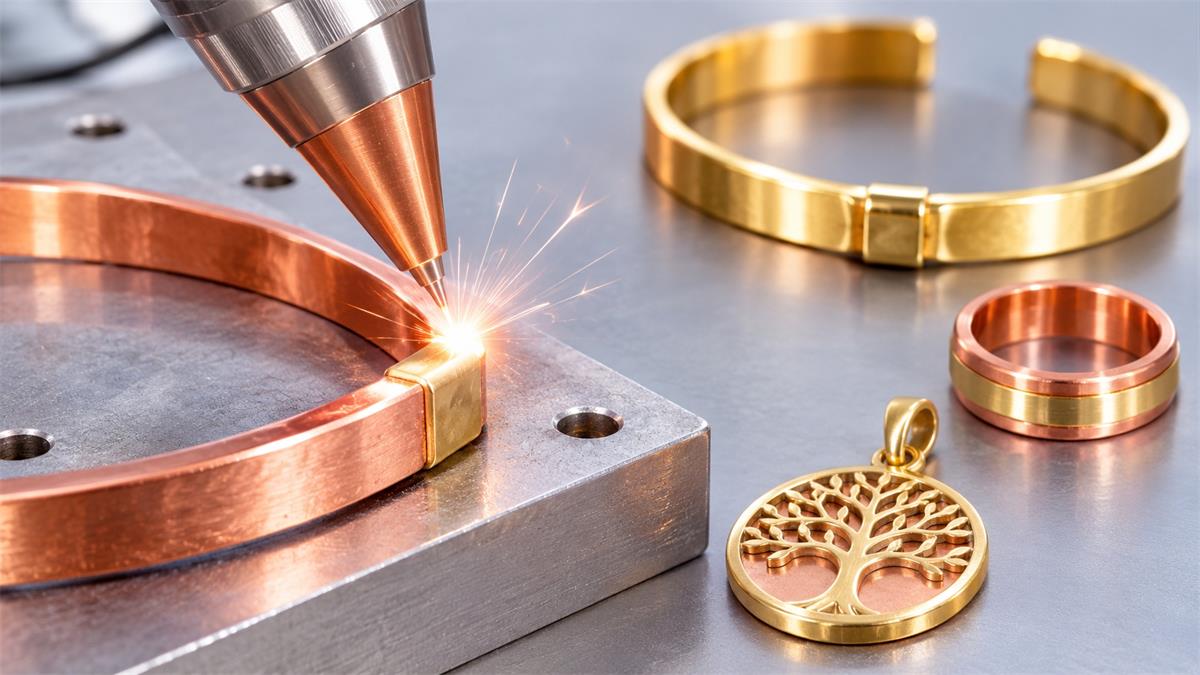
Yes. Copper and brass jewelry parts can be laser welded, but they require more careful parameter adjustment than many common gold and silver alloys. Both metals have relatively high thermal conductivity, while copper also has high laser reflectivity at commonly used welding wavelengths. These characteristics make it important to select suitable laser energy, pulse duration, and welding techniques.
For jewelry manufacturers and repair workshops, a pulsed YAG jewelry laser welding machine can be used for localized joining and repair of compatible copper and brass components. Understanding the differences between these two metals is the first step toward achieving reliable welding results.
1. Can Copper and Brass Both Be Laser Welded?
Yes, but copper and brass should not be treated as the same material. Although both are copper-based metals, their compositions and welding characteristics are different.
Copper Jewelry Parts
Copper is widely used in handmade jewelry, decorative accessories, pendants, bracelets, and artistic metalwork. Its reddish color makes it attractive for certain jewelry designs.
However, copper has two important characteristics that affect laser welding:
- High thermal conductivity: Heat spreads quickly away from the welding point, making it harder to maintain a stable molten pool.
- High laser reflectivity: Copper reflects a significant amount of near-infrared laser energy, particularly when the surface is clean and highly polished.
These properties can make copper more challenging to weld than gold or silver jewelry alloys. Suitable laser parameters and an appropriate welding setup are essential.
Brass Jewelry Parts
Brass is an alloy mainly composed of copper and zinc. Its color ranges from yellow-gold to reddish-gold depending on the zinc content.
Brass is commonly used for fashion jewelry, decorative metal components, chains, clasps, and jewelry accessories.
One particular challenge is zinc. Zinc has a relatively low boiling point compared with copper. During laser welding, excessive heat can cause zinc vaporization, potentially resulting in porosity, spatter, and unstable welds.
Therefore, brass welding requires careful control of heat input and attention to the alloy composition.
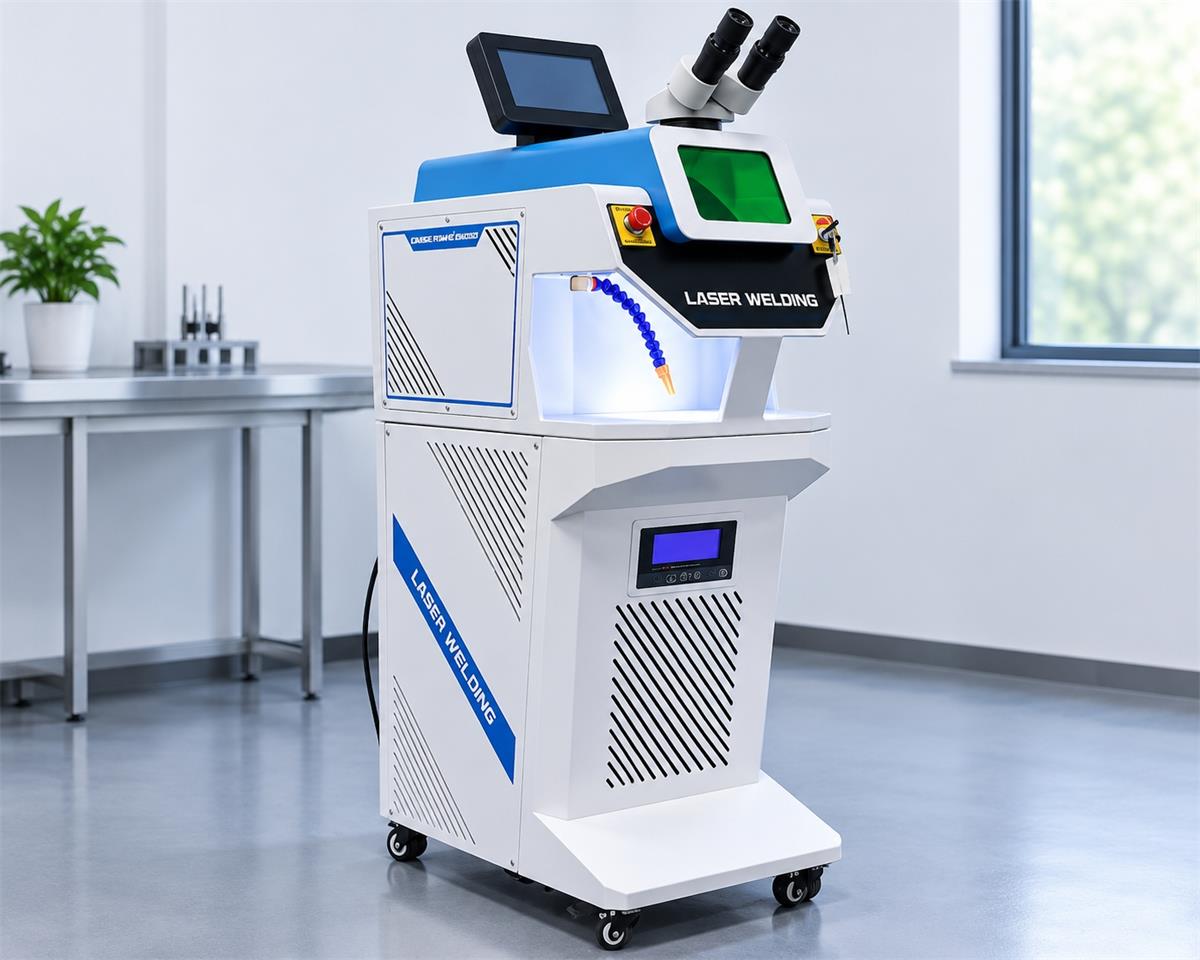
2. Copper vs Brass: Which Is More Difficult to Laser Weld?
Neither material is universally easier to weld. Their challenges are different.
| Property | Copper | Brass |
|---|---|---|
| Main composition | Primarily copper | Copper and zinc |
| Thermal conductivity | Very high | Generally lower than pure copper |
| Laser reflectivity | High | Depends on alloy and surface condition |
| Main welding challenge | Heat dissipation and reflectivity | Zinc vaporization and porosity |
| Common jewelry applications | Pendants, bracelets, decorative parts | Fashion jewelry, clasps, decorative components |
For pure copper, the main challenge is delivering sufficient energy to achieve stable fusion despite its high thermal conductivity and reflectivity.
For brass, the operator must also manage the effects of zinc vaporization. Excessive energy can cause material loss and defects in the weld.
The actual welding difficulty depends on the specific alloy, thickness, surface condition, and joint design.
3. What Copper and Brass Jewelry Parts Can Be Laser Welded?
Laser welding can be useful for various copper and brass jewelry applications, especially when a small, localized joint is required.
Copper Pendants and Charms
Small decorative pendants and charms often have delicate connections. Laser welding can join compatible copper components without heating the entire jewelry piece.
Brass Chains and Clasps
Brass chains, connectors, and clasps are common in fashion jewelry manufacturing. A focused laser spot can be used to repair or join small metal connections.
Decorative Jewelry Components
Many jewelry designs combine copper or brass with other metal components. Laser welding may be suitable for certain joining applications, provided the metals are metallurgically compatible.
Custom Handmade Jewelry
Small jewelry workshops often produce customized designs in limited quantities. Laser welding offers flexibility for localized joining, small repairs, and decorative metalwork.
However, when joining dissimilar metals, operators should evaluate their compatibility, melting behavior, and potential formation of brittle intermetallic compounds before proceeding.
4. What Laser Welding Parameters Are Important for Copper and Brass?
Choosing the correct parameters is particularly important when working with copper and brass. Applying the same settings used for gold jewelry may not produce satisfactory results.
For pulsed YAG laser welding, the main parameters include:
| Parameter | Function |
|---|---|
| Pulse energy | Controls the energy delivered to each welding spot. |
| Pulse duration | Controls the duration of each laser pulse and influences heat input. |
| Pulse frequency | Determines how many pulses are delivered per second. |
| Spot diameter | Controls the size and concentration of the welding area. |
| Shielding gas | Helps protect the molten metal from atmospheric contamination. |
For copper, sufficient energy must reach the joint to overcome rapid heat dissipation and achieve fusion.
For brass, excessive energy should be avoided because zinc vaporization can cause porosity and spatter. The operator should select suitable pulse conditions and test the actual alloy before production.
There is no universal parameter setting for all copper and brass jewelry. Material thickness, alloy composition, and joint geometry must all be considered.
5. Common Problems When Laser Welding Copper and Brass
Although both materials can be laser welded, several problems may occur during actual production.
Problem 1: Insufficient Welding Penetration
Copper dissipates heat rapidly. If the energy input is insufficient, the material may melt only on the surface without forming a strong joint.
Solution: Optimize pulse energy and duration based on the copper thickness. Test the weld on matching material and check the penetration before repairing valuable jewelry.
Problem 2: Porosity in Brass
Zinc can vaporize during welding because of its relatively low boiling point. The resulting vapor may contribute to pores and unstable weld formation.
Solution: Avoid excessive heat input, use suitable welding conditions, and test different pulse settings on the actual brass alloy.
Problem 3: Excessive Spatter
Unstable molten metal and rapid vapor formation can cause spatter around the welding area, particularly when welding brass.
Solution: Optimize pulse energy, duration, and spot diameter. Proper surface cleaning and suitable shielding gas also help improve consistency.
Problem 4: Color Differences After Welding
Copper and brass have distinctive colors. Oxidation, filler material selection, and differences in alloy composition can affect the appearance of the repaired area.
Solution: Use compatible filler material when required and perform appropriate polishing or surface finishing after welding.
6. Can a 150W or 200W Jewelry Laser Welder Weld Copper and Brass?
Both 150W and 200W pulsed YAG jewelry laser welding machines may be suitable for certain copper and brass jewelry applications. However, the actual welding capability depends on the material thickness, alloy composition, and machine configuration.
150W Jewelry Laser Welder
A 150W desktop jewelry laser welder can be considered for small components and localized repair applications. It is particularly relevant to workshops working with thin jewelry parts and delicate connections.
For copper and brass, actual welding tests are important because high thermal conductivity and alloy composition can affect the required pulse energy.
200W Jewelry Laser Welder
A 200W configuration provides greater available power and can offer more flexibility when working with thicker components or applications requiring higher pulse energy.
For workshops handling different jewelry materials, a 200W machine may be worth considering.
See the Dowin 200W 180 Joules YAG Pulsed Jewelry Laser Welder for more information about this machine configuration.
One important point: a higher wattage rating does not automatically guarantee better copper or brass welding. Laser wavelength, peak pulse power, pulse duration, and actual material compatibility are also important.
7. Can You Laser Weld Copper or Brass to Gold and Silver?
This is a more complicated application than welding two pieces of the same metal.
Some jewelry designs combine copper, brass, gold, and silver components. However, joining dissimilar metals through laser welding requires careful consideration of their metallurgical compatibility.
Potential problems include:
- Different melting temperatures and thermal properties.
- Different laser absorption and reflectivity.
- Formation of brittle intermetallic compounds.
- Different thermal expansion rates.
- Color differences and surface finishing difficulties.
For example, joining copper directly to gold or silver may be possible in certain configurations, but the correct welding method depends on the specific alloy combination and joint design.
Brass requires additional attention because zinc can vaporize during the process.
Before attempting dissimilar-metal welding on finished jewelry, conduct sample tests and inspect the mechanical strength and appearance of the joint.
8. Laser Welding vs Traditional Soldering for Copper and Brass Jewelry
Traditional soldering remains common in jewelry manufacturing, but laser welding offers different advantages for precision applications.
| Comparison | Laser Welding | Traditional Soldering |
|---|---|---|
| Heat application | Localized | Generally heats a larger area |
| Precision | High for small repair areas | Depends on operator skill |
| Nearby components | Reduced heat exposure with proper settings | May require more extensive heat protection |
| Filler material | Can use compatible filler wire when needed | Uses suitable solder alloys |
| Post-processing | May require less finishing | May require solder cleanup and polishing |
| Typical applications | Precision joining and localized repair | General jewelry fabrication and joining |
Neither process is suitable for every application. Laser welding is particularly useful when localized heat control and precise positioning are important, while soldering remains practical for many conventional jewelry manufacturing operations.
9. How to Test a Jewelry Laser Welder Before Buying
If you plan to use a jewelry laser welder for copper or brass, do not rely only on demonstrations using gold jewelry. Ask the supplier to test the actual materials you intend to process.
Here are several practical testing steps:
- Prepare material samples: Provide copper and brass samples with the same composition and thickness as your production materials.
- Check the welding settings: Test different pulse energy and duration combinations.
- Inspect the weld appearance: Look for excessive spatter, pores, cracks, and discoloration.
- Check joint strength: Perform an appropriate mechanical test on the welded samples.
- Evaluate finishing requirements: Check how much polishing or additional treatment is needed after welding.
These tests help determine whether a particular machine is suitable for your actual production requirements rather than simply relying on its rated power.
10. FAQ: Laser Welding Copper and Brass Jewelry
Can a 150W jewelry laser welder weld copper?
It may handle certain thin copper jewelry applications, depending on the machine’s pulse characteristics and the material thickness. Copper’s high thermal conductivity and reflectivity make actual sample testing essential.
Can a jewelry laser welder weld brass?
Yes. Brass can be laser welded, but zinc vaporization can cause porosity and spatter. Proper parameter adjustment and material testing are important.
Is copper harder to laser weld than brass?
The challenges are different. Copper has higher thermal conductivity and generally greater near-infrared reflectivity, while brass introduces additional challenges related to zinc vaporization. The actual difficulty depends on the alloy and application.
Can laser welding repair a broken brass chain?
Yes, in suitable cases. A focused laser spot can join small brass chain connections. However, the alloy composition, link thickness, and zinc content should be considered when selecting welding parameters.
Does copper need filler wire during laser welding?
Not always. Some copper joints can be welded without filler material, while others benefit from compatible filler wire depending on the joint design and required strength.
Can one jewelry laser welder process gold, silver, copper, and brass?
A suitable pulsed YAG jewelry laser welder can handle various compatible jewelry metals. However, each material requires its own parameter optimization, and not every alloy combination is suitable for direct laser welding.
Conclusion
Copper and brass jewelry parts can both be laser welded, but their different material properties require different welding approaches. Copper presents challenges related to high thermal conductivity and laser reflectivity, while brass requires careful control of zinc vaporization to avoid porosity and spatter.
For jewelry manufacturers and repair workshops working with multiple metals, a pulsed YAG jewelry laser welding machine offers flexibility for precision joining and localized repairs. The most important step is to test the actual material before selecting the final welding parameters.
If you are looking for a jewelry laser welding machine for gold, silver, copper, or brass applications, explore Dowin Jewelry Laser Welding Machines. Send your material samples and application details to discuss machine configurations and request a welding test.
Post time: Nov-16-2026
