
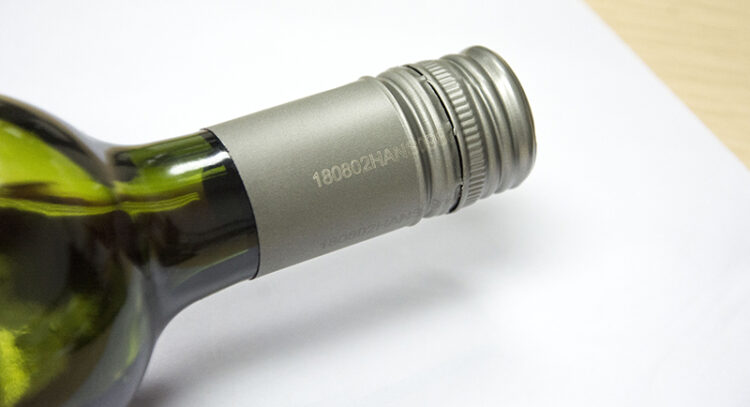
In modern manufacturing, a bottle is no longer just a container—it is a data carrier.
From beverages to pharmaceuticals, every bottle must communicate: production date, origin, batch, compliance, authenticity. What used to be printed is now engineered. And laser marking production lines have become the invisible infrastructure behind this transformation.
This is not just about marking. It is about turning packaging into a digital interface.
The Shift from Printing to Permanent Data Encoding
Traditional ink-based coding systems are reaching their limits:
- Ink fades, smears, or wears off
- Maintenance costs scale with production volume
- Environmental compliance becomes increasingly complex
Laser marking eliminates these constraints by creating permanent, high-contrast marks directly on the material surface without consumables.
Unlike inkjet or labeling, laser marking modifies the material itself—through melting, oxidation, or ablation—ensuring durability that matches the product lifecycle.
Implication:
Marking is no longer a consumable process. It becomes a fixed capability.
What Defines a Modern Bottle Laser Marking Production Line
A true production line is not just a machine—it is a synchronized system.
Core architecture typically includes:
- Laser marking unit – generates a focused beam for high-speed, high-precision marking
- Automated conveyor system – positions bottles dynamically with consistent timing
- Intelligent control system – coordinates data, speed, and marking parameters in real time
- Sensors and vision modules – ensure alignment, detection, and quality control
This integration enables continuous, uninterrupted operation—something standalone marking devices cannot achieve.
Speed Is Obvious—Synchronization Is the Real Advantage
Most discussions focus on marking speed. That misses the point.
Yes, laser systems support high-speed marking suitable for mass production environments.
But the real breakthrough lies in line synchronization:
- Bottles are marked in motion
- No stopping or repositioning required
- Real-time adjustments maintain accuracy
This reduces bottlenecks across the entire production chain—not just the marking stage.
Insight:
The value of laser marking is not speed alone—it is flow continuity.
Precision at Scale: Why Non-Contact Matters
Laser marking is fundamentally different because it is non-contact.
No pressure is applied to the bottle surface. This leads to:
- Zero deformation on thin plastics or glass
- No tool wear or replacement cycles
- Consistent marking quality over millions of units
At a microscopic level, laser systems can achieve millimeter to micron-level accuracy, enabling complex codes, logos, and data matrices.
This precision is critical as industries move toward serialized production and track-and-trace systems.
Traceability Is the Hidden Driver Behind Adoption
The real reason laser marking is expanding rapidly is not aesthetics—it is traceability.
Modern supply chains demand:
- Batch-level identification
- Item-level serialization
- Rapid recall capability
Laser marking enables permanent data encoding that can be linked to digital systems, reducing mix-ups and improving supply chain transparency.
New reality:
A bottle without traceable data is becoming a liability.
Anti-Counterfeiting: From Optional Feature to Core Requirement
Counterfeiting is no longer limited to luxury goods. It affects:
- Beverages
- Pharmaceuticals
- Cosmetics
Laser marking enables:
- Unique QR codes or DataMatrix codes
- Tamper-resistant identification
- Hard-to-replicate surface modifications
Unlike printed labels, these markings are integrated into the material itself, making duplication significantly harder.
Material Flexibility: One System, Multiple Substrates
A key advantage of laser marking production lines is versatility.
They can process:
- Glass bottles
- Plastic containers
- Coated or painted surfaces
- Ceramic packaging
Different laser types (fiber, CO₂, UV) adapt to material properties, ensuring optimal marking results across applications.
Operational benefit:
One system can serve multiple product lines.
The Sustainability Argument Is No Longer Secondary
Environmental pressure is reshaping manufacturing decisions.
Laser marking systems:
- Eliminate ink and chemical usage
- Reduce waste streams
- Lower long-term energy and material costs
This aligns directly with global ESG targets and regulatory trends.
Critical shift:
Sustainability is no longer a marketing claim—it is a procurement requirement.
Customization: The Underrated Competitive Edge
Modern laser marking lines are not static—they are programmable.
Manufacturers can:
- Switch marking content instantly
- Adjust parameters for different bottle types
- Integrate with ERP or MES systems
This enables mass customization without sacrificing efficiency.
In industries where product variation is increasing, this flexibility becomes a strategic advantage.
A More Critical Perspective: Where the Challenges Still Exist
Despite its advantages, laser marking production lines are not without limitations:
- Higher upfront investment compared to ink systems
- Integration complexity in legacy production lines
- Requirement for precise parameter tuning
- Skilled operation and maintenance
However, these are transitional barriers—not structural weaknesses.
Conclusion: From Marking to Manufacturing Intelligence
Bottle laser marking production lines represent more than an upgrade in marking technology.
They signal a broader transformation:
- From labeling → data encoding
- From manual processes → automated ecosystems
- From product identification → supply chain intelligence
The real innovation is not the laser—it is the system built around it.
Final insight:
In the near future, the question will not be “Should we use laser marking?”
It will be:
“How do we compete without it?”
Post time: Apr-20-2026
