
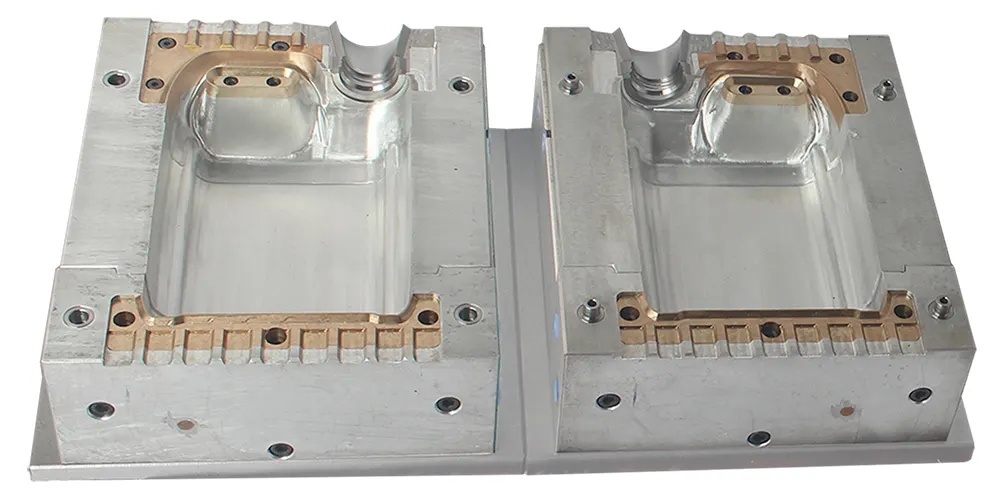
Injection molds are among the most valuable assets in modern manufacturing. From automotive components and consumer electronics to medical devices and packaging products, injection molds are used to produce millions of precision parts every year. However, continuous production inevitably leads to mold wear, cracks, scratches, chipped edges, and dimensional defects. Replacing damaged molds is expensive and time-consuming, which is why mold repair has become a critical part of mold maintenance strategies.
Today, laser welding technology is widely recognized as one of the most effective solutions for repairing injection molds. Choosing the best mold repair laser welding equipment can significantly extend mold life, reduce downtime, and lower production costs.
Why Injection Mold Repair Matters
Injection molds often operate under high temperatures, high pressures, and repeated mechanical stress. Over time, these conditions can cause:
- Surface wear
- Parting line damage
- Corner breakage
- Cracks and fractures
- Machining errors
- Design modifications
Traditional repair methods such as TIG welding frequently introduce excessive heat into the mold, causing distortion, hardness reduction, and additional finishing work. In contrast, laser welding provides highly localized heating, making it ideal for precision mold repair.
For mold manufacturers and maintenance workshops, investing in advanced laser welding equipment is no longer a luxury—it is becoming a necessity.
Advantages of Laser Welding for Injection Mold Repair
1. Minimal Heat-Affected Zone
One of the biggest advantages of mold laser welding equipment is its extremely small heat-affected zone (HAZ).
The laser beam concentrates energy precisely where welding is required, reducing thermal deformation and protecting surrounding mold surfaces. This is especially important for precision injection molds where even minor dimensional changes can affect product quality.
2. High Repair Accuracy
Modern mold laser welders can repair defects as small as a few tenths of a millimeter.
Operators can accurately deposit welding material onto:
- Fine mold cavities
- Sharp corners
- Deep grooves
- Complex contours
This precision minimizes post-processing and preserves the original mold geometry.
3. Extended Mold Life
Instead of replacing expensive molds, manufacturers can restore damaged areas multiple times through laser welding.
Many companies report substantial reductions in mold replacement costs after implementing laser repair systems, especially for high-value automotive and medical molds.
4. Superior Weld Quality
Laser welding creates dense, strong welds with excellent metallurgical bonding.
The repaired area typically demonstrates:
- High hardness
- Good wear resistance
- Excellent polishing performance
- Strong structural integrity
These characteristics make laser welding ideal for long-term mold maintenance.
Key Features to Look for in Mold Repair Laser Welding Equipment
Not all laser welders are designed specifically for injection mold repair. When selecting equipment, several features should be carefully evaluated.
Adjustable Laser Parameters
Different mold materials require different welding settings.
Quality equipment should allow precise adjustment of:
- Pulse energy
- Pulse width
- Frequency
- Spot size
This flexibility enables operators to optimize welding performance for various repair tasks.
Microscope Observation System
Precision repair requires clear visibility.
A high-quality microscope system allows operators to accurately position the laser beam and monitor welding quality in real time.
This is particularly useful when repairing intricate mold structures.
Multi-Axis Worktable
Large injection molds often contain repair areas that are difficult to access.
An adjustable multi-axis worktable enables easier positioning and improves repair efficiency while reducing operator fatigue.
Stable Laser Source
The laser source is the core component of any mold repair welding machine.
A reliable laser system ensures:
- Consistent welding quality
- Long equipment lifespan
- Reduced maintenance costs
- Stable power output
Modern systems often use advanced YAG laser technology specifically optimized for mold repair applications.
User-Friendly Control Interface
An intuitive control system can significantly improve productivity.
Features such as parameter memory, programmable welding modes, and touchscreen operation help reduce training time and improve repair consistency.
Common Applications in Injection Mold Industries
Laser mold repair equipment is widely used across multiple industries.
Automotive Manufacturing
Automotive molds are often large, complex, and costly.
Laser welding is commonly used to repair:
- Bumper molds
- Dashboard molds
- Interior trim molds
- Connector molds
This helps manufacturers maintain production schedules while reducing replacement costs.
Medical Device Production
Medical molds require extremely high precision.
Laser welding enables accurate repair without compromising dimensional accuracy, making it ideal for medical-grade mold maintenance.
Consumer Electronics
Electronic product molds frequently contain intricate structures and small features.
The precision of laser welding makes it possible to repair delicate mold areas while maintaining original tolerances.
Packaging Industry
Packaging manufacturers often run molds continuously for extended periods.
Laser repair helps restore worn mold surfaces quickly, reducing downtime and increasing productivity.
Why More Mold Workshops Are Investing in Laser Repair Equipment
Global competition is driving manufacturers to improve efficiency and reduce operational costs.
Mold replacement can take weeks and involve significant expenses. In contrast, laser repair often allows molds to be restored within hours or days.
The economic benefits include:
- Reduced downtime
- Lower replacement costs
- Improved production efficiency
- Extended mold service life
- Faster return on investment
As manufacturing tolerances become increasingly demanding, laser welding technology provides a practical solution for maintaining mold quality while controlling expenses.
Conclusion
The best mold repair laser welding equipment for injection molds combines precision, reliability, flexibility, and efficiency. Whether repairing cracks, worn surfaces, chipped edges, or dimensional defects, laser welding offers substantial advantages over traditional repair methods.
For mold manufacturers, injection molding companies, and repair workshops, investing in advanced mold laser welding technology can dramatically reduce maintenance costs while improving mold performance and lifespan.
As the injection molding industry continues to demand higher precision and faster turnaround times, laser welding equipment is becoming an essential tool for modern mold maintenance and repair operations.
For businesses seeking a dependable solution, professional systems from Dowin Laser offer the precision, stability, and performance required for high-quality injection mold repair, helping manufacturers maximize productivity and protect valuable tooling investments.
Post time: Jun-05-2026
