
Introduction
The Direct-to-Film (DTF) printing industry has revolutionized custom garment decoration by providing vibrant colors, excellent durability, and compatibility with a wide range of fabrics. As demand for personalized apparel continues to rise worldwide, DTF printing businesses are under increasing pressure to improve production efficiency while maintaining high-quality output.
While many companies focus on upgrading printers and heat presses, one critical stage often remains overlooked: film cutting. Traditional manual cutting methods can slow production, increase labor costs, and create inconsistencies in finished products. This is why more manufacturers are turning to the Laser Type DTF Film Cutter.
By integrating advanced laser technology into the DTF workflow, businesses can significantly improve productivity, precision, and profitability. In this article, we will explore the major benefits of using a Laser Type DTF Film Cutter and why it is becoming an essential tool for modern DTF production.
What Is a Laser Type DTF Film Cutter?
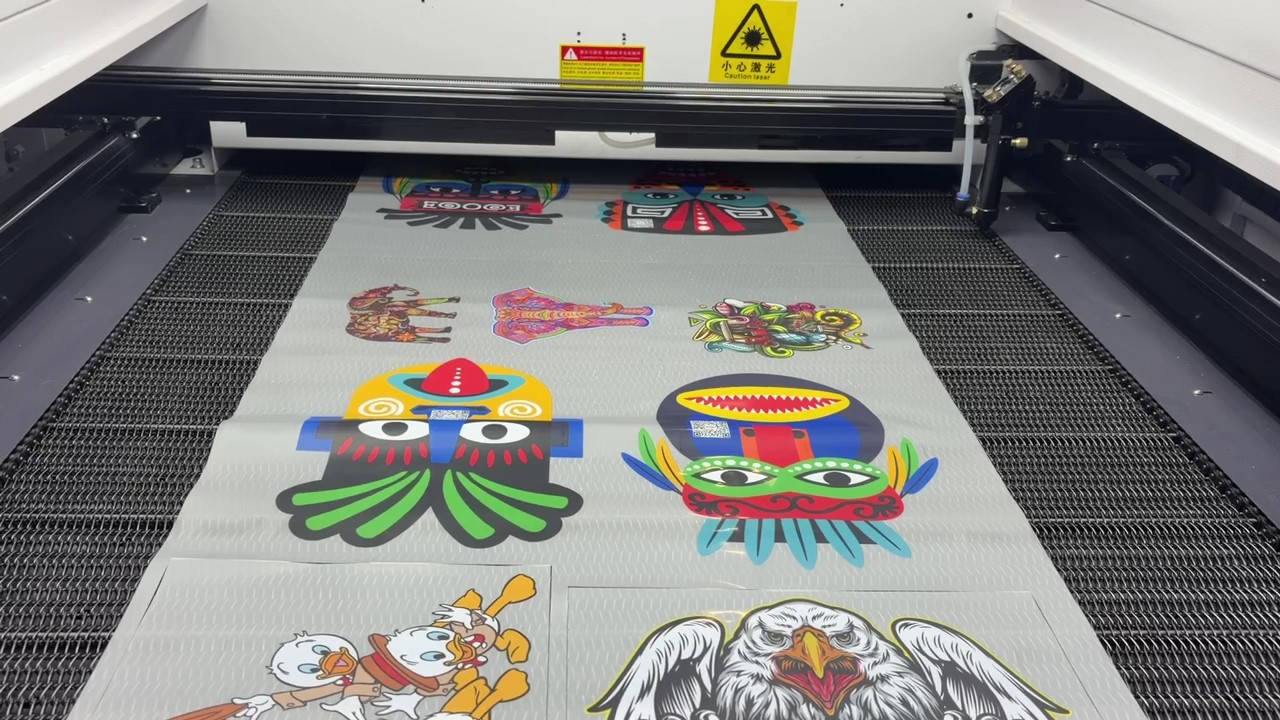
A Laser Type DTF Film Cutter is a specialized machine designed to cut printed DTF transfer films automatically using a high-precision laser beam. Unlike traditional blade-based cutting systems, laser cutting is a non-contact process that follows the contour of the printed design with exceptional accuracy.
Most modern laser DTF cutters are equipped with:
-
CCD camera positioning systems
-
Automatic contour recognition
-
Intelligent software control
-
Roll-to-roll feeding systems
-
Automatic material collection features
These technologies allow operators to achieve professional cutting results with minimal manual intervention.
1. Unmatched Cutting Precision
One of the most significant advantages of laser cutting technology is precision.
Modern DTF designs often contain:
-
Fine text
-
Detailed logos
-
Complex illustrations
-
Curved patterns
-
Personalized graphics
Manual cutting can struggle to maintain consistent accuracy, especially when processing large quantities of transfers.
A Laser Type DTF Film Cutter follows digital cutting paths precisely, ensuring clean and smooth edges on every design. This level of accuracy enhances the overall appearance of the final garment and helps businesses meet the quality expectations of demanding customers.
2. Dramatic Reduction in Labor Costs
Labor expenses continue to rise in many countries, making production efficiency more important than ever.
Traditional DTF workflows often require workers to spend hours cutting transfer sheets by hand. As order volumes increase, labor requirements increase as well.
Laser cutting automates this process.
One operator can supervise multiple production stages simultaneously, reducing the need for dedicated cutting staff. Over time, businesses can achieve substantial savings in labor costs while increasing overall productivity.
For growing print shops, this benefit alone can justify the investment in automated cutting equipment.
3. Faster Production and Higher Throughput
Speed is a major competitive advantage in today’s custom apparel market.
Customers increasingly expect:
-
Fast delivery
-
Short turnaround times
-
Same-day production
-
On-demand customization
Manual cutting often becomes a bottleneck, particularly during peak production periods.
A Laser Type DTF Film Cutter can process hundreds of designs continuously and accurately, dramatically increasing throughput. Faster cutting means faster order fulfillment, allowing businesses to handle larger volumes without sacrificing quality.
This increased efficiency directly contributes to improved customer satisfaction and business growth.
4. Consistent Product Quality
Consistency is essential for maintaining a professional brand image.
Human operators naturally introduce variations during manual cutting. Slight differences in trimming can affect the appearance of finished transfers and create quality control challenges.
Laser cutters eliminate this problem by following the same digital cutting file every time.
Whether producing ten pieces or ten thousand, the machine delivers identical results. This consistency helps reduce customer complaints, minimize rework, and strengthen brand reputation.
5. Reduced Material Waste
Material utilization plays a major role in determining production costs.
Manual cutting often leaves excessive margins around designs or results in cutting mistakes that waste valuable transfer film.
Laser cutting systems optimize material usage by accurately following contours and efficiently arranging designs on the film. Advanced nesting software can further improve utilization rates by maximizing available space.
Less waste means:
-
Lower material costs
-
Improved profitability
-
Greater environmental sustainability
In a highly competitive market, even small savings per transfer can create significant long-term financial benefits.
6. No Blade Wear or Replacement
Traditional cutting machines rely on physical blades that wear down over time.
As blades become dull, businesses may experience:
-
Rough edges
-
Reduced accuracy
-
Increased maintenance
-
Production interruptions
Laser cutting technology eliminates these issues because there is no physical contact between the cutting tool and the material.
Without blade replacement or sharpening requirements, maintenance costs decrease and production reliability improves. This allows businesses to focus on production rather than equipment upkeep.
7. Ideal for Complex and Custom Designs
The popularity of personalized apparel continues to grow rapidly.
Today’s customers want unique designs that often feature intricate shapes, detailed artwork, and custom text.
Laser cutters excel at handling these challenges.
Complex contours that would be difficult or time-consuming to cut manually can be completed automatically and accurately. This flexibility allows businesses to expand their product offerings and serve a wider range of customer needs.
As customization becomes a dominant trend in the apparel industry, laser cutting technology provides a valuable competitive advantage.
8. Supports Automation and Smart Manufacturing
Industry 4.0 and smart manufacturing are transforming production facilities worldwide.
Modern Laser Type DTF Film Cutters can integrate seamlessly with:
-
DTF printers
-
Conveyor systems
-
Workflow management software
-
Production monitoring systems
This integration creates a streamlined production environment where printing, cutting, and transfer preparation operate efficiently together.
Businesses investing in automation today will be better prepared for future growth and changing market demands.
9. Excellent Return on Investment
Although purchasing a laser cutter requires an initial investment, the long-term financial benefits are substantial.
The return on investment comes from:
-
Labor savings
-
Reduced waste
-
Increased production capacity
-
Lower maintenance costs
-
Improved product quality
For medium- and large-scale DTF businesses, these benefits often lead to rapid payback periods and significantly higher profitability.
Conclusion
The benefits of using a Laser Type DTF Film Cutter extend far beyond simple automation. From precision cutting and labor savings to faster production and improved consistency, laser technology helps DTF businesses operate more efficiently and competitively.
As demand for customized apparel continues to expand globally, manufacturers must find ways to increase output while controlling costs. A Laser Type DTF Film Cutter offers an effective solution by combining speed, accuracy, and automation into a single system.
For businesses looking to scale production, improve quality, and maximize profits, investing in laser cutting technology is no longer just an upgrade—it is becoming a necessity for long-term success in the DTF printing industry.
Post time: Jun-02-2026
