
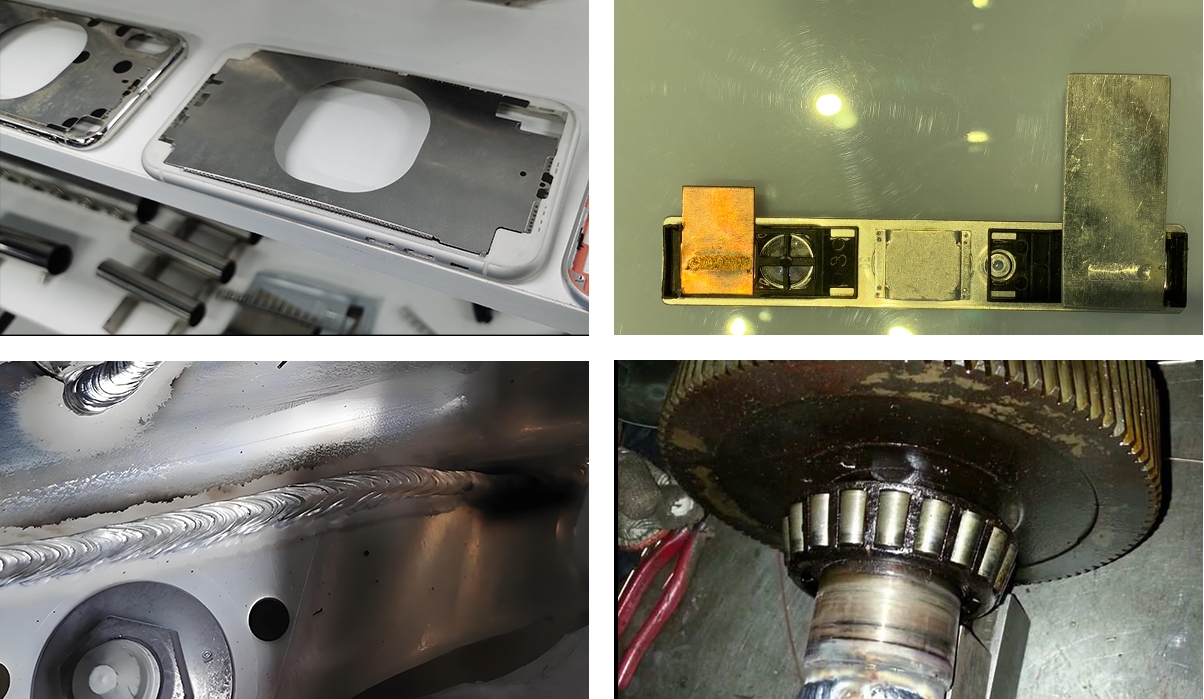
Mold laser welding has become an essential technology in modern mold manufacturing and maintenance. It is widely used in injection molds, die casting molds, and stamping molds to repair wear, restore damaged surfaces, and extend tool life without affecting dimensional accuracy.
Compared with traditional repair methods, laser welding offers high precision, minimal heat impact, and strong metallurgical bonding, making it ideal for high-value industrial tooling.
Advanced systems such as a Mold Laser Welding Machine are specifically designed for precision mold repair applications across different industries.
1. Injection Mold Applications
Injection molds are widely used in plastic product manufacturing and require high surface accuracy. Over time, they can suffer from wear, cracking, or corrosion.
Mold laser welding is used to:
- Repair parting line wear
- Fix cracks in cavity surfaces
- Restore damaged ejector pin areas
- Correct machining errors
- Rebuild worn edges and corners
Because the process delivers localized heat, it prevents deformation of precision mold structures, ensuring dimensional stability after repair.
2. Die Casting Mold Applications
Die casting molds operate under high temperature and pressure, especially in aluminum, zinc, and magnesium alloy production. This leads to frequent thermal fatigue and surface erosion.
Laser welding is commonly used to:
- Repair erosion from molten metal flow
- Restore damaged gating and runner systems
- Fix heat-checking cracks
- Rebuild worn cavity surfaces
- Extend mold service life
The low heat-affected zone is especially important for die casting molds, where repeated thermal cycles can otherwise weaken the structure.
3. Stamping Mold Applications
Stamping molds are used in sheet metal forming and are subject to mechanical wear and impact stress.
Laser welding helps to:
- Repair chipped cutting edges
- Restore worn forming surfaces
- Fix cracks caused by repeated punching
- Rebuild guide components
- Improve surface smoothness after damage
This reduces downtime and eliminates the need for full mold replacement.
Advantages of Mold Laser Welding
1. High Precision Repair
Laser beams can target microscopic areas, allowing precise restoration without affecting surrounding surfaces.
2. Minimal Thermal Distortion
The heat-affected zone is extremely small, preserving mold geometry and preventing deformation.
3. Strong Metallurgical Bonding
The weld forms a solid bond with the base material, ensuring durability under high pressure and temperature conditions.
4. Cost Reduction
Instead of replacing expensive molds, manufacturers can extend tool life through repeated repair cycles.
Material Compatibility
Mold laser welding works effectively on:
- Tool steels (H13, P20, S136)
- Stainless steel molds
- Alloy steel components
- Hardened mold surfaces
Adjustable parameters allow operators to match different hardness levels and material compositions.
Industrial Value of Mold Laser Welding
In manufacturing industries, downtime and mold replacement costs are significant. Mold laser welding helps reduce:
- Production interruptions
- Tool replacement expenses
- Scrap rates caused by damaged molds
Systems like a Mold Laser Welding Machine are widely adopted in automotive, electronics, packaging, and precision molding industries.
Conclusion
Mold laser welding provides a precise, efficient, and cost-effective solution for repairing injection, die casting, and stamping molds. By minimizing thermal damage and ensuring strong material bonding, it significantly extends mold lifespan and reduces manufacturing costs.
As industrial demand for high-precision tooling continues to grow, mold laser welding has become a critical maintenance technology in modern production systems.
Post time: Jun-25-2026
