
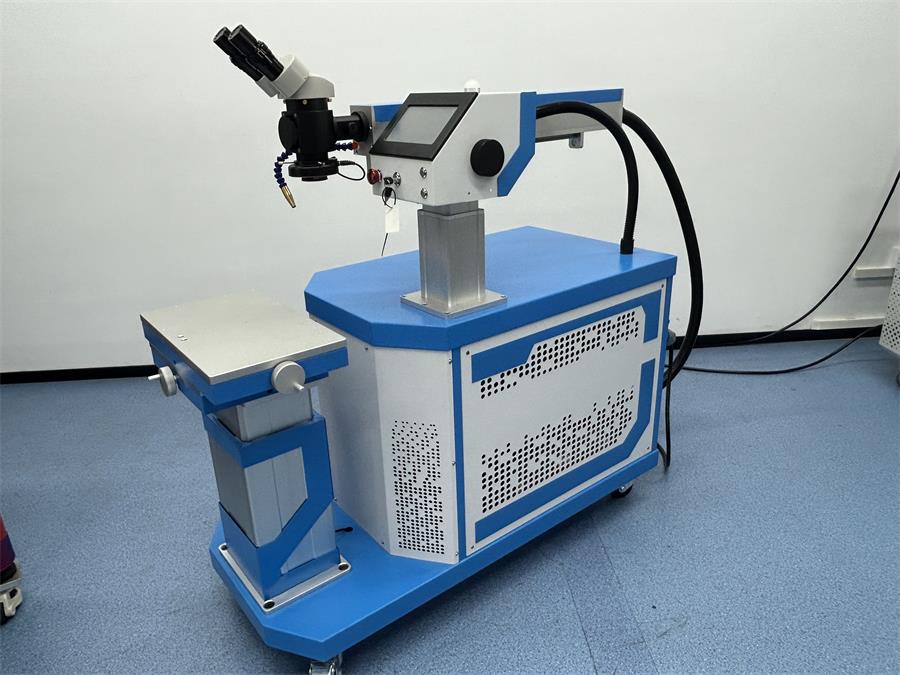
Mold laser welding technology has become an essential precision repair and modification method in modern tooling industries. It is widely used in injection molds, die casting molds, and stamping molds due to its ability to deliver localized, low-heat, and high-accuracy welding. Compared with traditional TIG or argon arc welding, laser welding significantly reduces thermal deformation and improves repair quality, making it ideal for high-value mold maintenance.
1. Mold Laser Welding in Injection Molds
Injection molds require extremely high surface precision because they directly affect plastic product quality. Mold laser welding is commonly used for repairing wear, cracks, and dimensional corrections.
Key applications include:
- Repairing gate wear and parting line damage
- Fixing cracks caused by long-term thermal cycling
- Restoring ejector pin areas and cavity surfaces
- Modifying mold structures for product updates
Advantages in injection molds:
- Minimal heat-affected zone (HAZ)
- No deformation of precision cavities
- Ability to weld small, complex areas
- Compatible with hardened steels and tool steels
This makes laser welding ideal for molds used in automotive parts, consumer electronics, and household plastic products.
2. Mold Laser Welding in Die Casting Molds
Die casting molds operate under high temperature and high pressure, especially in aluminum, zinc, and magnesium alloy casting. This leads to erosion, cracking, and surface fatigue over time.
Common applications include:
- Repairing erosion caused by molten metal flow
- Fixing heat-checking cracks on mold surfaces
- Restoring damaged cooling channels and edges
- Reinforcing high-wear areas such as gates and runners
Advantages in die casting molds:
- Strong metallurgical bonding with base material
- Low distortion even in large mold structures
- High resistance to thermal fatigue after repair
- Extends mold service life significantly
Laser welding is particularly valuable for expensive die casting molds where full replacement would be costly and time-consuming.
3. Mold Laser Welding in Stamping Molds
Stamping molds are used for sheet metal forming and are exposed to high mechanical stress and friction. Wear and edge deformation are common issues.
Typical applications include:
- Repairing cutting edges and punch surfaces
- Restoring worn die corners and profiles
- Fixing chipping damage on hardened tool steel
- Adjusting dimensional accuracy after long production runs
Advantages in stamping molds:
- High precision edge restoration
- Strong bonding on hardened materials
- Minimal post-processing required
- Maintains dimensional accuracy of stamping geometry
This ensures consistent part quality in automotive panels, appliances, and hardware components.
4. Key Advantages of Mold Laser Welding Across All Mold Types
Regardless of mold category, laser welding offers several shared benefits:
- Low thermal impact: Prevents distortion of precision molds
- High accuracy: Suitable for micro-scale repairs
- Strong bonding: Ensures durable weld strength
- Reduced downtime: Enables fast on-site repair
- Cost savings: Extends mold lifespan instead of replacement
These advantages make it a preferred maintenance solution in high-precision manufacturing environments.
5. Industrial Value and Production Impact
Mold laser welding is not only a repair technology but also a productivity optimization tool. It reduces mold downtime, improves maintenance efficiency, and supports continuous production.
Its industrial value includes:
- Lower tooling replacement costs
- Faster mold turnaround time
- Improved production stability
- Extended lifecycle of expensive tooling assets
For industries such as automotive, electronics, packaging, and appliance manufacturing, these benefits translate directly into higher profitability.
Conclusion
Mold laser welding plays a critical role in maintaining and restoring injection, die casting, and stamping molds. Its precision, low thermal impact, and strong repair performance make it an indispensable technology for modern mold maintenance. As manufacturing demands continue to increase, laser welding will remain a key solution for extending mold life and improving production efficiency across multiple industries.
Post time: Jul-02-2026
