
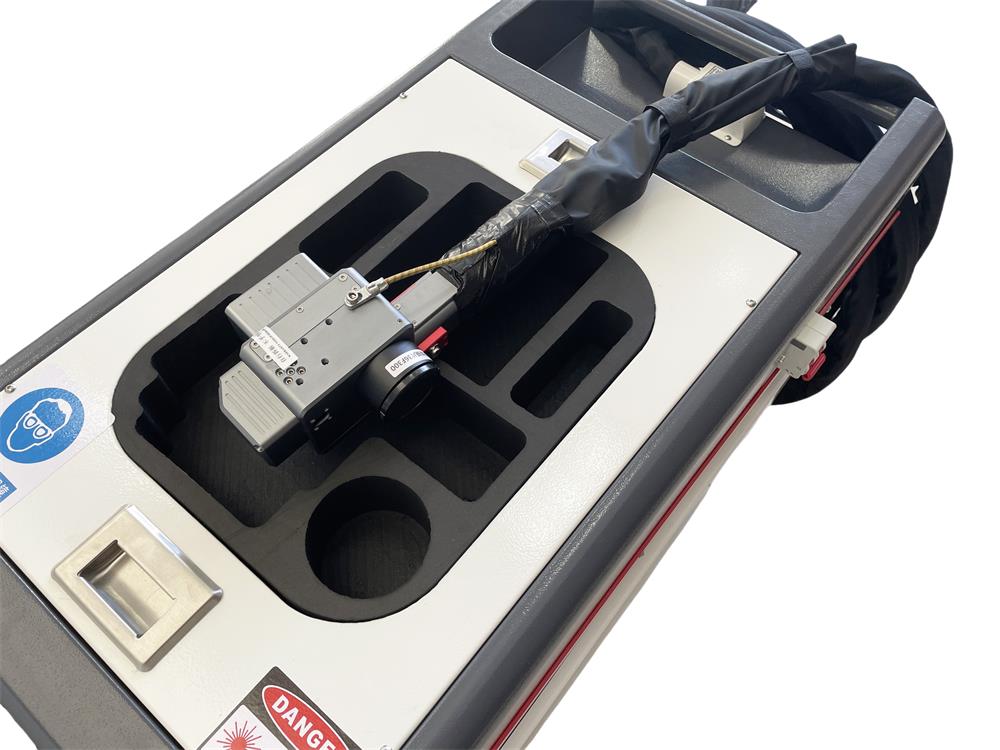
Rust has always been one of the most expensive hidden problems in manufacturing, transportation, construction, and metal processing. Corrosion damages equipment, weakens structural integrity, reduces production efficiency, and increases maintenance costs. Traditionally, industries relied on sandblasting, chemical solvents, grinding, or dry ice cleaning to remove rust. However, these methods are often messy, labor-intensive, environmentally harmful, and damaging to the underlying material.
Today, affordable laser rust remover systems are changing the economics of industrial cleaning. What was once considered a high-end technology reserved for aerospace or military applications is now becoming accessible to small factories, repair workshops, automotive shops, and even mobile maintenance businesses.
According to recent market research, the global laser rust removal equipment market was valued at approximately USD 0.5 billion in 2024 and is projected to exceed USD 1.2 billion by 2034, with handheld laser systems representing the fastest-growing segment. The rapid growth is largely driven by falling equipment prices, improved fiber laser technology, and rising environmental regulations against chemical cleaning processes.
Why Affordable Laser Rust Removers Are Gaining Popularity
The biggest shift in the industry is not simply better technology. It is affordability.
Five years ago, many laser cleaning systems were financially out of reach for small and medium-sized businesses. Modern portable fiber laser cleaning machines, however, have become dramatically more cost-effective due to advances in laser source manufacturing and compact system integration.
Portable systems now account for more than 60% of global unit sales in the laser cleaning market. This reflects a broader industrial trend: companies increasingly prefer flexible, low-investment tools that can perform multiple cleaning tasks without requiring specialized infrastructure.
Affordable laser rust removers are particularly attractive because they reduce ongoing operational expenses. Unlike sandblasting or chemical cleaning, laser cleaning typically requires:
- No abrasive consumables
- No chemical solvents
- Minimal maintenance
- Lower labor costs
- Reduced waste disposal expenses
Over time, these savings can offset the machine’s purchase price.
How Laser Rust Removal Works
Laser rust removal uses high-energy laser beams to vaporize or detach rust, oxides, paint, oil, and contaminants from metal surfaces. The laser targets the unwanted layer while leaving the base metal largely unaffected.
This selective cleaning capability is one of the technology’s biggest advantages. Traditional grinding or blasting methods often remove part of the underlying material together with the rust. Laser cleaning minimizes this issue, making it ideal for precision industries such as mold manufacturing, automotive restoration, aerospace maintenance, and electronics production.
Modern pulse laser systems are especially effective because they produce tightly controlled bursts of energy. These pulses remove contaminants while minimizing heat transfer to the substrate. As a result, laser cleaning can preserve delicate surfaces, fine textures, and critical tolerances.
The Rise of Handheld Laser Cleaning Machines
One of the most important developments in recent years is the emergence of handheld laser rust removers.
Portable handheld systems have transformed laser cleaning from a fixed industrial process into a flexible field operation. Operators can now carry compact laser cleaning guns directly to large machinery, pipelines, molds, ship hulls, or construction equipment without disassembling components.
Industry analysts report that handheld laser systems are expected to achieve the highest growth rate in the market due to their portability and low investment threshold.
These machines are increasingly used in:
- Automotive repair shops
- Mold maintenance workshops
- Shipbuilding yards
- Railway maintenance
- Oil and gas equipment servicing
- Steel structure restoration
- Manufacturing plants
For small businesses, portability means greater commercial flexibility. A single machine can serve multiple projects and locations, allowing companies to offer mobile rust removal services with relatively low operating costs.
Environmental Advantages Over Traditional Methods
Environmental regulations are becoming stricter worldwide, especially regarding chemical cleaning agents and abrasive blasting waste.
Laser cleaning offers a cleaner alternative because it produces very little secondary pollution. There are no chemicals, acids, or abrasive particles involved.
This matters for several reasons:
- Reduced environmental compliance costs
- Safer workplaces
- Lower waste disposal expenses
- Better air quality in factories
- Less contamination risk for precision components
Many manufacturers now view laser cleaning not only as a maintenance tool but also as part of their sustainability strategy.
Cost vs Performance: The Reality
Despite the excitement surrounding affordable laser rust removers, realistic expectations are important.
Laser cleaning is extremely effective for:
- Surface rust
- Oxide layers
- Paint removal
- Precision cleaning
- Mold cleaning
- Pre-weld surface preparation
However, some Reddit discussions from industrial users note that very thick corrosion can still be more efficiently handled by aggressive abrasive methods such as sandblasting.
This does not mean laser cleaning is ineffective. Instead, it highlights that laser rust removal excels in precision, surface preservation, automation, and cleanliness rather than brute-force abrasion.
For many industries, especially those involving expensive molds or precision metal parts, preserving the base material is more valuable than raw stripping speed.
Fiber Laser Technology Is Driving Prices Down
Fiber laser systems now dominate industrial cleaning applications because of their high efficiency, long lifespan, and relatively low maintenance requirements.
Compared with older laser technologies, modern fiber lasers offer:
- Better beam quality
- Higher electrical efficiency
- Longer service life
- Lower maintenance costs
- Compact system design
These advantages are one reason affordable laser rust removers are becoming increasingly common even among smaller workshops.
At the same time, manufacturers are integrating smarter features such as:
- AI-assisted cleaning control
- Real-time monitoring
- Automated scanning systems
- Adjustable cleaning modes
- Cloud-based diagnostics
These technologies are pushing laser cleaning beyond basic rust removal into intelligent industrial maintenance.
The Future of Affordable Laser Cleaning
The industrial cleaning industry is entering a major transition period. Companies no longer want cleaning systems that create large amounts of waste, require expensive consumables, or damage valuable components.
Affordable laser rust removers align with the future direction of manufacturing: cleaner, smarter, and more automated operations.
As hardware costs continue falling and fiber laser technology improves, laser cleaning will likely become standard equipment in many factories and repair shops rather than a specialized premium tool.
For businesses focused on long-term efficiency, precision maintenance, and environmental compliance, investing in an affordable laser rust remover is no longer a futuristic idea. It is rapidly becoming a practical competitive advantage.
Post time: May-07-2026
