
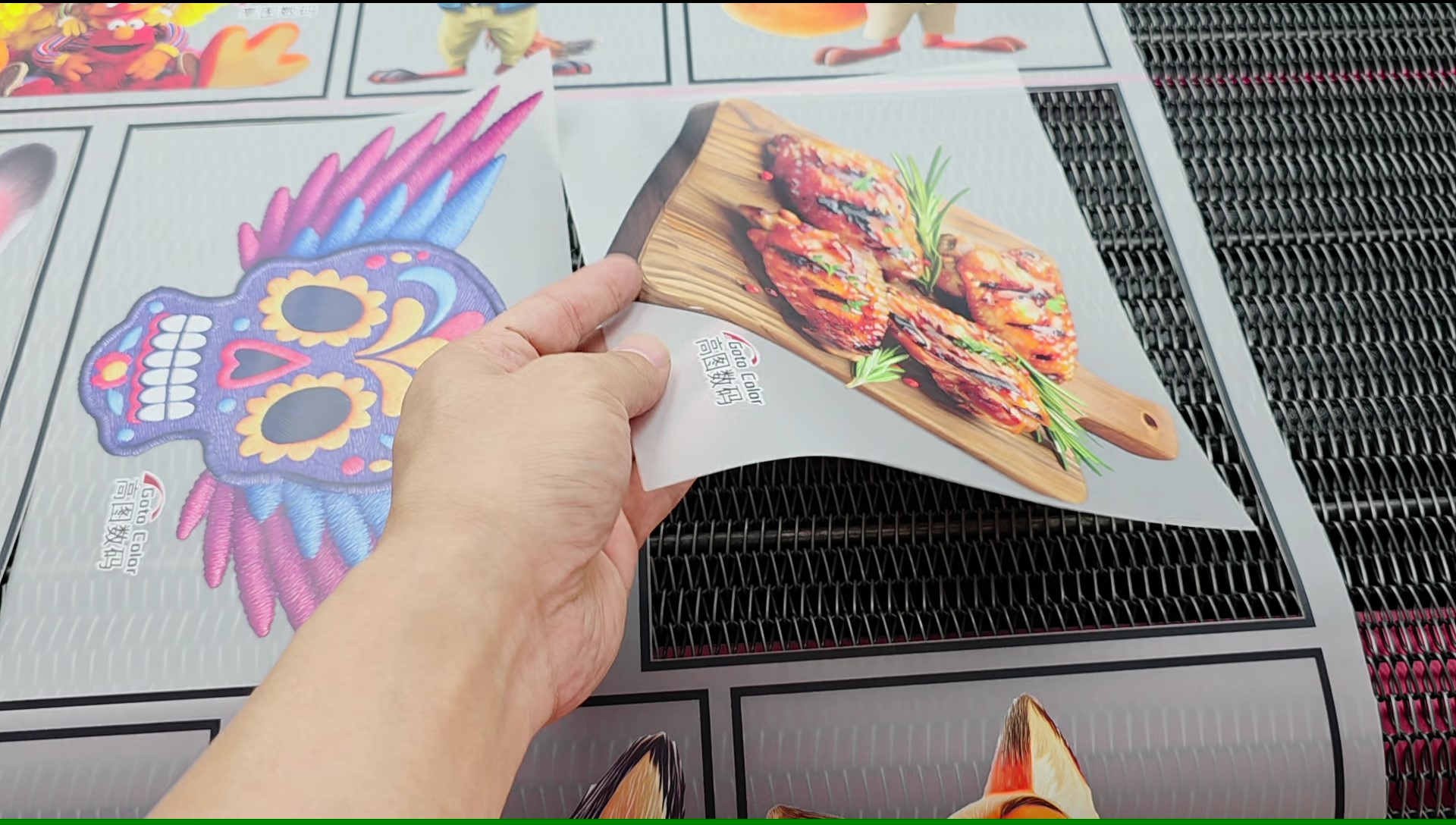
Fabric cutting machines, especially laser-based or automated roll-fed cutting systems, are increasingly used for processing DTF (Direct to Film) transfer film. Compared with manual cutting or traditional blade plotters, these machines offer higher precision, better efficiency, and improved production stability for modern printing businesses.
1. High Cutting Precision and Clean Edges
DTF film requires accurate contour cutting to ensure proper heat transfer alignment. Fabric cutting machines provide stable motion control and fine beam or blade accuracy.
Key benefits:
-
Clean and smooth edges without tearing
-
High repeatability for batch production
-
Accurate contour cutting for complex shapes
-
Reduced misalignment during heat pressing
Laser systems are especially effective because they seal edges during cutting, reducing film fraying or deformation.
2. Increased Production Speed
Manual cutting or desktop plotters can slow down workflow in mass production environments. Fabric cutting machines support continuous and high-speed operation.
Improvements include:
-
Faster processing of large film rolls
-
Continuous feeding for uninterrupted production
-
Reduced manual handling time
-
Higher daily output capacity
This is especially important for print shops handling bulk custom orders.
3. Compatibility with Roll-to-Roll DTF Production
Modern fabric cutting systems are designed to work with roll materials, making them ideal for DTF film in roll format.
Advantages include:
-
Automatic feeding and alignment of DTF film
-
Seamless integration with UV DTF or DTF printing lines
-
Reduced need for sheet-based handling
-
Better workflow automation from printing to finishing
This allows businesses to build a more complete production pipeline.
4. Reduced Labor Cost and Human Error
Manual cutting is labor-intensive and prone to inconsistencies. Automated fabric cutting machines reduce dependence on skilled labor.
Benefits:
-
One operator can manage multiple machines
-
Less training required for production staff
-
Reduced cutting mistakes
-
More stable output quality
This improves overall operational efficiency and lowers long-term labor costs.
5. Improved Material Utilization and Lower Waste
Precise nesting and controlled cutting paths help maximize material usage from each DTF film roll.
Key advantages:
-
Optimized layout reduces leftover waste
-
Accurate cutting reduces rejected transfers
-
Stable tension control prevents film distortion
-
Better cost control per print job
For high-volume businesses, even small improvements in material usage can significantly impact profitability.
6. Better Workflow Integration in Printing Businesses
Fabric cutting machines can be integrated into DTF production lines, improving overall workflow efficiency.
Typical setup includes:
-
DTF printer output
-
Drying or curing process
-
Cutting system for contour trimming
-
Heat press application
This end-to-end process reduces handling steps and improves production consistency.
7. Versatility for Different Film Types
Fabric cutting machines can handle various types of transfer materials, including:
-
DTF PET film
-
UV DTF sticker film
-
Heat transfer vinyl (HTV)
-
Sublimation transfer sheets
This flexibility allows businesses to expand product offerings without additional equipment investment.
8. Stable Quality for Branding and Custom Orders
For custom apparel and branding products, consistent quality is essential. Fabric cutting machines ensure stable output across large batches.
Benefits:
-
Uniform sticker and transfer shapes
-
Accurate logo and design reproduction
-
Reduced customer complaints
-
Improved brand reputation
9. Scalability for Growing Businesses
As order volume increases, manual cutting becomes a bottleneck. Fabric cutting machines provide a scalable solution.
They support:
-
Higher production capacity without adding labor
-
Expansion into bulk wholesale orders
-
Faster turnaround times for clients
-
Easier integration into automated factories
Conclusion
Using fabric cutting machines for DTF film processing significantly improves precision, efficiency, and production scalability. By reducing manual labor, minimizing waste, and enabling roll-to-roll automation, these systems help printing businesses transition from small-scale operations to high-volume industrial production.
For companies working in DTF or UV DTF printing, adopting automated fabric cutting technology is a key step toward improving competitiveness and long-term profitability.
Post time: Jul-01-2026
