
Introduction
The Direct-to-Film (DTF) printing industry has become one of the fastest-growing sectors in garment decoration. Its ability to produce vibrant, durable, and highly detailed transfers has made it a preferred solution for custom apparel manufacturers, print shops, and on-demand businesses worldwide.
As DTF production volumes continue to increase, many businesses are discovering that printing is no longer the bottleneck—cutting is. Traditional manual trimming methods consume time, require skilled labor, and often lead to inconsistent results.
This is where a laser cutter for DTF film becomes a game changer.
By combining precision laser technology with automated contour recognition, laser cutters help DTF businesses improve efficiency, reduce labor costs, and achieve higher-quality finished products. In this article, we explore the key advantages of using a laser cutter for DTF film and why it is becoming an essential investment for modern printing operations.
What Is a Laser Cutter for DTF Film?
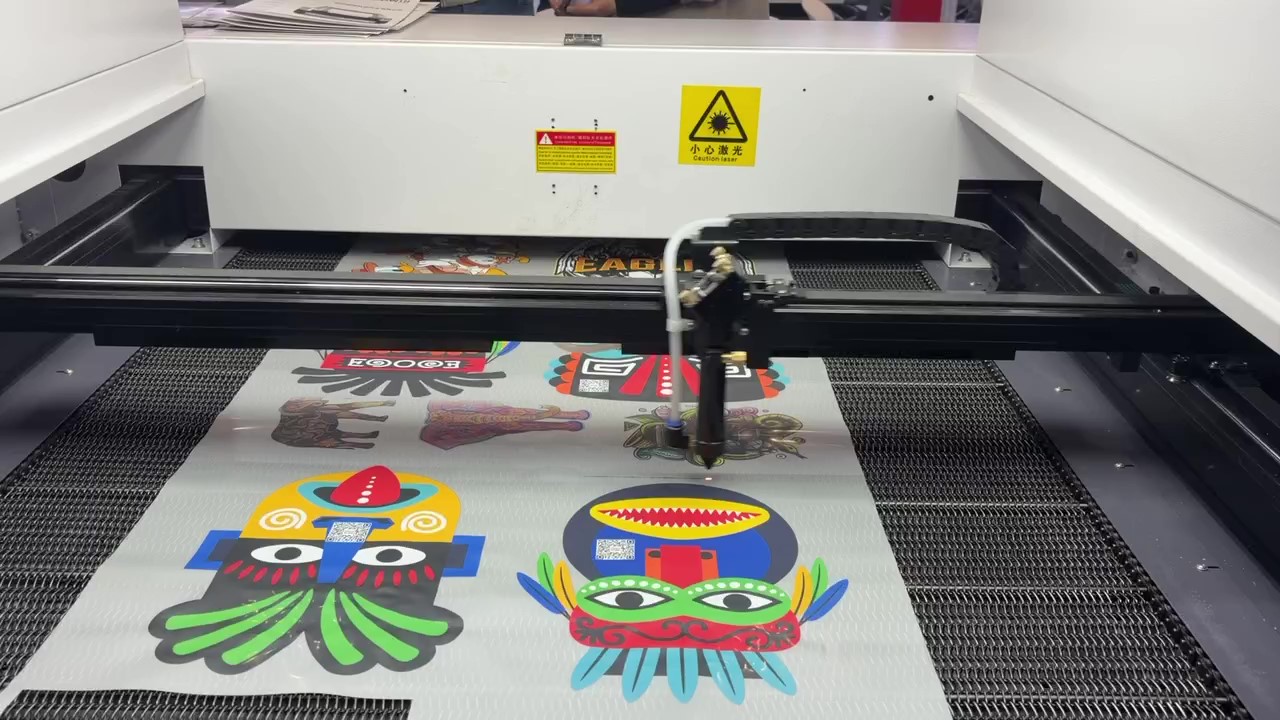
A laser cutter for DTF film is a specialized machine designed to automatically cut printed DTF transfer films according to the shape of the artwork.
Instead of using physical blades, the machine uses a focused laser beam to follow the contour of the design. Advanced systems often include CCD cameras, intelligent positioning software, and automatic feeding mechanisms to ensure precise cutting accuracy.
The result is a faster, cleaner, and more efficient workflow compared to manual cutting or conventional blade cutters.
Advantage 1: Exceptional Cutting Precision
One of the biggest advantages of laser cutting technology is its unmatched accuracy.
Modern apparel graphics often contain:
- Small text
- Fine details
- Complex logos
- Intricate patterns
- Multi-layered artwork
Manual cutting struggles to maintain consistency when dealing with such designs. Even minor deviations can affect the appearance of the final product.
A laser cutter follows digital cutting paths with extreme precision, producing clean and accurate edges every time.
This is particularly important for premium apparel brands that demand professional-quality transfers.
Advantage 2: Significant Labor Savings
Labor costs continue to rise across manufacturing industries.
Traditional DTF production often requires workers to spend hours cutting transfer sheets manually. As order volumes increase, labor expenses can quickly become a major operating cost.
Laser cutters automate the cutting process, allowing operators to focus on higher-value production tasks.
Benefits include:
- Reduced manpower requirements
- Faster order processing
- Improved workflow efficiency
- Lower long-term operating costs
For many businesses, labor savings alone can justify the investment.
Advantage 3: Faster Production Speed
Speed is critical in today’s competitive custom printing market.
Customers increasingly expect:
- Same-day production
- Fast shipping
- Short lead times
- On-demand customization
Manual cutting can slow down production and create bottlenecks.
Laser cutting systems can process large quantities of DTF transfers continuously and accurately, dramatically increasing throughput.
For high-volume print shops, this can mean handling more orders without hiring additional staff.
Advantage 4: Consistent Quality
Human error is unavoidable in manual cutting operations.
Different operators may produce slightly different results, leading to variations in:
- Cut accuracy
- Product appearance
- Production quality
Laser cutters eliminate this inconsistency.
Every design is cut according to the exact same digital file, ensuring identical results whether producing ten transfers or ten thousand.
This consistency helps businesses maintain professional standards and strengthen customer trust.
Advantage 5: Reduced Material Waste
Material efficiency directly affects profitability.
When operators cut manually, excess margins and positioning errors often result in wasted film.
Laser cutting software can optimize layout and nesting, allowing businesses to maximize film usage.
Advantages include:
- Less material waste
- Lower production costs
- Improved sustainability
- Better profit margins
Over time, these savings can be substantial, especially for large-scale production facilities.
Advantage 6: No Blade Replacement Costs
Traditional cutting systems rely on blades that gradually wear out.
Worn blades can cause:
- Rough edges
- Inaccurate cuts
- Material damage
- Increased maintenance expenses
Laser cutting is a non-contact process.
Since there is no physical blade touching the material, businesses avoid:
- Blade replacement costs
- Sharpening expenses
- Mechanical wear issues
This reduces maintenance requirements and minimizes production interruptions.
Advantage 7: Handles Complex Designs with Ease
Modern fashion trends increasingly favor customized and highly detailed graphics.
Many DTF transfers feature:
- Detailed illustrations
- Curved contours
- Personalized names
- Intricate lettering
These designs can be difficult and time-consuming to cut manually.
Laser cutters excel at handling complex shapes, delivering clean contours regardless of design complexity.
This capability enables businesses to offer more creative products without increasing production difficulty.
Advantage 8: Supports Production Automation
The future of garment decoration is automation.
Many modern laser cutters integrate with:
- DTF printers
- Conveyor systems
- Roll feeders
- Production management software
- Automatic waste collection systems
This creates a streamlined workflow from printing to transfer application.
Automation not only improves productivity but also helps businesses scale operations more efficiently.
Advantage 9: Better Return on Investment
While purchasing a laser cutter requires an initial investment, the long-term financial benefits are significant.
Savings come from:
- Reduced labor costs
- Higher production capacity
- Less material waste
- Lower maintenance expenses
- Improved product quality
As production volume grows, the return on investment becomes increasingly attractive.
Many DTF businesses find that automation allows them to expand operations without proportionally increasing staffing costs.
Advantage 10: Competitive Advantage in the Market
The DTF printing market is becoming increasingly competitive.
Businesses that can offer:
- Faster turnaround
- Consistent quality
- Large-volume production
- Competitive pricing
are more likely to attract and retain customers.
A laser cutter for DTF film helps companies achieve these goals while creating a more professional and efficient production environment.
For many print shops, adopting laser cutting technology is not simply about improving operations—it is about staying ahead of competitors.
Industry Trends Driving Laser Cutter Adoption
Several market trends are accelerating the adoption of laser cutting systems:
Growth of Print-on-Demand
Consumers want customized products delivered quickly.
Rising Labor Costs
Businesses are seeking automation solutions to control expenses.
Higher Quality Expectations
Customers expect flawless graphics and professional finishes.
Increased Production Volumes
Growing order quantities require faster and more scalable production methods.
Laser cutting technology directly addresses all of these challenges.
Conclusion
The advantages of a laser cutter for DTF film extend far beyond simple cutting automation. From exceptional precision and labor savings to faster production and improved consistency, laser cutting technology helps DTF businesses operate more efficiently and profitably.
As the custom apparel industry continues to grow, companies that invest in automated solutions will be better positioned to meet customer demands, reduce costs, and increase production capacity. For businesses looking to scale their DTF operations, a laser cutter is quickly becoming one of the smartest investments available.
By improving quality, productivity, and profitability simultaneously, laser cutters are helping shape the future of DTF printing.
Post time: Jun-01-2026
