
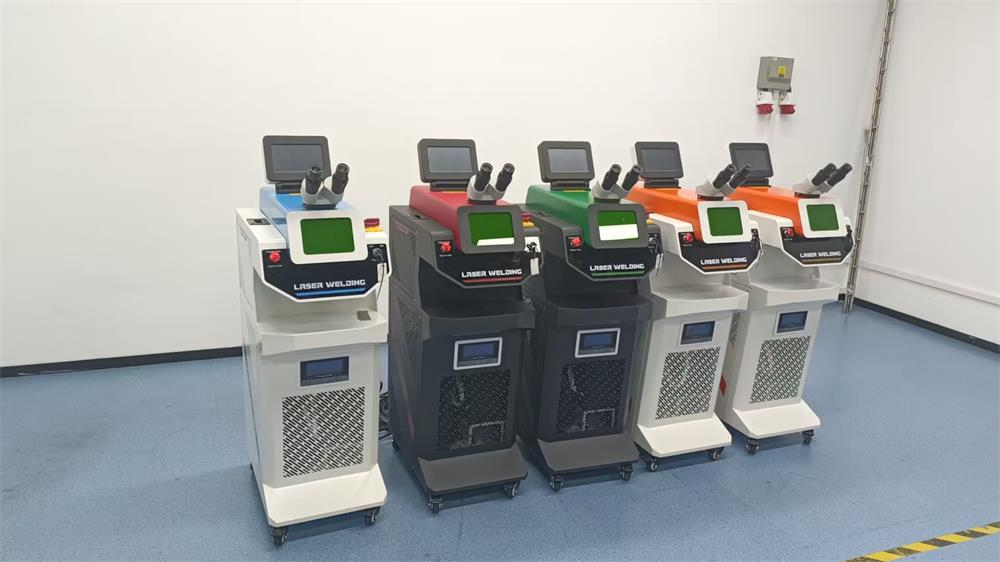
The jewelry industry is rapidly evolving toward higher precision, faster production, and more complex custom designs. Traditional repair and soldering methods are no longer sufficient for many modern jewelry applications, especially in luxury and high-precision markets. As a result, modern jewelry laser welders have become increasingly sophisticated, offering advanced features that dramatically improve repair quality, operational efficiency, and user experience.
Today’s jewelry laser welding machines are far more than simple repair tools. They are intelligent precision systems designed to handle delicate jewelry work with exceptional accuracy and consistency.
Why Modern Jewelry Workshops Need Advanced Laser Welders
Modern jewelry customers expect:
- Invisible repairs
- Faster turnaround times
- Stronger welds
- Safer gemstone handling
- High-end craftsmanship
At the same time, jewelry designs are becoming:
- Smaller
- More intricate
- More customized
- More difficult to repair traditionally
Advanced laser welding technology helps jewelers meet these growing demands while improving productivity and reducing operational risks.
1. Precision Pulse Control Technology
One of the most important innovations in modern jewelry laser welders is advanced pulse control.
Older laser systems offered limited energy adjustment, making delicate repairs more difficult. Modern machines allow operators to precisely control:
- Pulse energy
- Pulse duration
- Pulse frequency
- Spot size
This enables jewelers to adapt welding parameters for different metals and repair tasks.
Benefits of Precision Pulse Control
- Cleaner weld seams
- Reduced overheating
- Better penetration control
- Safer gemstone-adjacent repairs
- Improved consistency
For example, thin gold chains require lower pulse energy, while platinum prong rebuilding may need stronger penetration settings.
2. High-Definition Microscope Systems
Modern jewelry laser welders often include advanced microscope systems with high-resolution optics.
Precision visibility is critical when working on:
- Tiny prongs
- Micro pavé settings
- Fine filigree
- Delicate chain links
High-definition microscopes improve:
- Welding accuracy
- Operator comfort
- Repair quality
- Workflow efficiency
Some advanced systems now include digital display integration and camera-assisted viewing for even greater precision.
3. Smart Touchscreen Interfaces
Older laser welders often relied on complicated manual controls and analog settings.
Modern systems now feature:
- Touchscreen displays
- User-friendly software
- Preset welding programs
- Real-time parameter adjustment
These interfaces simplify machine operation and reduce the learning curve for new users.
Smart software systems may also store customized welding profiles for:
- Gold
- Silver
- Platinum
- Titanium
- Stainless steel
This allows operators to switch between materials quickly and consistently.
4. Advanced Cooling Systems
Stable cooling is essential for maintaining laser performance and extending machine lifespan.
Modern jewelry laser welders use advanced cooling technologies such as:
- Water cooling systems
- Intelligent temperature monitoring
- Automatic overheating protection
Efficient cooling improves:
- Continuous operation stability
- Weld consistency
- Machine durability
- Maintenance reliability
For busy jewelry workshops, stable cooling systems reduce downtime and improve productivity.
5. Ultra-Fine Spot Welding Capability
Modern laser systems can produce extremely small laser spots for micro welding applications.
This feature is especially important for:
- Luxury jewelry repair
- Designer jewelry
- High-end watch repair
- Precision custom fabrication
Ultra-fine spot welding allows jewelers to perform repairs in areas previously considered impossible with traditional soldering.
In many cases, repairs become nearly invisible after polishing.
6. Non-Contact Welding Technology
One major advantage of laser welding is non-contact operation.
Unlike traditional soldering, laser welders do not physically touch the jewelry surface during welding.
Benefits include:
- Reduced mechanical stress
- Lower contamination risk
- Greater precision
- Improved safety for delicate pieces
Non-contact processing is particularly valuable for antique jewelry and fragile custom designs.
7. Gemstone-Safe Welding Features
Modern jewelry laser welders are increasingly designed to work safely near gemstones.
Advanced energy control minimizes heat transfer, allowing repairs close to:
- Diamonds
- Sapphires
- Rubies
- Some semi-precious stones
This reduces the need for:
- Stone removal
- Re-setting labor
- Additional repair risks
For jewelry repair businesses, gemstone-safe welding dramatically improves workflow efficiency.
8. Compact and Ergonomic Design
Modern jewelry workshops often have limited space.
Manufacturers now design laser welders with:
- Compact desktop footprints
- Ergonomic working positions
- Integrated lighting systems
- Adjustable viewing angles
These features improve:
- Workspace organization
- Operator comfort
- Long-term productivity
Portable and compact systems are especially popular among independent jewelers and small repair shops.
9. Energy Efficiency and Lower Operating Costs
New-generation laser welders are becoming more energy efficient than older models.
Benefits include:
- Lower electricity consumption
- Reduced maintenance costs
- Longer component lifespan
- Improved operational sustainability
As energy costs rise globally, efficient laser systems provide important long-term financial advantages.
10. Automation and Digital Integration
Some high-end jewelry laser welders now support:
- Automated parameter adjustment
- Digital process monitoring
- Production data storage
- Smart manufacturing integration
These features align with the broader trend toward intelligent manufacturing and Industry 4.0 technologies.
Although full automation is more common in industrial manufacturing, advanced jewelry workshops are increasingly adopting digital production tools as well.
Fiber Laser vs YAG Technology in Modern Jewelry Welding
Modern jewelry laser welders generally use either:
- YAG laser technology
- Fiber laser technology
YAG Laser Advantages
- Mature technology
- Excellent for jewelry repair
- Stable performance
- Widely used in traditional jewelry workshops
Fiber Laser Advantages
- Higher energy efficiency
- Lower maintenance
- Longer service life
- Faster operation
Fiber laser systems are becoming increasingly popular as prices continue decreasing.
Why Advanced Features Matter for Jewelry Businesses
Investing in advanced laser welding technology helps jewelry businesses:
- Improve repair quality
- Increase production speed
- Expand service capabilities
- Reduce operational risks
- Enhance customer satisfaction
Customers increasingly notice the difference between basic repairs and precision laser craftsmanship.
For luxury jewelry businesses, advanced welding capability also strengthens brand reputation and professional credibility.
Industry Trends Driving Innovation
Several industry trends are accelerating development of advanced jewelry laser welders:
Growth of Custom Jewelry
Consumers increasingly demand personalized and intricate jewelry designs.
Rising Demand for Invisible Repairs
Luxury customers expect flawless restoration work.
Expansion of Independent Jewelry Studios
Small workshops require compact yet powerful equipment.
Technological Competition
Manufacturers continue improving software, optics, and laser precision to remain competitive.
Final Thoughts
Modern jewelry laser welders have evolved into highly advanced precision systems capable of transforming jewelry repair and manufacturing.
Features such as precision pulse control, smart touchscreens, advanced cooling, gemstone-safe welding, and ultra-fine spot capability allow jewelers to achieve levels of quality and efficiency that traditional soldering methods cannot match.
As the jewelry industry continues moving toward higher precision, customization, and premium craftsmanship, advanced laser welding technology will play an increasingly important role in the future of jewelry production and repair.
Post time: May-26-2026
